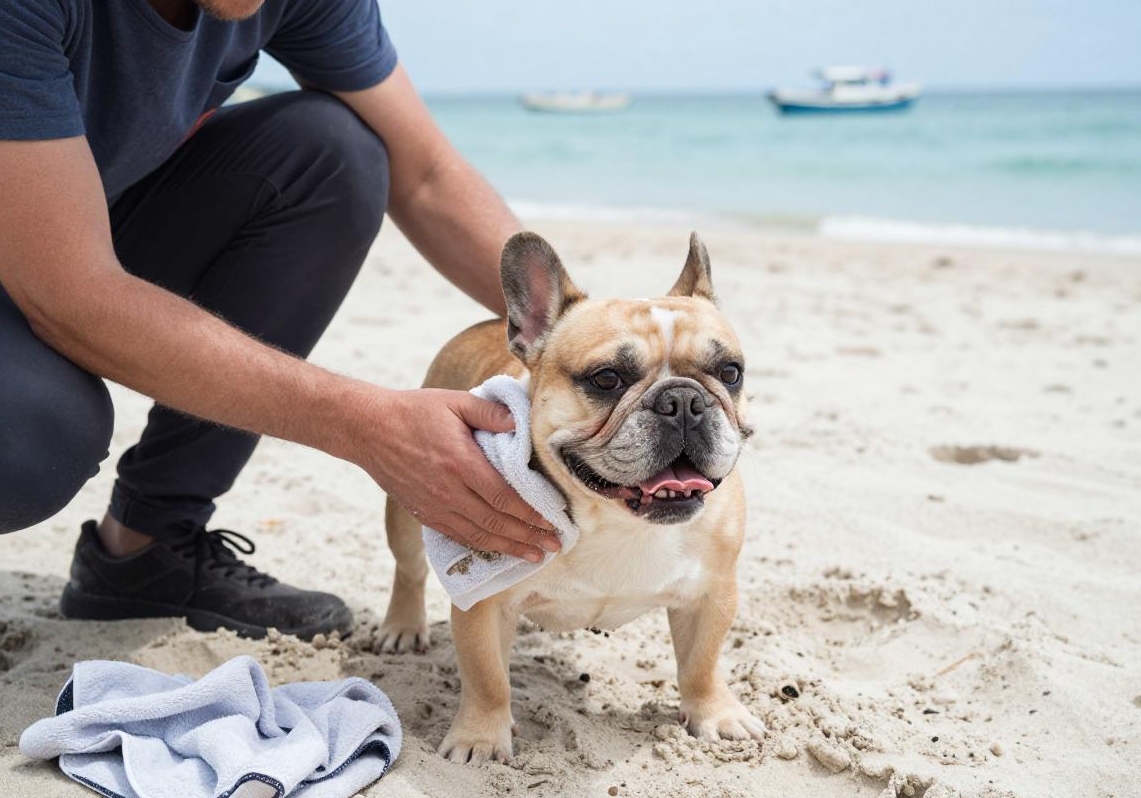
Planning a Flight With Your Little French Tank
Hello, I’m Dr. Wang, with over ten years of experience in veterinary care and the pet industry. I have seen countless owners excitedly plan trips, relocations or family visits with their French Bulldogs, only to face unexpected trouble — even tragedy — at the airport. One of the most distressing cases involved a client traveling south for the Lunar New Year with his two-year-old Frenchie Niuniu. Though the owner made preparations, he failed to fully understand special airline regulations and the breed’s physical limitations. Niuniu suffered severe respiratory distress during cargo transport. Thankfully he survived emergency treatment, but the incident was terrifying. This experience made me realize standard pet shipping knowledge is far insufficient for air travel involving brachycephalic flat-faced breeds such as French Bulldogs. A dedicated, thorough, scientific plan is essential.
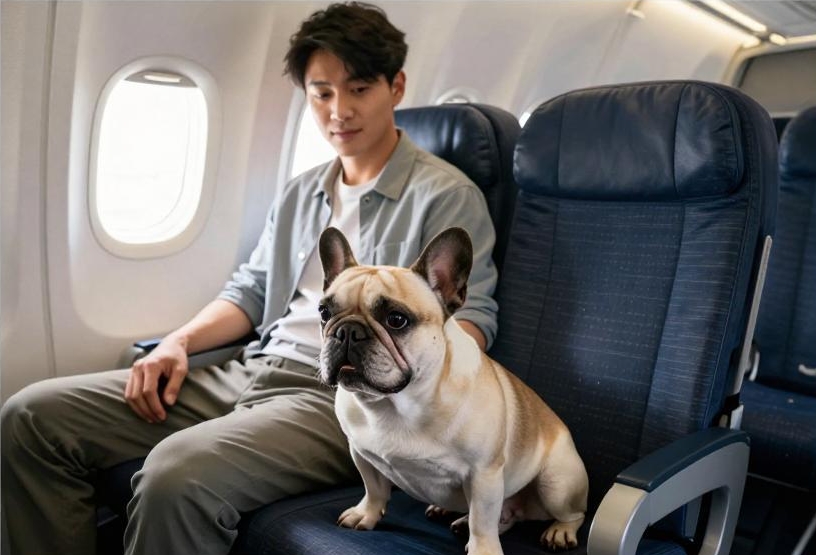
Why Do French Bulldogs Require Extra Care For Air Travel?
The root cause lies in their unique anatomy. French Bulldogs are brachycephalic dogs, meaning they have stenotic narrow nostrils, elongated soft palates and relatively small tracheas. Even under normal conditions, they often need to work harder to draw enough oxygen. Conditions shift dramatically once placed inside an aircraft cargo hold (even pressurized live animal holds):
1. Changes in Air Pressure & Oxygen: Cargo hold pressure is regulated during flight yet remains lower than ground level, equivalent to living at an altitude of 1,500–2,500 meters. This directly increases strain on the respiratory systems of Frenchies, who already have low breathing efficiency.
2. Fluctuating Temperature & Pressure: Rapid pressure shifts during takeoff and landing easily trigger ear discomfort and worsen anxiety. Cargo hold temperatures may also swing up and down.
3. Stress Response: Unfamiliar surroundings, loud noise and prolonged isolation place massive stress on French Bulldogs. Stress immediately accelerates heart rate, quickens respiration and raises body temperature. This creates a vicious cycle alongside their inherent breathing difficulties, which can trigger an acute episode of Brachycephalic Obstructive Airway Syndrome (BOAS). In severe cases this may lead to heatstroke, collapse or even death.
Therefore, flying with a French Bulldog requires preparation that extends beyond paperwork — you need rigorous health management tailored to their physical vulnerabilities.
My Advice: Five Steps to Arrange Safe Air Travel for Your French Bulldog
Step 1: Prioritize Airline Policies — Never Travel Unprepared
This is the most critical yet frequently overlooked step. I once advised a client to consult an airline one week ahead, and they were told brachycephalic breeds could be shipped. When arriving two days before departure to complete formalities, temporary policy revisions disrupted the entire trip.
My Practical Recommendations:
1. Begin research 1–2 months early: Visit the airline’s official website directly, locate sections for Special Passenger Services or Pet Transportation, and carefully read clauses regarding “brachycephalic breeds” and “breeds unsuitable for air transport”. Do not rely on general summaries; locate explicit breed lists.
2. Carry Out Triple Verification: First check the official website; second call customer service and record the call for confirmation; third reconfirm with check-in counters or cargo departments 72 hours before departure. I advise clients to save screenshots of key policy terms or recorded phone conversations.
3. Watch For Seasonal Restrictions: Many airlines ban pet cargo shipments when temperatures rise above 30°C or drop below 10°C, even in pressurized live animal holds. This is vital for heat-sensitive Frenchies that struggle with extreme temperature swings. Choose early morning or evening flights to avoid peak extreme temperatures.
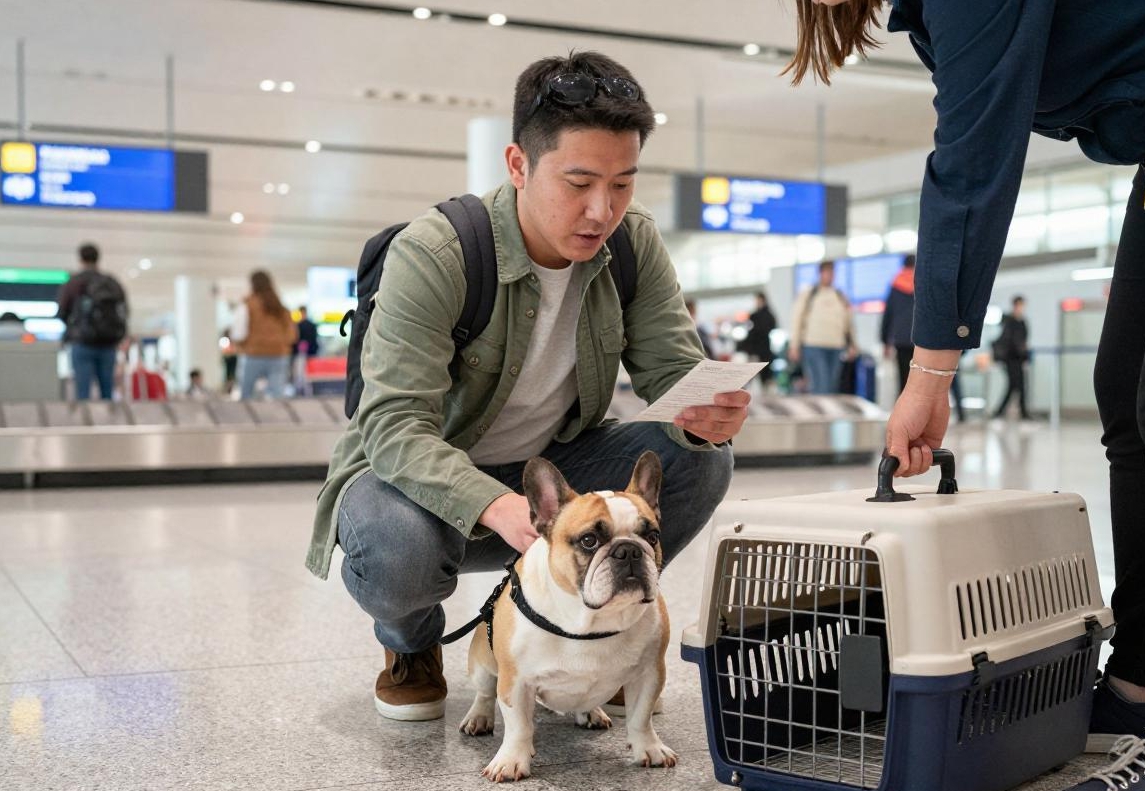
Step 2: Health Assessment & Document Preparation — Your Pet’s Travel Pass
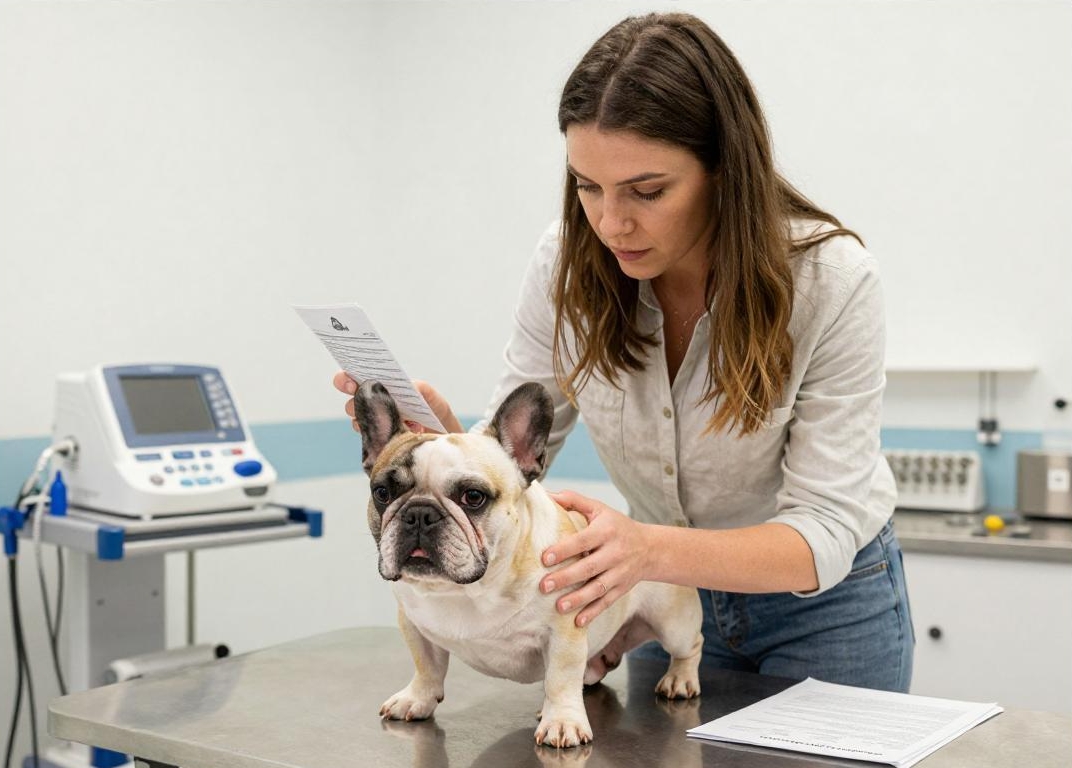
A valid health certificate is not just an official requirement; it offers professional confirmation of your dog’s physical fitness for travel.
My Practical Recommendations:
1. Select a Trustworthy Veterinary Clinic: Schedule a comprehensive pre-flight check-up at least two weeks before travel. Focus on cardiac and pulmonary function (auscultation, X-ray tracheal evaluation if needed), nasal airway patency and baseline stress tolerance. I will specifically assess soft palate thickness and laryngeal structure.
2. Obtain Official Quarantine Documentation: Using the veterinary health examination report, apply for an Animal Quarantine Qualification Certificate at the local Animal Health Supervision Institute 1–7 days prior to departure (regulations vary by region). This mandatory boarding document carries a short validity window, so coordinate timing precisely.
3. Consider Mild Calming / Anti-Anxiety Aids: These are not compulsory, yet worth discussing thoroughly with your vet for highly sensitive, stress-prone French Bulldogs. I never recommend powerful heavy sedatives. Sometimes I suggest pheromone sprays, calming supplements containing L-theanine, or ultra-low-dose short-acting anti-anxiety medication prescribed strictly under veterinary supervision. Always trial these products well before travel to observe your dog’s reaction.
Step 3: Airline Crate — Their Safe Haven During Transit
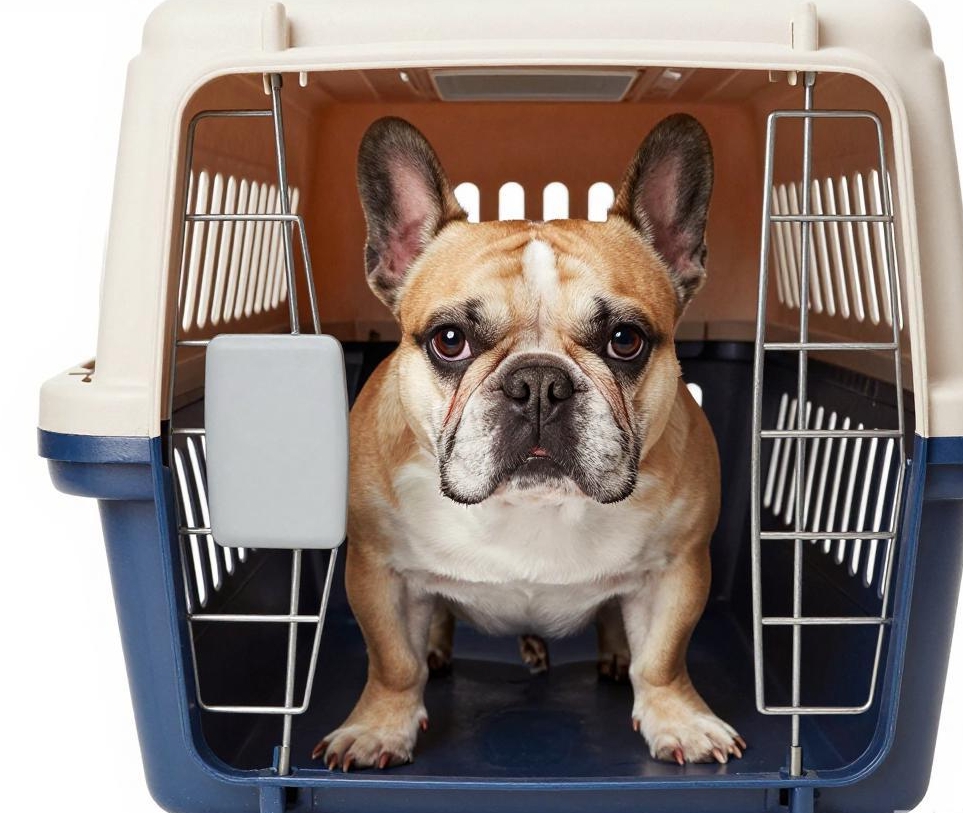
An airline crate is more than a cage; it can be life-saving. I have seen owners use perfectly sized crates lacking sufficient ventilation holes, nearly suffocating their dog mid-transit.
My Practical Recommendations:
1. Strictly Follow IATA Standards: Purchase official travel crates marked IATA Approved. Dimensions must allow the dog to stand naturally, turn around and lie down fully. For French Bulldogs, I recommend sizing up one level above standard calculations to maximize airflow space.
2. Crate Modifications & Setup: Install a secured water dispenser inside the crate door to prevent spills during turbulence while letting the dog lick water freely. Line the base with absorbent puppy pads, then cover with a familiar old towel or clothing carrying your scent to build security. Reinforce upper and lower latch points with zip ties to stop accidental door opening.
3. Start Crate Training Early: Place the crate in your home one month before travel with the door left open. Feed meals and toss treats inside to build positive associations that this space is a happy safe zone. Gradually introduce short closed-door training sessions (from several minutes up to multiple hours), and simulate ambient noise (play audio of aircraft takeoff and landing from your phone).
Step 4: On-the-Day Procedures for Your Flight
Small details on travel day determine everything.
My Practical Recommendations:
1. Diet Management: Withhold solid food 6–8 hours before takeoff; offer limited drinking water two hours prior. This drastically lowers risks of motion sickness, vomiting and soiling inside the crate.
2. Extended Pre-Departure Walk: Allow ample exercise before heading to the airport so your dog can fully empty their bladder and bowels and expend surplus energy, helping them settle quietly inside the crate.
3. Communication During Check-In: Clearly inform staff at the counter that your shipment is a brachycephalic dog, and ask them to remind cargo hold crew to provide extra monitoring. Attach highly visible labels to the crate stating: Brachycephalic Breed – Ensure Adequate Ventilation alongside standard markings Live Animal - This Side Up.
4. Personal Preparations: Carry your dog’s daily supplies, a small portion of kibble and drinking water for potential flight delays. Save the airline cargo department contact number for transit updates.
Step 5: Post-Arrival Care & Observation
Collecting your dog is not the end — this marks the start of a critical monitoring window.
My Practical Recommendations:
1. Calm Retrieval: After collecting your dog at the cargo terminal, move to a quiet, low-traffic area before slowly opening the crate. Do not rush to lift them out excitedly; let them exit voluntarily to adjust to environmental changes.
2. Immediate Health Check: Quickly assess their energy levels, breathing stability (watch for open-mouthed panting), gum colour (healthy pink; seek help if purple, blue or pale), external wounds or unusual discharge.
3. Gradual Reintroduction of Food & Activity: Offer only small amounts of water first. Feed easily digestible food after 1–2 hours of rest. Avoid intense exercise or overexcited play immediately. Allow sufficient rest for physical recovery.
Mistake Avoidance Guide: Never Fall For These Common Pitfalls
1. Hiding Breed or Health Conditions: Lying about your dog’s breed or ignoring underlying health issues to secure boarding puts your Frenchie in extreme danger.
2. Using Non-Compliant Transport Containers: Wire cages, soft fabric carriers and wooden crates are prohibited and extremely unsafe.
3. Overfeeding Before Travel: This is one major cause of in-flight vomiting, choking and risk of suffocation.
4. Careless Use of Sedatives: Purchasing human sedative medication for your dog carries unregulated dosage risks. At high altitude this may trigger life-threatening hypotension or respiratory suppression.
5. Ignoring Updated Airline Rules: Policies change constantly, and regulations targeting brachycephalic breeds grow stricter. Never rely on the assumption “it worked last time, so it will work again”.
Summary
Flying with a French Bulldog is a systematic undertaking requiring love, patience and professional knowledge. It tests not your budget, but your sense of responsibility and thorough preparation. The core goal is fully understanding their physical vulnerabilities, and coordinating every step around three priorities: minimize stress, secure unobstructed breathing, maintain stable physical condition. Every stage matters, from months-early policy research and health evaluations to refined management on flight day. Always remember safety comes first. If you hold doubts over any part of the process, adjust your travel arrangements (choose ground transport or book professional pet escort services) rather than taking unnecessary risks.
Important Reminder
Closely monitor your French Bulldog before and after travel. Immediately contact your veterinarian or visit the nearest animal hospital if you observe any of these serious warning signs:
1. Persistent severe open-mouthed panting, wheezing, coughing, gums or tongue turning purple, blue or greyish-white.
2. Inability to stand, unsteady gait, confusion or unconsciousness.
3. Repeated retching, dry heaving or blood present in vomit.
4. Abnormally elevated body temperature (noticeably hot skin) paired with extreme lethargy.
5. Any other serious abnormal behaviour that feels concerning to you.
Air travel poses severe challenges for brachycephalic dogs. Comprehensive advance preparation and attentive post-flight observation are the best protection you can offer as an owner. Wishing you and your French Bulldog safe, smooth journeys every time!