Hello everyone. If you clicked this title, you are most likely struggling with skin issues on your lovely French bulldog. After baths, drooling or sweating, do you worry about dirt trapped deep inside their facial and body folds? When you catch a faint sour smell, or watch them scratching their face with paws and rubbing against sofas, you feel concerned. This is one of the most frequent frustrations for French bulldog owners: skin inflammation from moist wrinkles. Mild cases bring itching and discomfort; severe infections lead to pus. Your dog suffers, and owners feel stressed.
Why Do French Bulldog Skin Folds Become High‑Risk Zones?
To fix the problem, understand its origin. French bulldog skin folds act like natural miniature greenhouses. Tightly folded skin creates closed, poorly‑ventilated pockets. When bath water, saliva, sweat, skin oils, dead skin cells and household dust collect inside these warm damp spaces, they create ideal conditions for rapid multiplication of bacteria (especially Malassezia) and yeast. Microbial by‑products irritate skin and trigger redness, itching and bad odour — commonly known as fold pyoderma (skin‑fold dermatitis).
What makes it worse: French bulldog skin is inherently sensitive. Once the skin barrier breaks down, inflammation spreads fast. Many owners think surface towel‑wiping equals proper cleaning, yet moisture and grime deep inside folds remain untouched. Simple wiping or air‑drying alone are never sufficient.
Field‑Tested Method: Step‑by‑Step Wrinkle‑Drying Workflow
Over ten years, I have seen countless French bulldogs and worried owners suffering from improper fold maintenance. One case involved a French bulldog named Potato with extremely deep nasal folds. Inflammation kept recurring despite various ointments. The real issue was not medication, but failure to fully dry deep‑set folds after cleaning. Together with Potato’s owner, we refined a reliable step‑by‑step wrinkle‑drying routine. Skin flare‑ups almost disappeared. Below I share this complete procedure.
Solution 1: Deep Wrinkle Cleaning & Drying After Bathing (Core Procedure)
This is the most critical preventive step and must be done after every bath.
Step 1: Gentle cleaning, open up skin folds. Use hypoallergenic pet‑formulated shampoo. Do not skip folded areas. Carefully separate each fold layer by layer with your fingers. Apply diluted shampoo lather with fingertips and softly rub inner fold skin to remove oil and dirt. Keep movements light to avoid abrasive skin damage.
Step 2: Thorough rinse, eliminate residue. This step is widely overlooked. Keep folds pried open while rinsing with soft, low‑pressure water directed inside crevices. Ensure zero shampoo residue left behind. Leftover chemical irritants worsen skin problems. Rinse repeatedly until skin no longer feels slippery.
Step 3: The most critical part — staged drying. This is the heart of the whole routine.
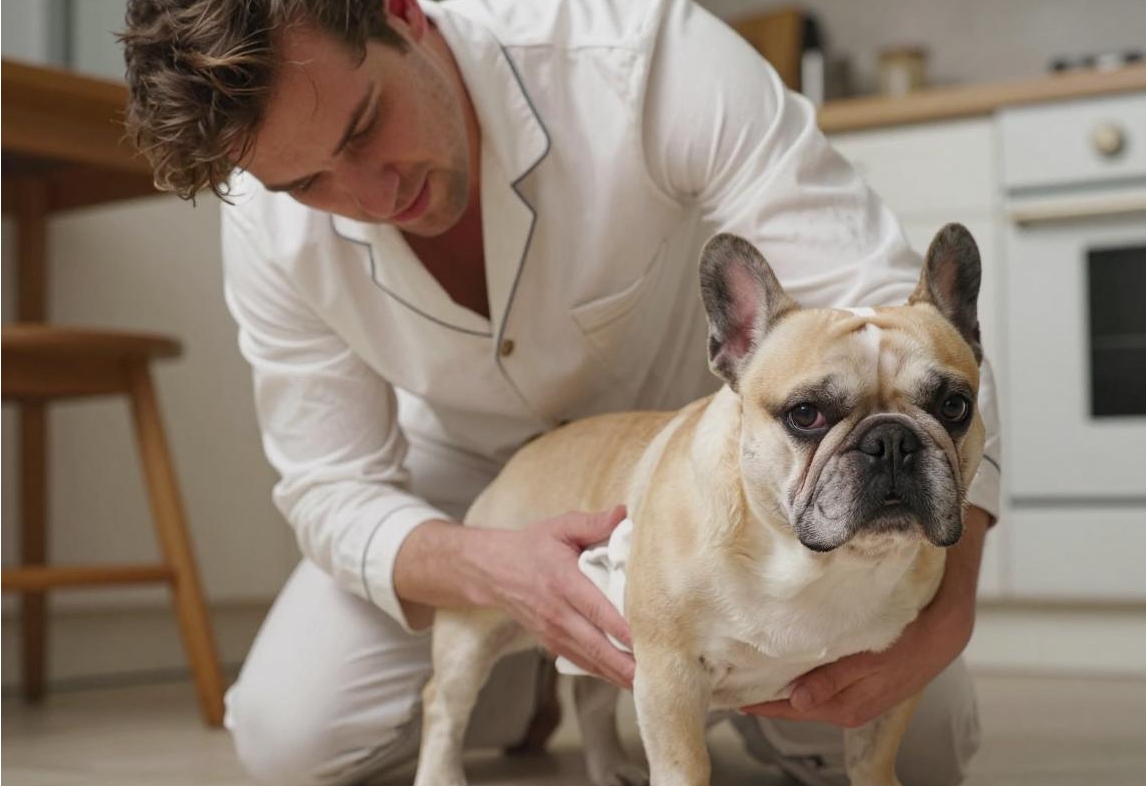
1. Initial moisture absorption: Use micro‑fibre or chamois towels to press‑blot most surface and shallow‑fold moisture. Do not rub back and forth; friction irritates sensitive skin.
2. Tool preparation: Get a pet hair‑dryer set to low‑temperature or cool‑air mode. Hot air burns delicate fold skin and frightens your dog.
3. Zone‑by‑zone drying: Start with facial folds. Hold and steady skin on the dog’s forehead with one hand. Use index finger and thumb of your other hand to fully spread open target folds such as nasal folds, forming an open tunnel‑shaped gap.
4. Direct airflow deep inside: Aim dryer nozzle toward the opened tunnel, keep 15‑20 cm distance, blow cool‑low‑temperature air slowly inside. Use your fingers to verify airflow reaches the very bottom of folds. Constantly shift dryer position and adjust how wide you hold folds open so every inner surface gets airflow.
5. Tactile check for dryness: After several minutes, touch inner fold skin gently. True dryness means skin feels completely dry, no dampness at all, similar to the back of your own hand. If cool or dampness persists, keep drying. Deep nasal folds often require 3‑5 minutes of focused drying.
6. Cover remaining body: Repeat this process for neck, armpit and other folded areas, then finish drying regular coat fur.
Solution 2: Daily Maintenance & On‑the‑Spot Drying
Baths do not happen every day, yet drooling and sweating during play are normal for French bulldogs. Day‑to‑day upkeep matters greatly.
1. Dog drool bibs are helpful: Fit heavy‑drooling French bulldogs with soft, highly‑absorbent cotton bibs and change them frequently. This prevents saliva from soaking chin and neck folds for long periods.
2. Wipe‑and‑dry immediately: Keep pet‑safe dry‑clean foam or alcohol‑free baby wipes handy. Whenever your dog gets a wet chin from drinking, damp toe gaps after walks, or visible dirt inside folds: wrap your finger with a wipe, reach inside folds and clean gently. Then press‑blot moisture away with dry paper towel or soft cloth. Remember: press‑blot, do not rub.
3. Routine inspections: Build a daily habit of checking your dog’s folds. Under good lighting, gently pull each fold apart. Verify skin colour stays normal pale‑pink. Look for swelling, rashes, dander or abnormal discharge, and sniff for unpleasant odours. Catch small issues early.
Solution 3: Supplementary Products & Overall Health Management
Good tools make care much easier.
1. Wrinkle care powder / ointment: Only apply pet‑specific fold‑care powder or ointment once folds are 100 % dry. Powder absorbs trace residual dampness to maintain dryness. Ointments (often containing zinc‑oxide) form a protective barrier shielding skin from irritants. Practical rule of thumb: use powder when skin is dry; use ointment for mild redness. Remember these are only aids. Complete drying is fundamental. Never use powder to mask damp skin.
2. Diet & immune support: Skin reflects overall health. Feed high‑quality protein plus essential fatty acids such as Omega‑3 and Omega‑6 to strengthen the skin barrier and lower inflammation risk. For recurring skin troubles, consult your vet about dietary adjustments or skin‑supporting nutritional supplements.
Pitfall‑Avoidance Guide: Avoid These Common Mistakes!
1. Towel‑only cleaning without drying: Towels only handle outer surfaces. Moisture trapped deep inside folds evaporates extremely slowly, creating perfect bacterial‑growth conditions.
2. Human‑grade products or strong disinfectants: Human wipes may contain alcohol and artificial fragrances. Over‑concentrated pet disinfectants irritate tender fold skin and damage natural skin‑oil layers, making problems worse.
3. Hot‑hair‑dryer setting held too close: Causes low‑temperature burns, pain and fear of drying, making future care far harder.
4. Random ointment application upon seeing redness: Bacterial infections and fungal infections such as Malassezia require completely different medications. Untested human creams or antibiotic ointments can worsen fungal problems or create drug resistance.
5. Ignoring small daily details: Thinking care is only needed after baths, while disregarding drool, tear stains and damp paws lets minor issues escalate into serious illness.
Summary
The core secret for preventing French bulldog fold inflammation can be summed up in four words: keep skin dry. Owners need patience and careful attention, treating step‑by‑step wrinkle‑drying as an essential grooming ritual. With thorough post‑bath cleaning‑drying, instant daily moisture control and balanced nutritional management, you can build strong skin‑health defences for your French bulldog. Every effort pays off when you see them relaxed and comfortable.
Important Reminder
Please note: all advice in this article covers preventive and mild‑maintenance routines. Seek veterinary care right away if your French bulldog’s folds show any of these serious warning signs:
‑ Severe redness, skin ulceration, pus or bleeding.
‑ Strong, foul rotting odour.
‑ Intense itching and pain, constant scratching disrupting normal rest and activity.
‑ No improvement or worsening after several days of home care.
These symptoms likely signal deep‑seated infection or underlying conditions such as allergies or hormone disorders. Stop self‑medication immediately and visit a professional pet hospital. Your vet may perform skin‑scrape microscopy and other tests for accurate diagnosis and targeted treatment. Combining professional veterinary treatment with consistent daily home care delivers the most complete protection for your dog’s wellbeing.