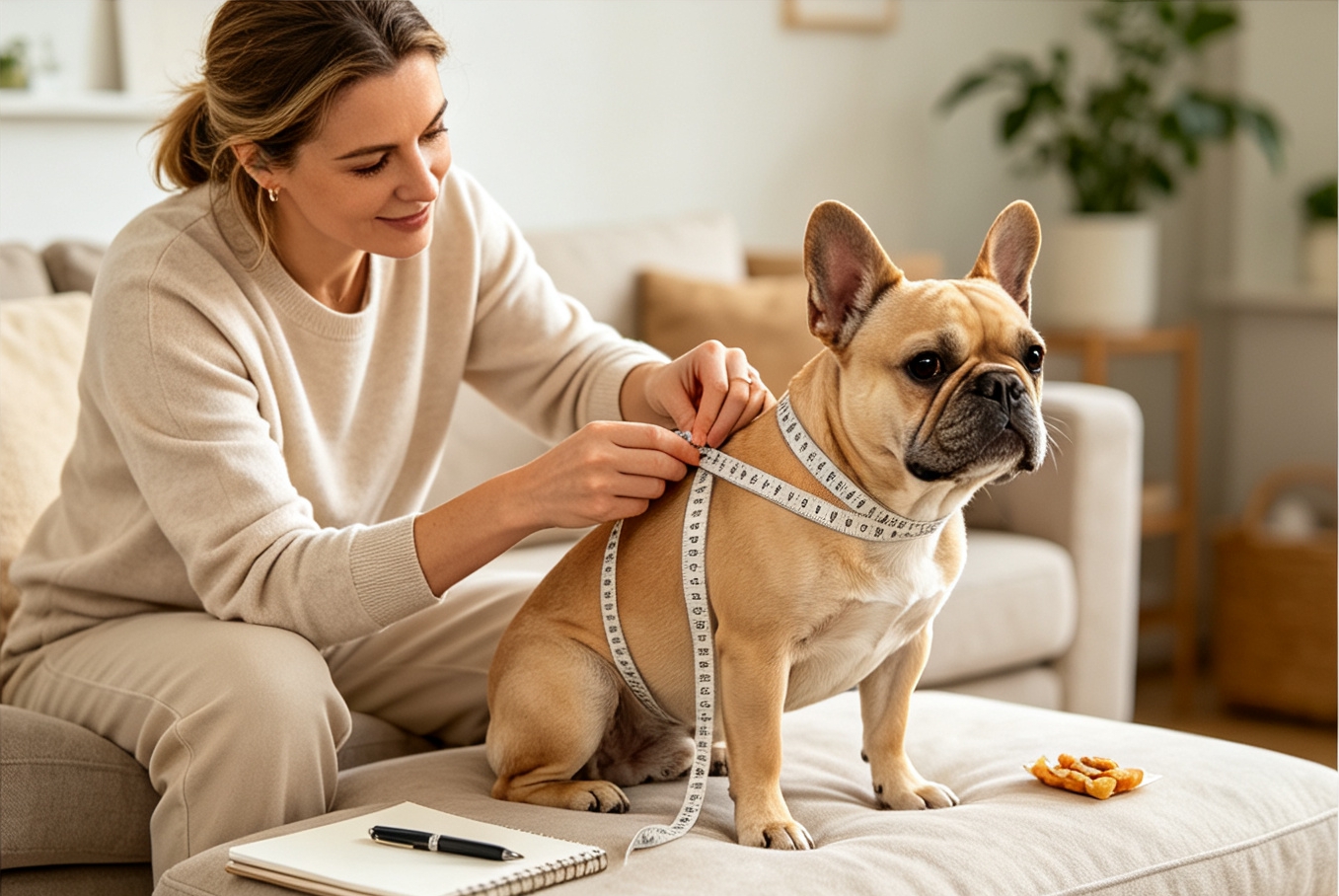
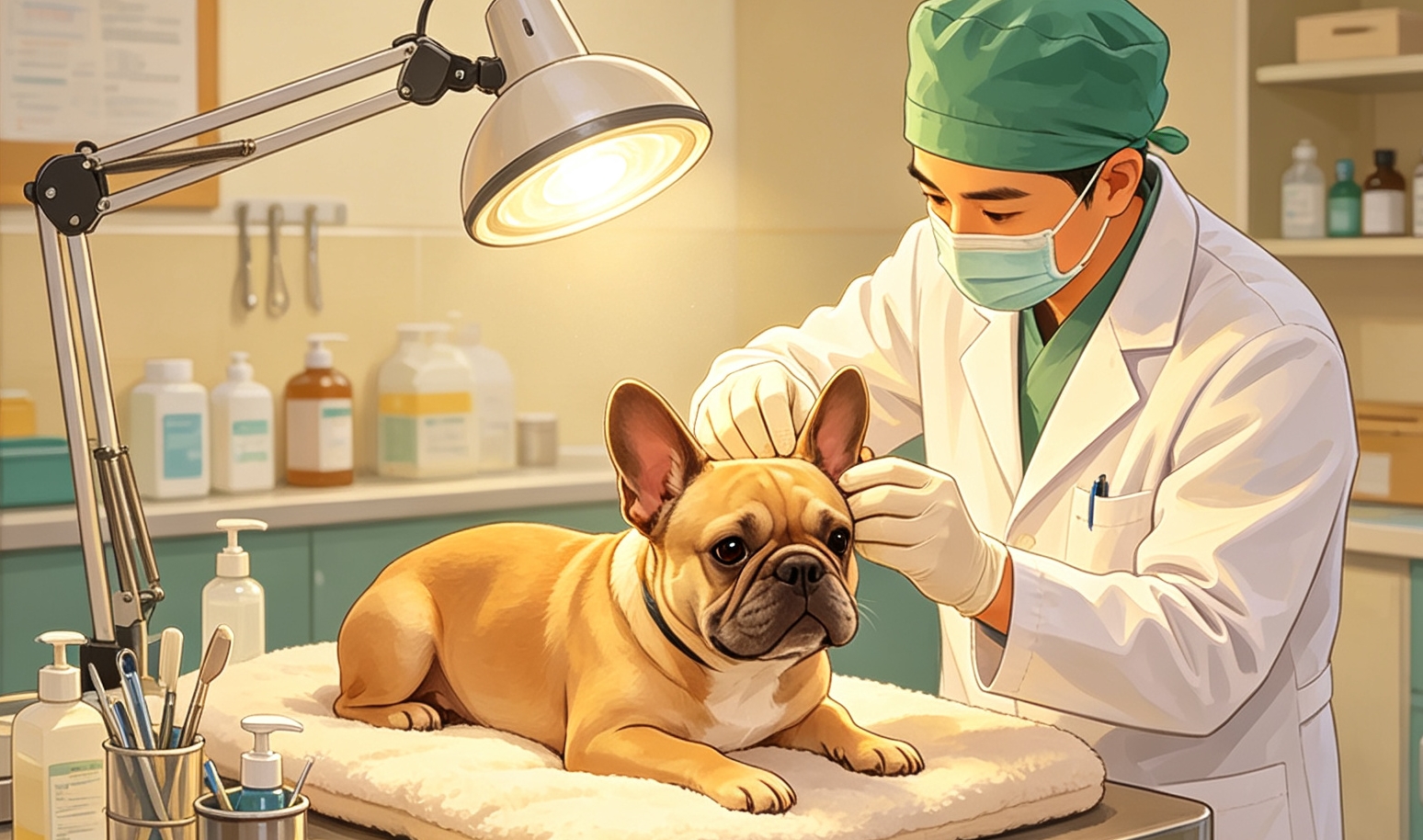
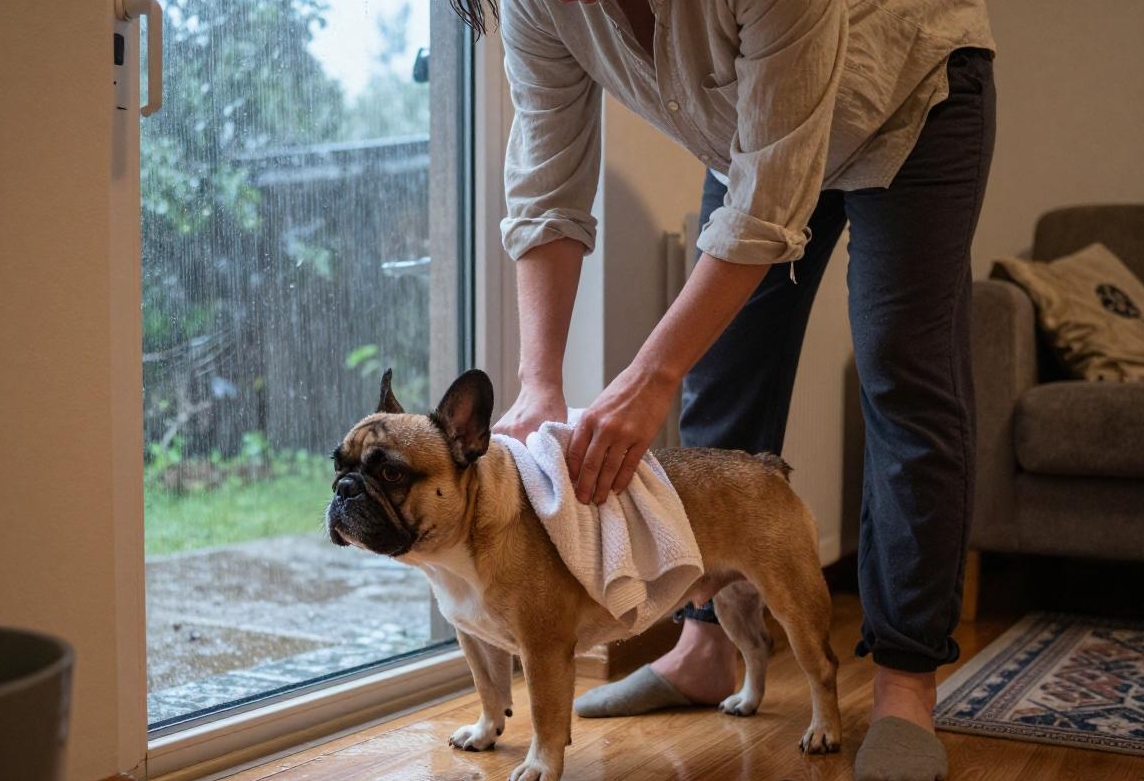
Looking at your lovely yet stubborn young French Bulldog — hiding under the sofa the second it sees nail clippers, trembling at the sound of a hair‑dryer, and turning bath‑time into a battle‑royale — do you feel utterly frustrated? Many French Bulldog owners have shared similar troubles with me. Such resistance turns every basic care session into a “fight between human and dog”, draining huge amounts of time and energy. Worse still, improper handling or violent struggling from the dog may cause accidental injury. More importantly, long‑term fear and stress toward grooming can severely harm your dog’s mental health and damage the trust bond with its owner. Today we will take an in‑depth look at how gentle, scientific “desensitization training” can build positive associations with grooming in your French Bulldog puppy from an early age, turning care time from a nightmare into warm bonding moments.
Why Does Your French Bulldog Puppy Resist Grooming?
To solve the problem we first need to understand its root causes. French Bulldogs, with their docile‑looking appearance yet sensitive, stubborn personalities, do not resist grooming for no reason. From behavioural science and canine‑psychology perspectives, the main triggers are as follows:
1. Innate sensitivity and stubbornness: Although compact‑bodied, French Bulldogs have strong individual personalities and self‑awareness. When faced with unfamiliar or uncomfortable stimuli (unfamiliar tools, restrained feelings, strange noises), their instinctive first reaction tends to be resistance rather than compliance. Without proper guidance during puppyhood, this stubbornness worsens as they mature.
2. Insufficient early socialisation: Puppies go through a “golden socialisation window” from 3‑14 weeks old. If they are not exposed to grooming tools, care‑handling postures and groomers (or owners performing care work) in positive ways during this phase, these stimuli become categorised as “suspicious” or “dangerous” in their minds.
3. Association with negative past experiences: Perhaps water accidentally entered ears or eyes during a bath; or the quick was nicked while trimming nails, bringing sharp pain. Dogs form direct memories: they rapidly link “grooming tools” to “unpleasant or painful experiences”, creating conditioned fear reflexes.
4. Emotional transfer from owners: Dogs excel at reading human emotions. When owners grow tense, anxious or impatient worrying that the puppy will misbehave, those feelings are clearly picked up by the dog, amplifying its unease and resistance. This creates a vicious cycle: the more nervous you are, the more frightened it becomes; the more frightened it becomes, the more flustered you grow.
Understanding these points makes it clear that force and suppression are never viable solutions. What we need is patience and scientific methods to rebuild positive, relaxed associations for the dog. That is the core idea behind “desensitization training” and “counter‑conditioning”: repeatedly pair originally neutral or unpleasant stimuli with rewarding experiences (treats, praise, gentle petting), until the dog accepts them willingly.
Five Core Steps: Hands‑On Grooming Desensitization for French Bulldog Puppies
Drawing on ten years of experience guiding hundreds of households, I will walk you through a practical, actionable grooming‑desensitization programme for French Bulldog puppies. Bear in mind the training pillars: “gradual progression” and “positive association”. Every step must take place while the dog is fully relaxed; never rush progress.
Step 1: Build foundational trust and touch desensitization (the absolute foundation)
Before introducing any tools, your puppy must fully trust being touched by you. This underpins all subsequent training.
Real‑world experience: I once worked with a 3‑month‑old French Bulldog named Doubao, extremely sensitive about paw and ear handling. It would pull away or even growl at the lightest touch. Forcing procedures would only make matters worse.
Practical implementation:
1. Pick moments when your puppy is relaxed (after meals, post‑playtime). Gently pet areas it enjoys, e.g. chin and chest.
2. While petting, speak in an upbeat tone saying “good boy/girl”, and immediately offer a tiny piece of its favourite treat (such as cooked chicken).
3. Once the puppy enjoys routine petting, make extremely brief contact with “sensitive zones” (paw edges, outer ear flaps). Offer treats and praise the exact instant you touch, then pull your hand away right after. Keep interactions quick so the puppy learns “a paw touch = wonderful things happen”.
4. Repeat multiple times daily for a few minutes each session. As it adapts, slowly extend contact duration on sensitive areas (0.5 seconds → 1 second → 2 seconds…). Start simulating care movements: softly squeeze toes, flip open ears for inspection. After roughly one week, Doubao could calmly let me hold its paws for several seconds without resistance.
Step 2: Introduce tools and build positive associations (turn grooming gear into “treat dispensers”)
Let your puppy explore all grooming tools with zero pressure first.
Practical implementation:
1. Place nail clippers, combs, toothbrushes, electric trimmers (switched off), hair‑dryer (cold‑air setting, powered off) within its usual activity space. Let it sniff and investigate freely, no intervention needed.
2. Begin active association: pick up the nail‑clipper, set it on the floor, and lay treats beside it. When the puppy approaches for treats it naturally smells the tool. Repeat several times.
3. Advance: hold one tool (e.g. comb) in one hand while feeding treats with your other hand. Then very lightly touch the puppy’s body (e.g. its back) with the tool and give a treat straight away. Stop offering treats as soon as the tool moves away. Teach your dog: “tool touching me means treats arrive”.
4. For noise‑producing tools such as hair‑dryers — one of the biggest fears for French Bulldogs: switch the dryer on to its lowest‑power cold‑air setting from across the room, and feed high‑value treats (cheese strips). Stop treats when the dryer turns off. Gradually reduce distance between dryer and puppy. Only move closer if the dog stays calm and keeps eating. This phase may take days or weeks; exercise ample patience.
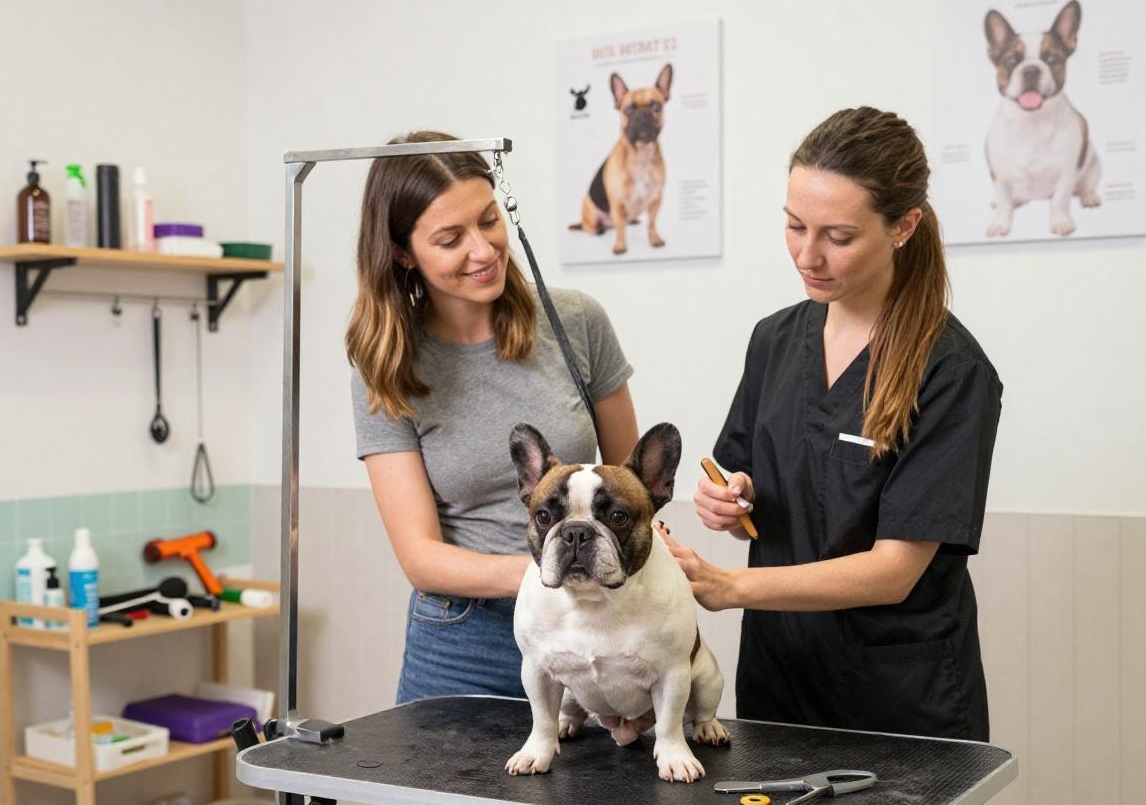
Step 3: Simulate grooming workflows (dry‑run before real sessions)
Once the puppy no longer regards tools with suspicion, mimic real‑life grooming motions without activating the tools’ functional purpose.
Practical implementation:
- Nail‑trimming simulation: Get your puppy lying comfortably on its side or sitting on your lap. Hold its paw exactly as you would for a real trim, lightly tap each nail with clippers (no actual cutting), and reward after every tap. Maintain a light‑hearted mood throughout.
- Tooth‑brushing simulation: First let the puppy lick tasty pet toothpaste (chicken‑flavoured for example) off your finger to build “toothpaste tastes great” associations. Next use a finger‑cot or soft‑bristled toothbrush to gently touch teeth and gums; reward immediately upon contact.
- Bath simulation: Bring the puppy into the bathroom on non‑bath days and give treats and praise. Turn on the tap to produce soft, gentle running water, let the puppy observe from afar and receive treats. Progress to wiping its back and limbs with damp cloths, rewarding after every small step.
Step 4: Low‑intensity real‑world practice — start with shortest, mildest exposure
This marks the critical transition from simulation to actual grooming work.
Real‑world insight: Many owners fail at nail trimming because they aim to finish every nail in the very first session. For a puppy not yet fully habituated, that creates overwhelming stress.
Practical implementation:
1. Nail trimming: For your first real attempt, your goal is not “trim all nails”, but “successfully snip the tip of one nail”. While your puppy stays relaxed, swiftly and cleanly cut only the transparent tip of one nail (always locate the quick). Immediately give extra‑large rewards: handful of treats, enthusiastic praise plus playtime. Stop work for the day. The next day try two nails. Gradually increase quantity until you can complete all toes in one sitting.
2. Bathing: Keep your first real bath under 5 minutes. Use plain water or a tiny amount of shampoo for quick cleansing of main body zones. The priority is teaching your puppy “bathing is not scary, and rewards follow afterwards”. Towel‑dry as thoroughly as possible before blow‑drying on low warm‑air setting from a safe distance, offering treats continuously during drying.
Step 5: Establish fixed routines and positive closing rituals
Predictability gives dogs a strong sense of security. Build a consistent grooming sequence and end each session with an extra‑enjoyable activity.
Practical implementation:
1. Before every grooming session bring out your dedicated treat container and tool kit, and say cheerfully “Time to get you nice and tidy!”.
2. Stick to a fixed order: Brushing → Tooth‑brushing → Wipe face and ears → Nail trimming → Fold cleaning (critical for French Bulldogs!) → Bath (if needed).
3. Most vital step: No matter small hiccups occur mid‑session or not, finish every care routine with your puppy’s favourite activity. Offer its best chew toy straight away, go for a walk, or play its favourite game. This builds complete understanding in your dog’s mind: “wonderful things happen once grooming finishes!”, greatly lowering resistance toward future care sessions.
Pitfall‑Avoidance Guide: Never Make These Common Mistakes!
Certain missteps will derail training entirely and make behaviour worse. Please pay close attention:
1. Being over‑eager and advancing too quickly: Desensitization training cannot tolerate skipping stages. If your puppy shows stress signals (airplane ears, lip‑licking, body stiffening, escape attempts), go straight back to the previous simpler exercise and increase rewards. Respect your dog’s learning pace.
2. Forcing continuation while the dog is terrified: This only reinforces fearful memories and makes desensitization far harder. Whenever severe fear reactions appear, stop immediately, soothe your puppy, and restart the next day with easier steps.
3. Punishment or scolding: Your puppy resists not out of naughtiness, but out of fear. Any negative emotion or punishment links “grooming” to “owner anger”, leading to worse outcomes.
4. Neglect ongoing maintenance: Desensitization training is not a one‑and‑done fix. Even once your puppy adapts, run short mock practice sessions with rewards on a regular basis (e.g. weekly) to preserve positive associations.
5. Ignoring French Bulldogs’ physical traits: French Bulldogs have short nasal passages. Take extreme caution during bathing to prevent water entering nostrils and triggering choking sensations. Clean facial folds gently yet thoroughly without excessive force. Physically uncomfortable experiences caused by mishandling will directly fuel resistance.
Conclusion
Helping French Bulldog puppies accept grooming care is fundamentally an exercise built on trust, patience and positive guidance. It is never about brute‑force domination; instead it uses wisdom to co‑create pleasant shared experiences. Every soft touch, every encouraging treat, every calm compliment you give paves smooth ground for your dog’s health‑care across its coming decade‑plus of life. When your French Bulldog calmly offers its paws for nail trims and peacefully enjoys teeth‑brushing and bathing, you gain not just a neat‑looking dog, but also a secure‑minded close companion who trusts you deeply.
Important Reminder
The methods in this article serve as behavioural‑adjustment guidance for most puppies showing mild‑to‑moderate grooming resistance. Please note: if your dog displays extreme, unrelievable fear (severe aggression, panic‑induced house‑soiling, prolonged hiding, refusal to eat), or sustains accidental injury through struggling during care, these scenarios lie beyond basic behavioural training. Strongly advise you stop home‑based attempts immediately and consult a qualified veterinary behaviour specialist or experienced positive‑reinforcement trainer for guided intervention. Your dog’s physical and mental wellbeing always comes first.