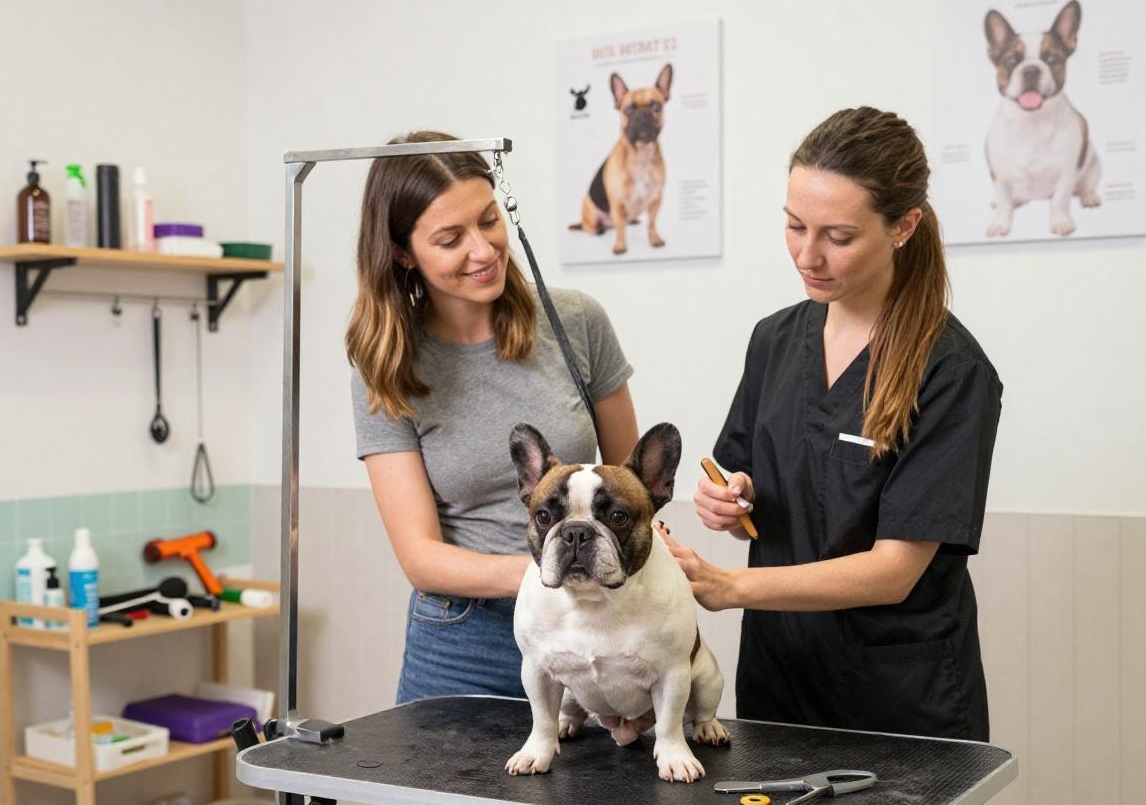
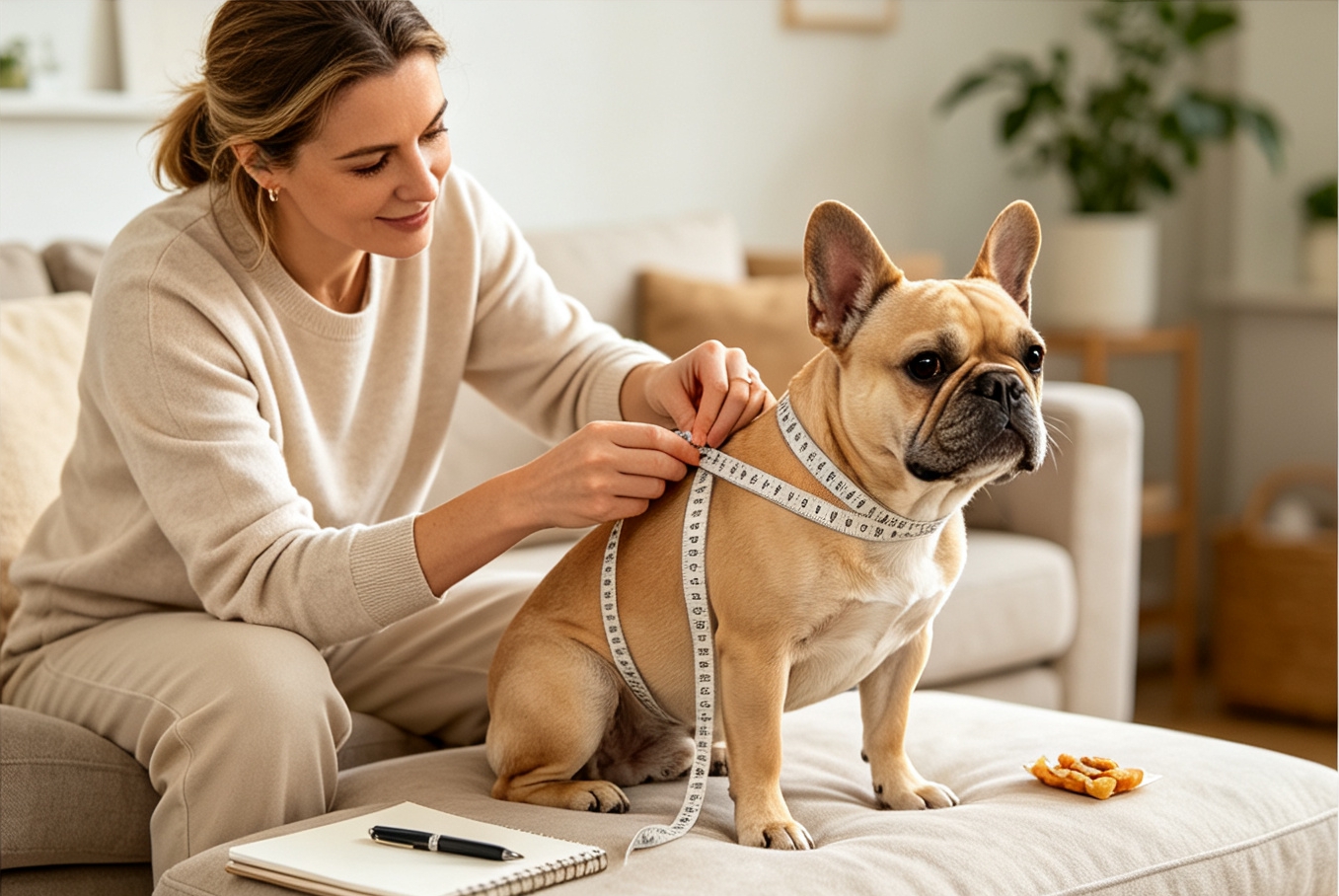
Whenever rain starts pattering outside the window, I look at my own French Bulldog staring eagerly at the door, desperate to head out for an “adventure”. I feel both fond and worried. I love its endless energy and curiosity toward the world, yet I worry about water droplets splattered everywhere and damp little paws after walks in light rain or once the rain stops. Many French Bulldog owners have told me similar frustrations: “Doc, my pup got slightly wet in the rain last time and started sneezing and having a runny nose the next day — what should I do?” This is far from an isolated case. As a veterinarian who has supported countless French Bulldog families for ten years, I know that this seemingly minor “getting wet” issue poses substantial health risks. Today we will go through a scientific post‑rain cleaning routine to build solid health defences for your French Bulldog.
Why Are French Bulldogs Especially Vulnerable to Dampness and Chills?
Before diving into practical steps, we need to understand the root cause. Due to their unique physiology, French Bulldogs are quite vulnerable when exposed to moisture and temperature shifts.
First, their signature short muzzle. Their adorable flat faces (medically known as brachycephalic breed) come with naturally narrowed airways. Their respiratory system is far less efficient at heat dissipation and regulating inhaled air temperature and humidity compared with long‑nosed dogs. After getting wet, evaporation of surface moisture draws large amounts of body heat away. To generate heat and maintain core temperature, their metabolism speeds up and oxygen demand rises, placing extra strain on their already strained respiratory tract. Inhaled cold‑moist air easily irritates respiratory mucosa and triggers inflammation — the onset of colds (upper respiratory tract infection).
Second, their sleek single‑layer short coat. Unlike Golden Retrievers or Huskies, French Bulldogs lack dense water‑repellent undercoat. Hair sits close against skin, offering poor waterproofing and insulation. Rainwater readily soaks straight to the skin, and damp skin creates ideal breeding conditions for bacteria and fungi such as Malassezia, greatly increasing skin‑disease risk. Meanwhile wet fur acts like a water‑soaked garment clinging tightly to the body and accelerating heat loss.
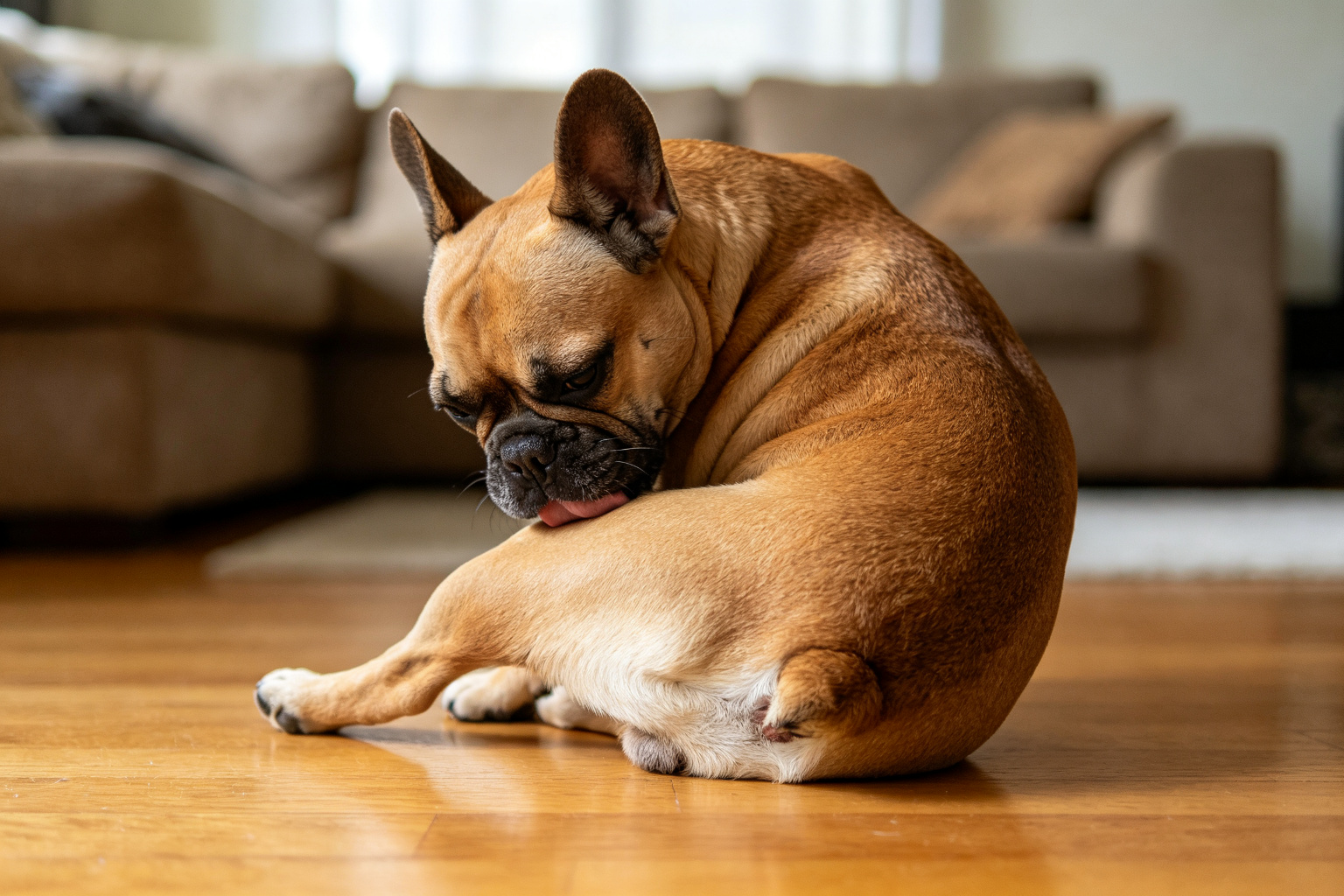
Third, sensitive interdigital areas and skin folds. Though paw pads are thick, toes sit closely together. Rainwater and mud get trapped easily. Without thorough cleaning and drying, pododermatitis is likely to develop. Skin folds around the face and tail base retain pooled moisture, turning red, itchy, infected and smelly under humid warm conditions.
I once treated a French Bulldog named Potato. Its owner simply wiped it with a small towel after a rainy walk. The next day the dog became lethargic and started coughing. Examination confirmed bronchitis requiring antibiotic treatment. The owner deeply regretted not realizing how much harm minor dampness could cause. Cases like this show that a standard, thorough post‑rain cleaning routine is not over‑sanitizing — it is an essential necessity.
5‑Step Professional Cleaning Routine: Keep French Bulldogs Dry and Healthy
Drawing on years of clinical practice plus personal experience owning French Bulldogs, I have summarized a “5‑step entry‑way drying method”. The core goal: quickly remove surface moisture, restore dry skin, pay special attention to high‑risk areas, and provide adequate post‑cleaning warmth.
Step 1: Stop at the doorway and scrape off excess water
Never let a soaking‑wet dog dash straight into the living room and roll on carpets! I keep a dedicated “rain‑day cleaning kit” right by the entrance.
Key actions: Use a professional silicone water‑scraping brush (similar to car window squeegees, available in pet stores). Scrape swiftly from head to tail following hair growth direction. This removes over 70 % of surface water, far more efficiently than towel blotting alone. After testing many approaches, this is the most labour‑saving and effective first step. Move gently and quickly so the dog perceives it as a fun game.
Step 2: “Hug‑style” drying with microfibre towels
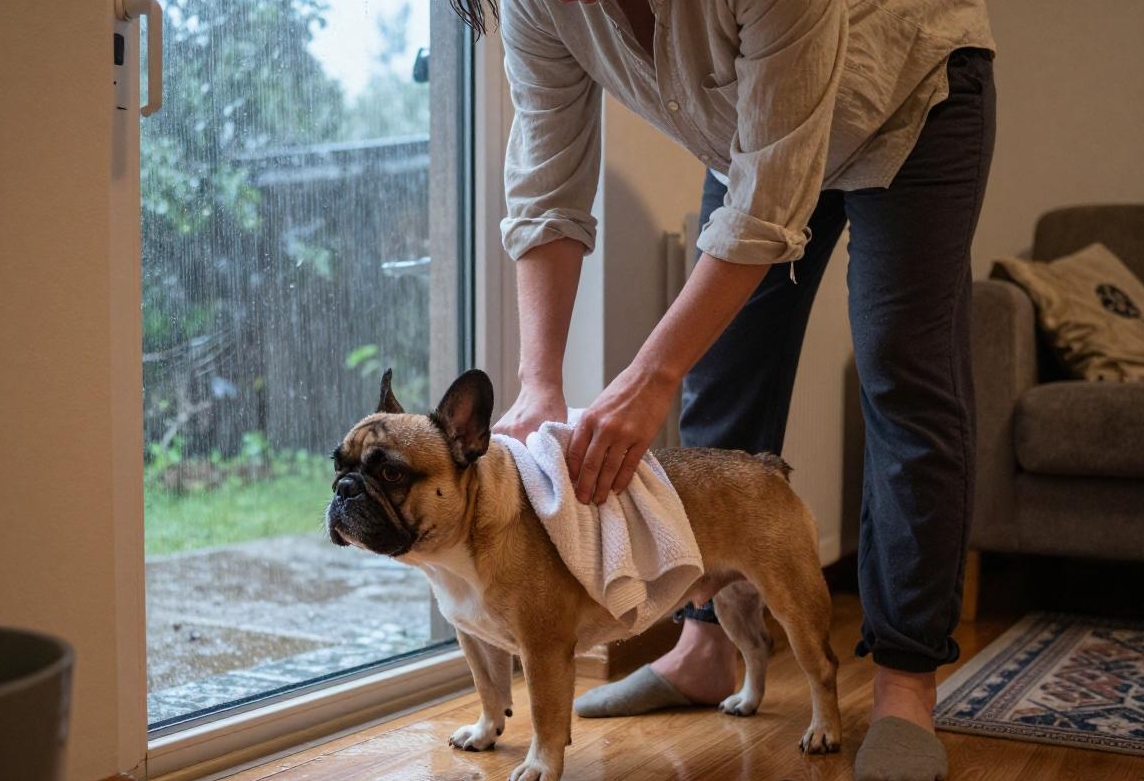
Once standing water is scraped away, towels take over. Ordinary cotton towels have limited water‑absorbing capacity. I highly recommend microfibre chamois towels or sports quick‑dry towels. Their fibre structure soaks up moisture like countless tiny spoons.
Practical tips: Do not rub back‑and‑forth; this damages hair cuticles and stresses your dog. Drape the large towel over the dog like a cape. Press through the towel and wrap along hair growth direction. Press‑blot large surfaces including back, belly and outer legs. Use extra gentle movements on sensitive zones: inner legs, armpits and groin. Prepare multiple towels and swap them once damp.
Step 3: Slow blow‑drying on low heat for full drying
Once towel‑dried to roughly 70‑80 % dryness, a hair‑dryer is mandatory. This is the most critical step for preventing colds and skin disorders.
Mistakes to avoid: Never blast the dog with high heat and high airflow! French Bulldogs have thin skin prone to burns, and loud noise frightens them. My procedure:
1. Use a quiet pet‑specific dryer, or set household hair dryers to low‑warm or cool mode.
2. Keep the nozzle at least 15‑20 centimetres away from the dog’s body at all times.
3. While blowing, lift fur with your hands so airflow reaches skin. Pay special attention behind ears, inner legs and tail‑base skin folds.
4. You may use a pin brush while blow‑drying for faster, fluffier results. Stay patient throughout; treat it as a relaxing massage. I often play soft background music and offer treats as rewards.
Step 4: Detailed care for paws and skin folds
After full body blow‑drying, two hidden areas demand extra attention.
Paw care: Use soft damp cloths or pet wet wipes to carefully clean each paw pad and toe crevice, removing grit and contaminants. Then thoroughly dry every toe gap with dry towels or tissues — no dampness should remain. Lightly dust with pet‑safe cornstarch‑based paw powder for dryness.
Fold cleaning: Use cotton pads dampened with pet ear cleaner or mild skin lotion to gently wipe nasal folds, eye‑corner folds and tail‑base folds. After removing dirt, completely absorb residual moisture from folds using dry cotton swabs or pads to keep them well‑ventilated. This step effectively prevents fold dermatitis.
Step 5: Warming and observation
Once all drying steps finish, do not let your dog lie directly on cold floors or sit in front of air‑conditioning vents. Put a light‑weight pure‑cotton warming shirt (not raincoats, which are non‑breathable) on it, or let it rest for half an hour in a warm blanket‑lined dog bed until body temperature and condition stabilize.
Over the following 24 hours, closely monitor energy levels, appetite, nose moisture, and watch for coughing or sneezing. Provide plenty of fresh lukewarm drinking water.
Common‑Mistake Avoidance Guide: Things You Must Not Do
1. Do not bathe using human‑strength shampoo or soap: Frequent bathing just because of post‑rain dirt strips protective skin oils. If merely wet, the above cleaning workflow is sufficient. If heavily caked in mud, only use mild pet‑formulated shampoo and ensure complete rinsing plus thorough drying.
2. Do not ignore indoor humidity: Rainy days bring high indoor moisture. A dehumidifier helps maintain dry household conditions beneficial for canine skin health.
3. Do not assume raincoats offer full protection: Raincoats mainly block direct rainfall, yet trapped sweat from exercise may build up underneath, and bellies or legs can still get splashed. Always inspect and perform targeted drying after returning home.
4. Do not forget to clean leashes and collars: These items harbour bacteria when damp. Wipe them with disinfectant wet wipes and leave them to air‑dry.
Conclusion
Caring for French Bulldogs calls for extra care and patience. Post‑rain home‑coming cleaning involves far more than a quick wipe‑down. It represents a science‑backed health‑protection workflow tailored to French Bulldogs’ physiological weaknesses. From doorway water scraping, towel press‑blotting, patient low‑temperature blow‑drying, meticulous paw‑and‑fold care, to final warming and observation — every step builds a protective barrier for their delicate respiratory tract and skin. Prevention always beats treatment. Build these steps into your routine. They greatly lower risks of colds and skin conditions, and let rainy‑day outings become safe, happy moments shared between you and your dog.
Important Reminder
This article covers preventive and daily‑care advice. Even after you strictly complete the drying workflow, seek veterinary support promptly if your French Bulldog shows persistent lethargy, reduced appetite, frequent coughing, thick purulent nasal discharge, elevated body temperature (over 39 °C), or skin issues including red spots, papules and intense itching. These may signal active infection. Do not self‑medicate. Contact your trusted vet or visit a professional animal hospital for diagnosis and treatment. Early professional intervention is key for your pet’s speedy recovery.