Hello everyone, I’m your pet‑health consultant. With more than ten years caring for countless dogs and their families, I have noticed one problem troubling nearly every French bulldog owner: after meals, the fur around the chin turns yellow and develops an unpleasant smell. You may find no matter how hard you wipe, stains persist, and the underlying skin may become red and start losing hair. This is not merely a cosmetic nuisance; it poses real risks to your dog’s comfort and health. Today we dive deep into this frustrating “chin problem” for French bulldogs and share practically validated care routines.
Why Are French Bulldog Chins So Prone to Issues?
To fix the problem, you must first understand its causes. Dirty, smelly chins in French bulldogs stem from a combination of anatomy, lifestyle and diet.
First, their distinctive facial structure is the root cause. French bulldogs feature their signature short muzzle, broad chin and stacked adorable skin folds. These folds create natural crevices where food debris, saliva and water easily get trapped during eating and drinking. Stainless‑steel or ceramic bowls perform better; plastic bowls have tiny surface scratches that become ideal bacterial breeding grounds, worsening chin‑related issues after contact.
Second, saliva and food residues act as catalysts. As brachycephalic dogs, French bulldogs eat less neatly than long‑snouted breeds, so food sticks easily around the lips. Their saliva contains amylase and other substances. Mixed with food — especially wet food, meat and nutritional pastes — these substances cling to skin and fur. Without timely removal, they oxidize and ferment, staining fur reddish‑brown or yellow and producing sour, foul odors.
Finally, neglected cleaning leads to skin disease. Skin kept persistently damp and dirty suffers impaired barrier function. Bacteria such as Staphylococcus and fungi including Malassezia multiply rapidly, triggering canine chin pyoderma or fold dermatitis. At this stage you will see more than yellow stains and bad smells: skin becomes swollen, red and itchy, with papules and pustules. Dogs scratch constantly with paws or rub their chin against floors, bringing secondary infections that make treatment far more complicated.
Field‑Tested Experience: Five Steps for a Fresh‑Smelling French Bulldog Chin
The methods below come from my long‑term practice and have proven effective on my own food‑loving French bulldog. He once suffered severe chin problems and now stays consistently clean.
Solution 1: Build the Golden Habit — Wipe Immediately After Meals
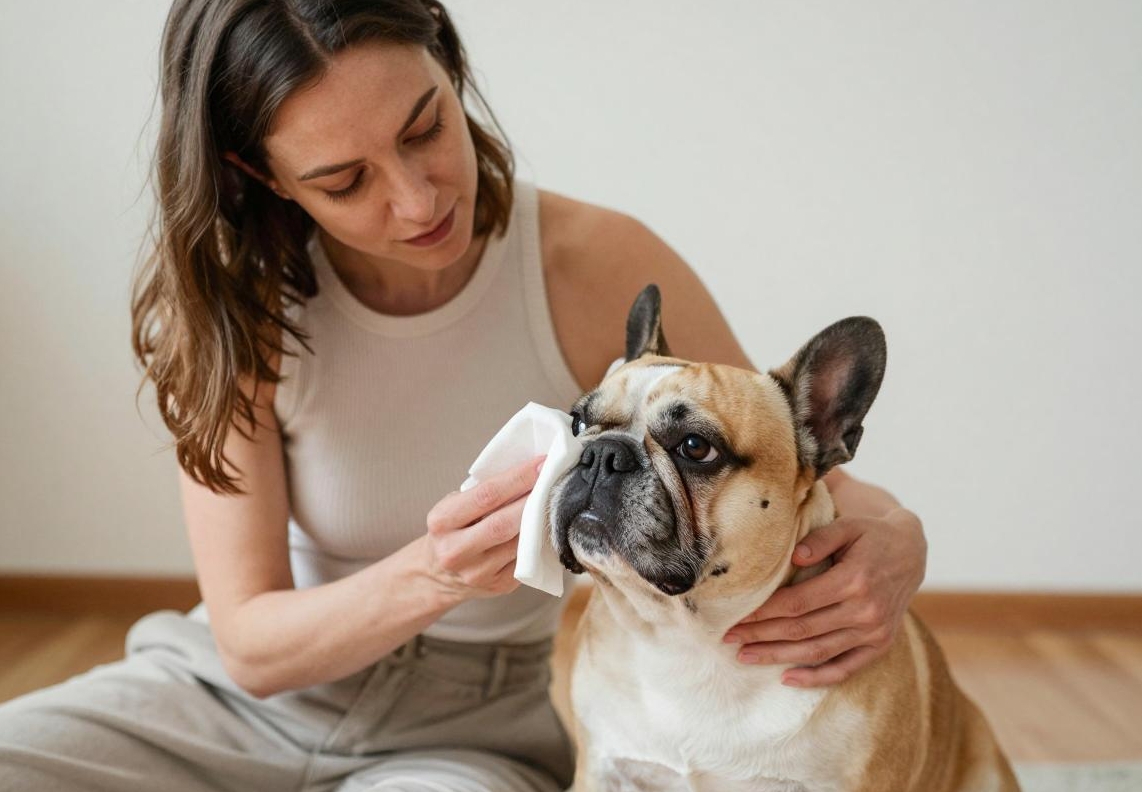
This is the most critical foundational step, focusing on timeliness and gentleness. My advice: keep ultra‑soft fragrance‑free baby cotton wipes and pet‑specific skin‑cleansing liquid (or diluted mild chlorhexidine solution). Never use human facial cleanser or soap; improper pH will damage the skin’s lipid balance.
Procedure: Within ten minutes after every meal, dampen a cotton wipe with cleanser and gently wipe the entire chin, lip perimeter and deep inside skin folds. Pull folds open gently to reach hidden skin. Pat dry thoroughly with a fresh dry cotton wipe. Complete dryness is mandatory! Moisture is the main culprit behind most issues. This single habit solves 80 % of preventive work.
Solution 2: Upgrade Feeding Gear — Reduce Contamination at the Source
Good tools make work easier. I strongly recommend replacing all plastic food and water bowls with stainless‑steel or ceramic models. These materials have smooth dense surfaces, resist scratches, inhibit bacterial adhesion and are easy to sanitize. You may also choose slow‑feed bowls or elevated feeders.
A short personal note: I originally thought slow‑feed bowls only prevented choking. Later I learned elevated bowls stop dogs from lowering their heads too far while eating, greatly reducing how much their face dips into food. After switching to an elevated stainless‑steel bowl, visible food debris on my dog’s chin dropped noticeably.
Solution 3: Adjust Diet — Choose Less‑Messy Food Options
Food texture directly influences how much dirt accumulates on the chin. Oily wet food, meat pastes and thick nutritional supplements consistently worsen chin‑related troubles. My recommendations:
1. Main‑food selection: Prioritize high‑quality dry kibble with moderate‑sized dry‑surface pellets. Low‑fat, skin‑friendly formulas made for brachycephalic breeds such as French bulldogs and pugs are excellent choices.
2. Supplement‑feeding tips: When serving wet food, canned meals or homemade fresh food, mix them with dry kibble or use food‑dispensing toys so your dog eats while playing and reduces direct contact. Always perform Solution 1’s cleaning routine right after feeding thick pastes such as nutritional supplements.
3. Water‑drinking management: Ball‑bearing or hanging water‑drinking devices effectively prevent soaking of chin and chest fur. If you use open bowls, refresh water frequently and keep surrounding areas dry.
Solution 4: Weekly Deep Cleaning & Care
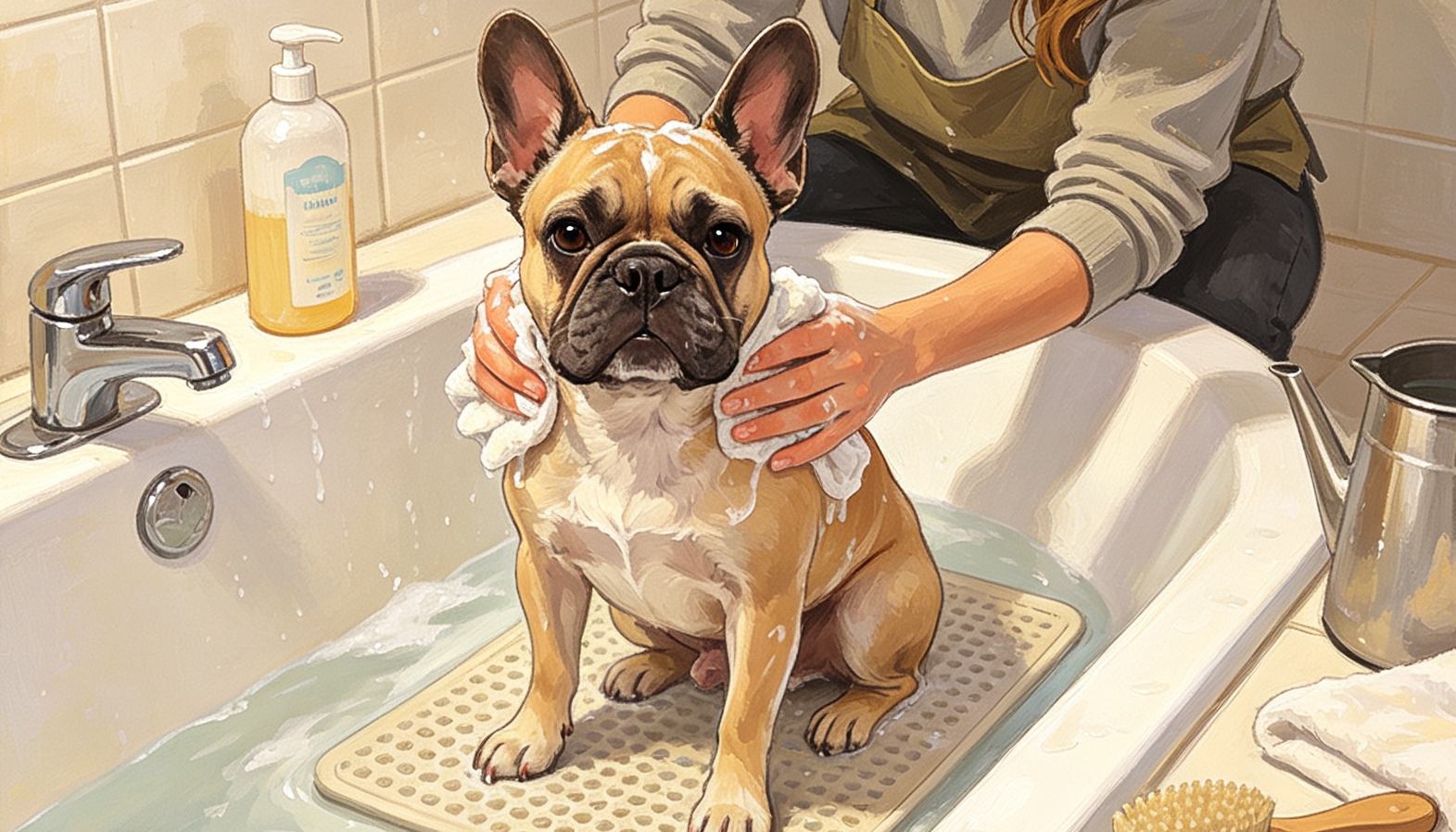
Daily wiping is basic maintenance; schedule one thorough weekly cleaning. During weekend baths, pay extra attention to the chin area. Lather with mild pet shampoo, carefully wash inside every fold and rinse completely. Blow‑dry the chin gently using the dryer’s low‑temperature low‑air‑flow setting until zero moisture remains deep inside folds.
For mildly reddened non‑ulcerated skin, after full cleaning and drying I sometimes apply a thin layer of veterinary‑grade skin‑repair ointment or hypoallergenic moisturizer to strengthen the skin barrier. Important: Do not apply random ointments once infection signs appear; always follow veterinary instructions.
Solution 5: Frequent Replacement & Disinfection — Fight Invisible Enemies
Many owners overlook this point: dog towels, bedding and toys are bacterial hotspots, especially toys dogs rub their chin against. My routine: use disposable cotton wipes for face‑wiping and never reuse them. Wash food and water bowls daily and scald with boiling water. Launder and disinfect towels and bedding weekly. Boil or soak heat‑resistant toys in pet disinfectant regularly. This habit effectively breaks bacterial‑transmission cycles.
Pitfall Guide: Avoid These Common Mistakes
Some well‑intended care practices backfire; watch out for the following:
1. Over‑cleaning or harsh products: Do not scrub many times per day chasing “perfect cleanliness”, and avoid strong irritants such as alcohol or hydrogen peroxide. They destroy normal skin microflora and the sebum layer, leaving skin more fragile and infection‑prone.
2. Only wiping surface skin while ignoring deep folds: This is the most frequent mistake. Gently open every skin fold to remove hidden grime; otherwise cleaning accomplishes nothing.
3. Skipping the drying step: Drying matters more than wiping. Even tiny residual moisture inside closed folds creates perfect bacterial‑growth conditions.
4. Applying human‑formulated medicine to pets: Using ointments such as erythromycin cream on red skin may cause complications due to mismatched treatment or accidental ingestion. Always consult your vet before medicating.
Summary
Maintaining a clean chin for your French bulldog requires patient, attentive long‑term care. Core principles: reduce contamination at source via improved tableware and diet; interrupt fermentation processes with timely gentle cleaning; eliminate bacterial and fungal living conditions through thorough drying. Integrate these five solutions into daily care to build stable habits. You can fundamentally eliminate yellowing and foul odors on your French bulldog’s chin, improve your dog’s comfort and make human‑pet interaction more pleasant.
Important Reminder
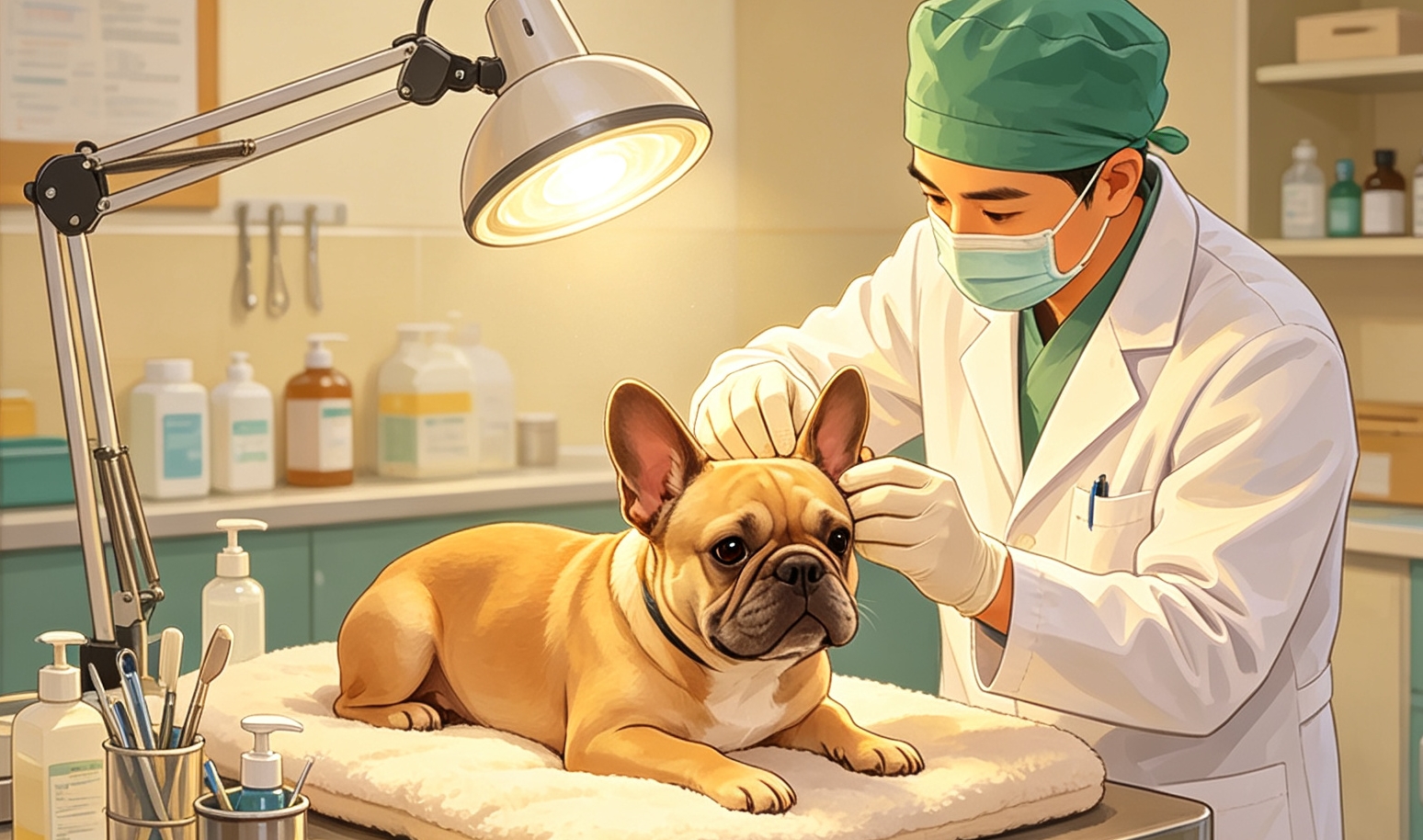
Please note: all guidance in this article covers routine prevention and mild‑case home care. If your French bulldog develops large‑area red swollen skin, ulcers, pus discharge, severe hair loss, or shows obvious intense itching and pain, bacterial or fungal dermatitis is highly likely. Home care may be insufficient and could delay treatment. Visit a formal veterinary clinic promptly for professional diagnosis (skin‑scraping tests may be required) and prescribed medication including antibiotics, antifungals or medicated baths. Combine professional veterinary intervention with scientific home care for the fastest recovery.