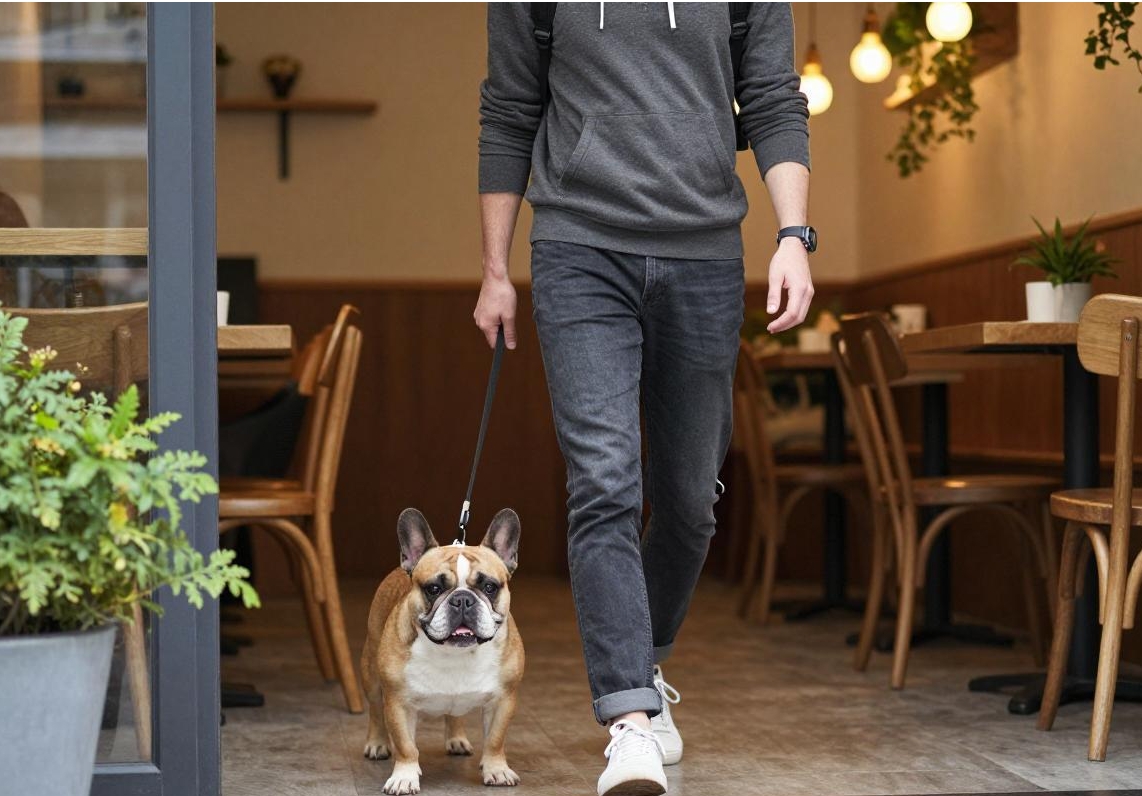
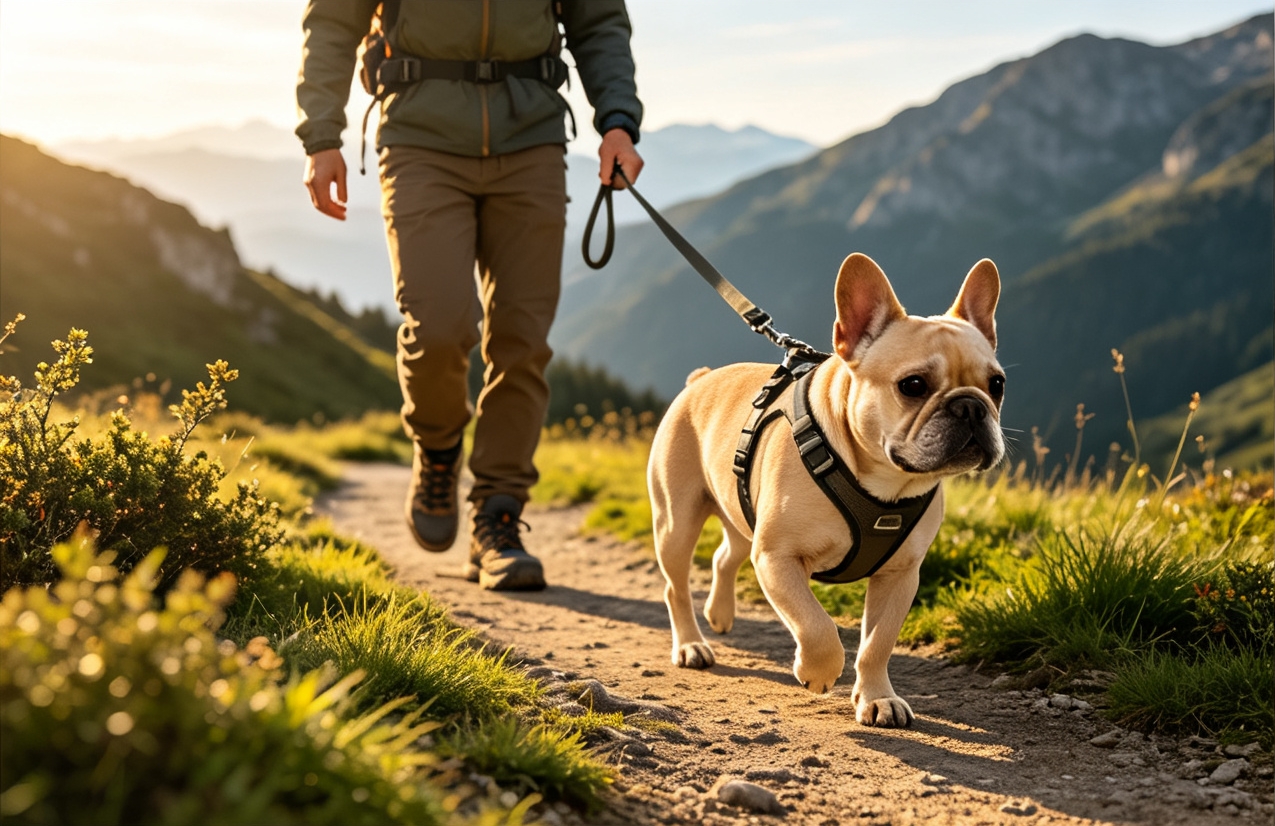
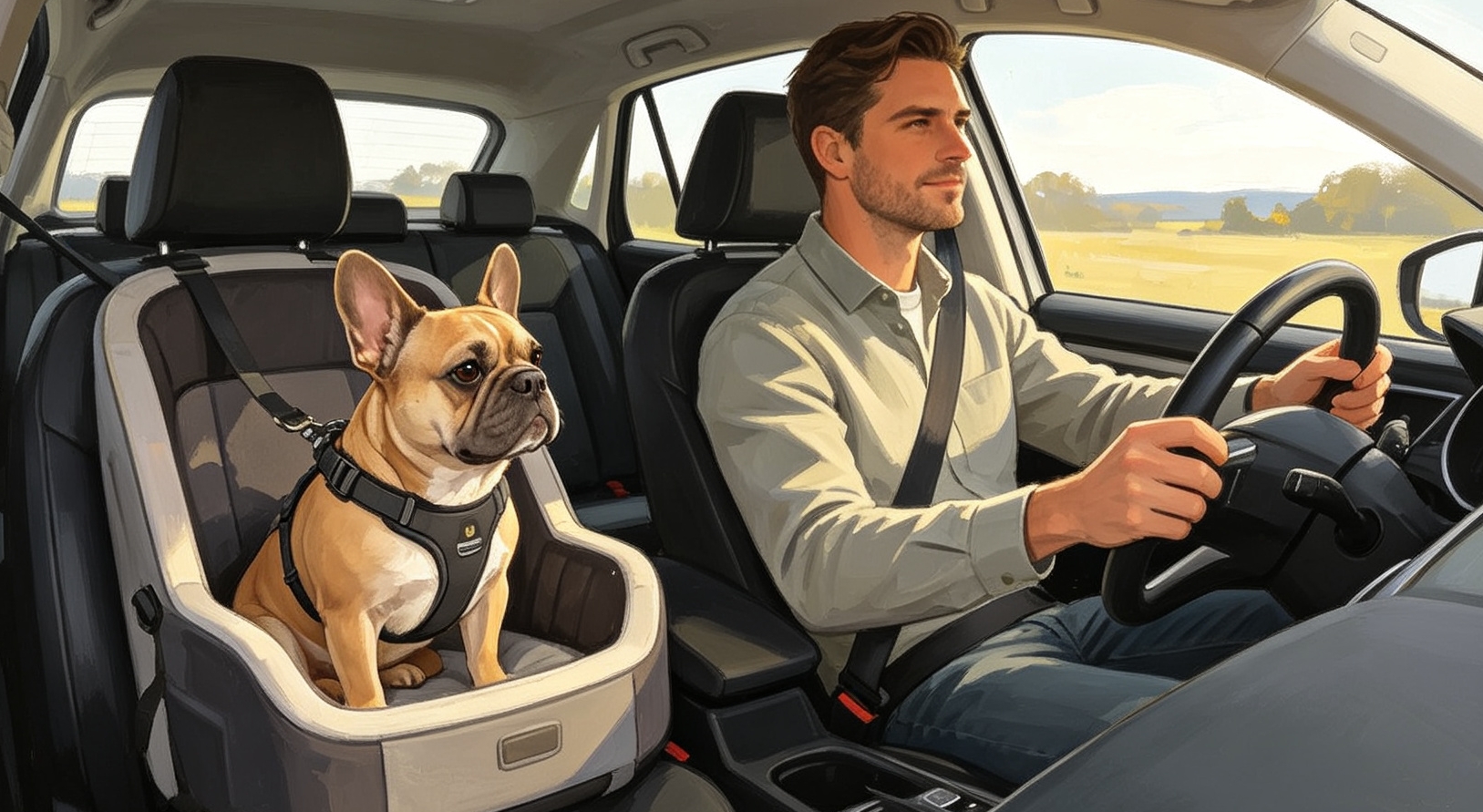
As temperatures drop, foggy days become more frequent. Every time I see the white haze outside the window, I feel concerned, especially for flat‑faced pets like French Bulldogs. Having served countless pet families for ten years, I fully understand what foggy weather means for them — it is far more than a change of scenery, but a potential challenge to their fragile respiratory systems. Today we will discuss how to satisfy French Bulldogs’ curiosity and exercise needs for the outdoors while protecting their health as careful guardians during foggy conditions.
Why Are Foggy Days Especially Hard on French Bulldogs?
To solve the problem, we first need to understand its root cause. French Bulldogs, together with Pugs and Boston Terriers, are brachycephalic (short‑snouted) breeds. Their cute signature appearance comes with physiological challenges known as Brachycephalic Obstructive Airway Syndrome.
They are born with narrow nostrils, elongated soft palates and relatively narrow tracheas. Even under normal circumstances, their respiratory tract resembles a partially blocked narrow path. Fog makes this path even harder to traverse. Fog contains high‑concentration water vapour and suspended particulate matter, raising air humidity and breathing resistance. For French Bulldogs, every breath requires extra effort, which may trigger laboured breathing, wheezing and stress reactions caused by oxygen shortage. Worse still, fog may carry pollutants and allergens such as pollen and mould spores, irritating their sensitive respiratory mucosa and inducing or aggravating inflammation including tracheitis and bronchitis. I have seen many cases where French Bulldogs were brought to clinics coughing severely and lethargic after long, reckless walks in fog, leaving their owners full of regret.
Practical Experience: Five‑Step Safety Plan for Fog‑Day Walks
Based on years of observations and clinical cases, I have summarised proven protection measures. These are not merely theoretical ideas, but practical insights from my work with French Bulldog owners.
Solution 1: Upgrade Gear — Add a “filter screen” for breathing
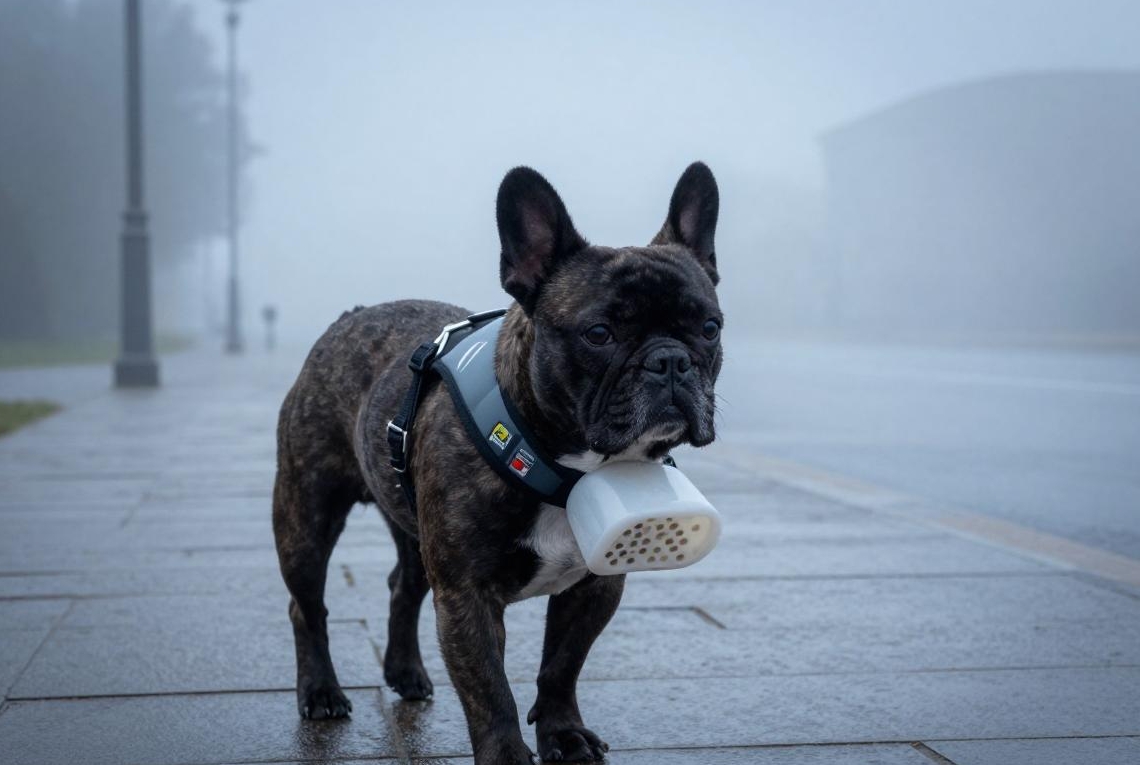
This is the most direct and effective measure. I highly recommend equipping your French Bulldog with a pet‑specific face mask or air‑filter collar designed for brachycephalic dogs. Key point: choose products made specifically for dogs. Ordinary dog masks may not fit the unique facial structure of French Bulldogs, causing pressure or air leakage instead.
I still recall one client who used an ill‑fitting mask for his French Bulldog. Not only did the dog resist wearing it, the edges rubbed and damaged its skin. Later we selected a professional mask with soft silicone inner padding, adjustable head circumference and N95‑grade filter cartridges. You need patient guidance at the beginning: encourage adaptation with treats, starting from a few minutes and gradually extending wearing time. Nowadays, when fog arrives, this French Bulldog will actively move toward its mask, knowing it can go out safely for exploration.
Solution 2: Choose Timing and Routes Wisely to Avoid Pollution Peaks
For fog‑day outings, timing and location matter more than walking duration. Avoid early mornings and late evenings when fog is densest and ground pollutants either linger or accumulate. Check weather forecasts and Air Quality Index (AQI). Pick periods when fog partially clears and air quality improves, for example after 10 a.m. or when fog lifts in the afternoon.
For route planning, remember: stay away from main roads, stick to green belts. Prioritise residential compounds, parks and green zones with light traffic and abundant trees. Trees can absorb certain particulate matter for relatively fresher air. When walking recovering French Bulldogs for my clients, I always plan such “green routes” in advance.
Solution 3: Strictly Control Duration and Exercise Intensity — Follow the “short, quick & calm” principle
Foggy weather is not suitable for endurance training or long walks. Cut walking time to half or less of your usual duration. For instance, if you normally walk for 30 minutes, 15 minutes is enough on foggy days. Reduce exercise intensity to slow, steady strolls; forbid fast running and intense chasing games entirely.
Continuously observe your dog’s condition. If you notice frequent open‑mouthed panting with darker tongue colour, noisy breathing such as intensified snoring, slowed pace, or attempts to sit or lie down refusing to move, stop the walk immediately, carry your dog or let it rest quietly. These are its distress signals.
Solution 4: Thorough Post‑Walk Cleaning Should Not Be Overlooked
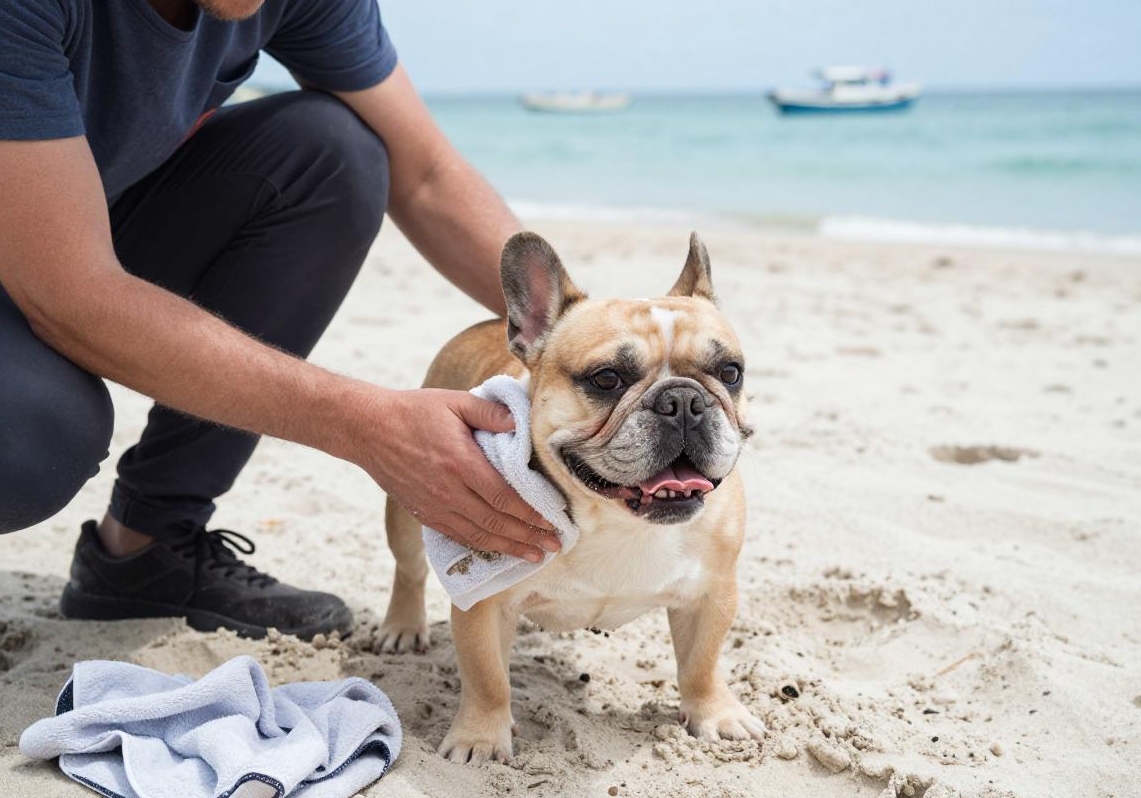
Your work is only half‑finished once you get home. Fog‑borne particles cling to fur, especially on limbs and bellies. My standard routine:
1. Wipe the whole body carefully with soft damp towels or pet‑specific wet wipes, focusing on paws, belly and muzzle area.
2. Gently clean around eyes with mild pet eyewash or saline pads to prevent conjunctivitis triggered by fog irritation.
3. Offer warm drinking water to moisten respiratory tracts and help flush inhaled impurities.
This habit greatly lowers risks of pollutant ingestion through licking and persistent skin irritation.
Solution 5: Strengthen Daily Health Management and Boost Natural Resistance
Good internal condition is the best defence. During high‑smog seasons, daily care can improve French Bulldogs’ respiratory resilience.
- Maintain healthy body weight: Obesity heavily burdens the respiratory system. Keep weight within standard ranges through scientific feeding and exercise.
- Indoor humidification and air purification: Run an air purifier at home. Use a humidifier in dry seasons to keep indoor humidity around 50‑60 %, supporting moist, healthy respiratory mucosa.
- Nutritional support: Under veterinary guidance, supplement nutrients beneficial for respiratory health such as anti‑inflammatory Omega‑3 fatty acids or pet‑formulated respiratory‑support products.
Pitfall‑Avoidance Guide: Steer Clear of These Misconceptions
When protecting French Bulldogs, clarify these widespread misunderstandings:
- Misconception 1: “Fog is just water vapour, so it is clean”: Wrong! Urban fog often mixes with pollutants forming smog, far more harmful than pure mist.
- Misconception 2: “My French Bulldog is fit so it will be fine”: Respiratory structural defects are congenital and unrelated to physical stamina. Even robust French Bulldogs have more vulnerable airways than other dog breeds, so never take risks.
- Misconception 3: “Just stay indoors and skip walks”: Total confinement causes insufficient exercise and psychological depression. We need scientific outings instead of avoiding walks entirely. Indoor brain games and basic training can compensate for reduced outdoor activity.
- Misconception 4: “Use human masks or scarves instead”: Human masks cannot fit dog faces, offering almost zero protection and risking entanglement. Scarves cannot filter particulate matter at all.
Summary
Keeping French Bulldogs safe in fog depends on prepared owners’ careful observation and rational decisions. By understanding their special physiology and adopting the five‑pronged integrated strategy: protective gear, time‑and‑route management, intensity control, post‑return cleaning and daily physical conditioning, you can build solid protection for them. If you love your dog, provide it with the safest and most scientific care.
Important Reminder
All advice above covers preventive and daily‑care practices. If after fog‑day outings your pet develops persistent severe coughing, rapid or laboured breathing with heavy abdominal movement, lethargy, loss of appetite, bluish‑purple gums or tongue (signs of oxygen deprivation), contact your vet immediately or visit a professional animal hospital. Respiratory conditions range from mild to life‑threatening. Timely professional veterinary intervention is your most critical safeguard. Remember: your careful observation and prompt action are the best protection for your dog’s wellbeing.