When I see you walk in carrying your round, wrinkly little French Bulldog puppy, full of joy yet slightly overwhelmed, I’m reminded of countless new pet parents I met when I first became a vet ten years ago. I fully understand how you feel: you want to give this tiny pup the absolute best, yet fear accidental mistakes could harm them. Feeding is often the first and most daunting challenge for new dog owners. Today, drawing on years of professional experience, I’ll walk you through creating a scientific weaning feeding schedule tailored for your French Bulldog puppy.

Why Feeding French Bulldog Puppies Requires Extra Care?
French Bulldogs are beloved for their distinctive looks and gentle personalities, yet they are famously prone to sensitive digestive tracts (“glass stomachs”) and delicate respiratory systems. During puppyhood—especially the critical growth window from weaning (typically 6–8 weeks old) up to 4 months old—their digestive systems are far from fully developed. They have tiny stomach capacity, insufficient digestive enzyme production, and extremely fragile intestinal flora.
I’ve seen countless heartbreaking cases where well-meaning owners fed adult dog kibble, human food (even a small piece of milk or cake), or frequently switched food brands. This triggered severe vomiting, diarrhea, loss of appetite within just one week of the puppy arriving home. Weakened immunity also leaves puppies highly vulnerable to life-threatening illnesses such as Parvovirus and Coronavirus. These painful lessons make it clear: proper early feeding is about far more than filling their bellies—it builds a lifelong foundation of robust immunity and healthy digestion.
3-Stage Scientific Feeding System: From Chaos to Consistent Routine
Below is a practical, field-tested feeding routine refined over years of clinical practice. Remember the two core rules: gradual transition and diet consistency.
Stage 1: Adaptation & Transition Phase (First Week Home)
Goal: Help the puppy adjust to its new environment and avoid gastrointestinal distress caused from stress or abrupt food changes.
Veterinarian Insight: I once rescued a French Bulldog puppy with life-threatening diarrhea after its previous owner fed human baby formula. This case highlighted widespread ignorance about canine lactose intolerance. Your very first step is to ask the breeder or previous owner what exact food the puppy was eating (softened milk puppy gruel or specific puppy kibble).
Step-by-Step Operation:
1. Maintain Original Diet: Request at least 3–5 days’ supply of the puppy’s original food from the breeder. This is the most critical stress reliever for your pup.
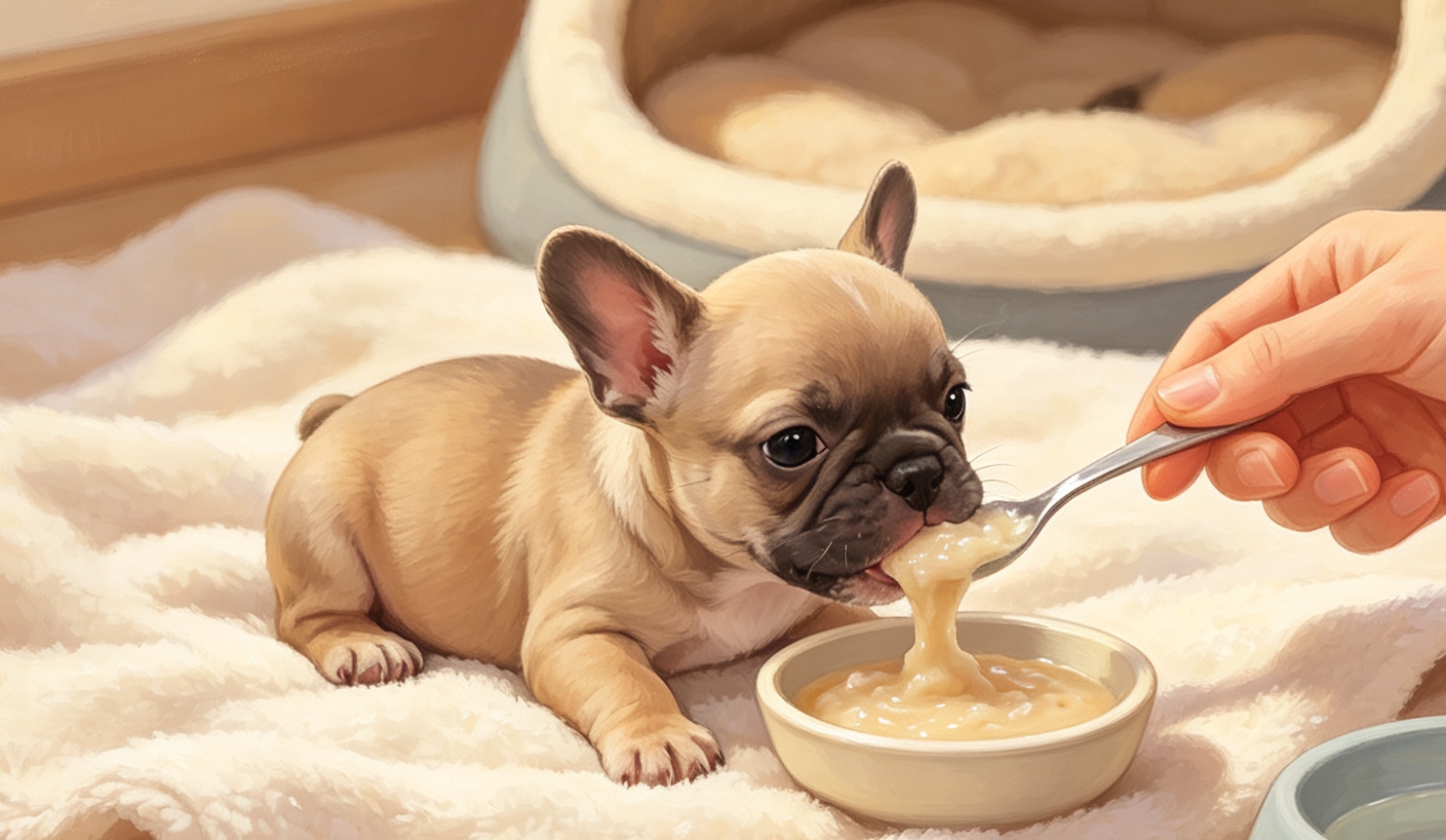
2. Feeding Method: Fully soak kibble with warm water (~40°C) until no hard core remains, forming a thick porridge or paste. Never use boiling hot water—it destroys vital nutrients.
3. Feeding Frequency & Portion Control: Follow the rule of small, frequent meals. Offer 4–5 meals daily. You may reference portion guidelines on the kibble packaging, but physical observation of the puppy’s belly is more reliable. After eating, its abdomen should be slightly rounded, not rock-hard like a balloon. If the puppy licks the bowl frantically after finishing, increase the portion slightly next time; if leftover food remains, reduce the serving size.
4. Water Supply: Provide unlimited clean cooled boiled water. Avoid mineral water or unfiltered tap water.
Stage 2: Food Switch & Stabilization Phase (Week 2 to 1 Month)
Goal: Gradually transition to your chosen high-quality puppy kibble while gut function stays stable, and establish regular bowel habits.
Veterinarian Insight: Many owners rush full food replacement in a single day, triggering loose stools, then hastily switch back—wreaking havoc on the puppy’s gut. The slow 7-Day Food Transition Method delivers reliable long-term results despite its gradual pace.
Step-by-Step Operation:
1. 7-Day Transition Formula: Mix your new kibble (select dedicated puppy food or all-life-stage formulas prioritizing highly digestible proteins like chicken and fish) into the original diet incrementally.
- Days 1–2: 75% old kibble + 25% new kibble
- Days 3–4: 50% old kibble + 50% new kibble
- Days 5–6: 25% old kibble + 75% new kibble
- Day 7: Fully switch to the new kibble.
Continue soaking all food for the entire transition period!
2. Stool Monitoring: Puppy feces act as a health barometer. Healthy stool is firm, moderately soft, yellowish-brown and log-shaped. If stools soften or turn watery, revert to the prior mixing ratio and monitor for an extra day.
3. Fixed Meal Schedule: Gradually consolidate to 4 daily meals served at consistent times. This builds a stable biological clock and simplifies tracking appetite and bowel movements.
Stage 3: Growth & Adjustment Phase (2 Months Old & Older)
Goal: Transition to dry kibble as permanent teeth develop, and add limited high-quality supplementary food when appropriate.
Veterinarian Insight: French Bulldog puppies enter teething phase at 3–4 months old, suffering itchy gums and strong chewing urges. Introducing dry kibble eases teething discomfort and promotes dental health. Closely watch chewing ability at first to prevent whole, unchewed kibble from being swallowed.
Step-by-Step Operation:
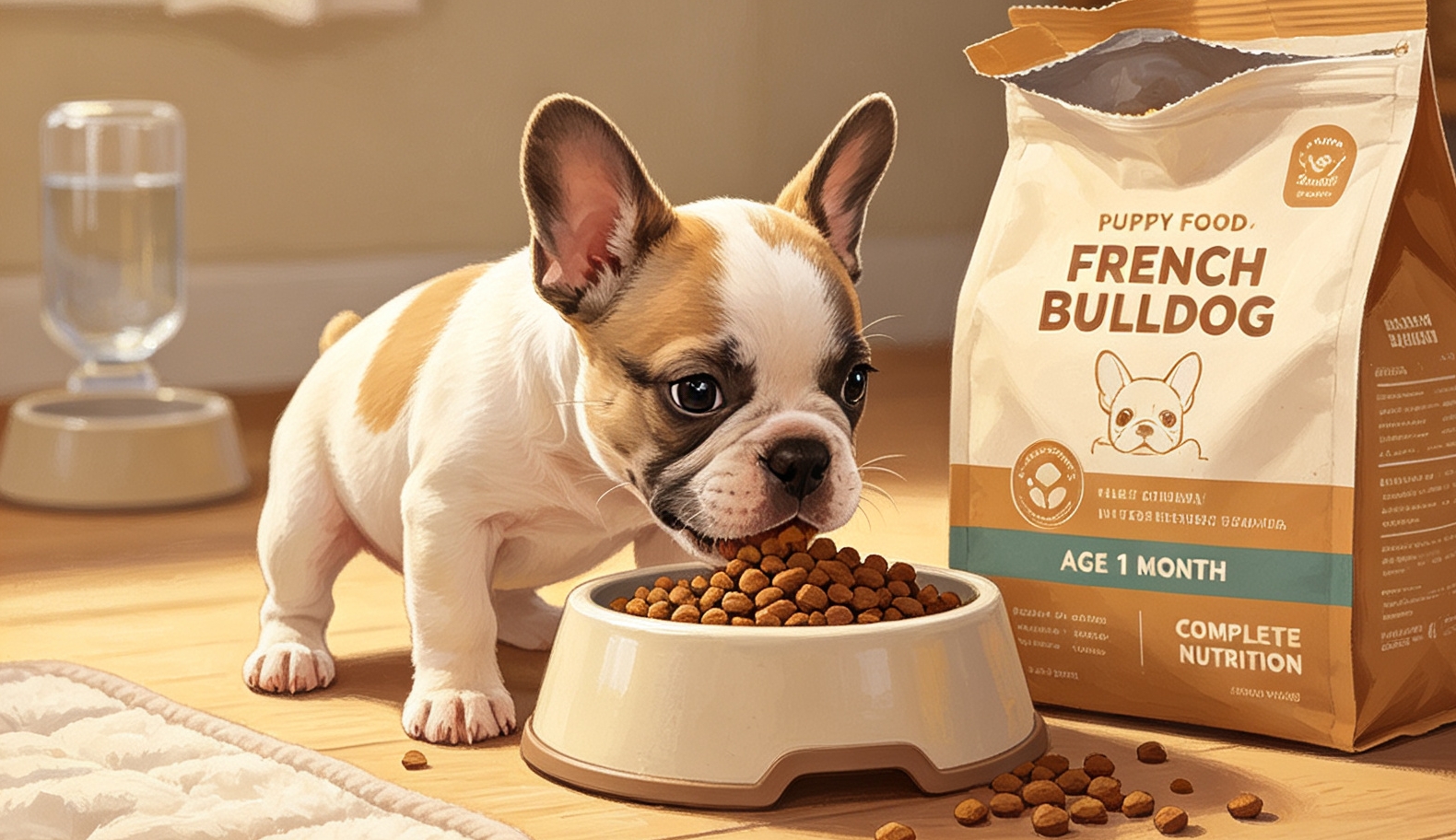
1. Gradual Shift to Dry Kibble: Shorten soaking time step-by-step, e.g., from 30 minutes down to 15 minutes to create kibble soft on the outside and firm inside. Alternatively, mix a handful of fully dry kibble into one meal for trial. Slowly raise the proportion of dry kibble over 1–2 weeks until soaked food is fully replaced.
2. Careful Supplementary Feeding: Once the puppy fully adapts to dry kibble with consistent healthy digestion, add small portions of cooked, oil-free, unsalted supplements 1–2 times weekly as rewards and nutritional boosts: ground chicken breast, mashed pumpkin (excellent for gut health), mashed carrots. Introduce only one new supplement at a time, and limit total supplementary volume to less than 10% of the main meal.
3. Adjust to Three Daily Meals: Reduce feeding frequency to 3 meals per day once puppies reach 4–6 months old.
Mistake Avoidance Checklist: Harmful Habits Masked As Affection
1. Feeding human table food: Strictly forbidden! Human meals contain excessive salt and grease toxic to dogs. Onions, chocolate, grapes, xylitol and more are lethal canine poisons. Bones (especially cooked poultry bones) easily lacerate the esophagus and intestinal tract.
2. Frequent main kibble switches: Do not jump between brands simply because you hear positive reviews. Stick to one well-suited high-quality formula once selected. Constant food changes are a top trigger for chronic gastroenteritis.
3. Overfeeding: French Bulldogs are prone to obesity. Excess calories during puppyhood lead to skeletal developmental disorders such as hip dysplasia and lifelong overweight issues. Follow weight-based portion recommendations and regularly palpate the puppy’s abdomen to gauge fullness.
4. Neglecting fresh water access: As brachycephalic short-nosed dogs, Frenchies pant heavily after activity and require constant clean drinking water. Dehydration causes severe systemic health damage.
5. Disturbing the puppy during meals: Provide a quiet, undisturbed feeding zone. Teasing them beside the bowl triggers food guarding stress and persistent behavioral problems.
Summary: Patience Is The Purest Form Of Love
Raising a French Bulldog puppy is akin to caring for an infant. Unable to speak, they signal all discomfort and needs through appetite, energy levels and stool quality. Practice extreme patience and abide by the golden rules: gradual transitions, small frequent meals, and unchanging diet consistency. There is irreplaceable joy in watching your unsteady, fragile pup grow into an energetic, robust companion. The healthy eating habits you establish now will benefit them for their entire lifespan.
Important Reminder
This guide covers general scientific feeding advice, and every puppy has unique individual physical differences. Immediately discontinue home feeding adjustments and contact your veterinarian or a reputable animal hospital if your French Bulldog puppy displays any of the following symptoms:
- Complete refusal of food and water lasting 24+ hours
- Frequent vomiting (more than 3 times daily), or vomit containing blood/foreign material
- Severe watery diarrhea, or stool mixed with blood/mucus
- Extreme lethargy, excessive sleepiness, minimal response to stimulation
- Abnormally distended abdomen, obvious pain when touched
Puppy medical conditions progress rapidly; timely professional veterinary intervention can save their lives. Wishing you and your French Bulldog puppy a long, happy, healthy life together!