Hi, I’m Leo, a dog behaviour trainer with over ten years of hands‑on experience. I encounter countless dog‑behaviour issues every day, and mealtime‑related frustrations consistently rank among the top three. This is especially true for high‑energy, somewhat stubborn French bulldogs. At feeding time they turn into little whirlwinds: scratching bowls, circling, barking and even jumping up at owners. Today we dive into pre‑meal wait training to turn your food‑obsessed French bulldog into a patient, well‑mannered companion at dinnertime.
1. Why Is Your French Bulldog Acting Chaotic At Mealtime?
Before starting training we need to understand what drives this behaviour. Impatient eating is far more than simple greed. Based on hundreds of real‑world cases I have handled, these are the core contributing factors:
1. Instinctive drives: In the wild food is scarce. Eating fast and competing for resources is built‑in survival programming. Though domestic French bulldogs have reliable access to food, this genetic sense of urgency remains.
2. Over‑high resource value: If eating and walks are the only major highlights in your dog’s otherwise dull daily routine, food becomes the most valuable reward of the whole day, triggering intense excitement and urgency.
3. Reinforced past experience: Many owners set the bowl down quickly to stop scratching and barking or out of fear the dog will go hungry. This unintentionally rewards impatience and teaches the dog: “Make a fuss and you get food”. I have seen many clients fall into this pit early in their training journey.
4. Emotion and stress: Impatience around food can mask underlying anxiety. This may stem from resource insecurity (common in multi‑pet households) or pent‑up boredom that erupts when mealtime arrives.
I recall a French bulldog named Tank owned by a young office worker. At every feeding Tank would act frantic: clattering the stainless‑steel bowl with his paws, spinning in circles, and leaping toward the feeding spoon. The owner tried scolding and waiting for calm behaviour, yet repeatedly gave up from exhaustion. By the time he contacted me, he was close to giving up hand‑feeding entirely. My assessment showed Tank’s problems stemmed from over‑valuing food and inadvertently reinforced bad habits. Left alone for long hours each day, his main joys were waiting for his owner to return for meals and short walks. Food became his entire emotional outlet.
2. Build Polite Mealtime Rituals — 5 Core Practical Solutions
The key to fixing impatient mealtime behaviour is establishing a clear, stable, owner‑led feeding routine. These five techniques draw on behavioural science and extensive real‑world practice. Work through them sequentially and stay patient.
Solution 1: Rewire associations with food preparation
Many dogs grow excited the moment you pick up the kibble bag or food bowl. Our goal is to break the old mental link: “owner prepares food = eat immediately”.
My practical method: Prepare food slowly in full view of your dog — portion kibble, add water, stir. Stay completely calm; avoid eye contact or talking to your dog throughout the process. If he grows excited (pawing your legs, barking), freeze completely like a statue. Keep holding the bowl or spoon but do not move, and look away. The instant he pauses or steps back, even for half a second, say “Good” in a calm tone and resume preparation. If excitement resumes, freeze again. Repetition is required; initial sessions may last more than ten minutes. This is the foundation for setting household rules. For Tank we spent three days, two sessions daily, helping him learn: hyperactivity delays his meal.
Solution 2: Introduce the “Stay” cue before serving food
Once food is ready, do not set the bowl down right away. Give your dog a clear wait cue.
My practical method: I prefer using the cue “Stay”. Hold the bowl and stand facing your dog, deliver the calm, distinct verbal cue “Stay”. He will fail at first. Physically block forward lunges or lift the bowl higher whenever he surges forward. Reward for even 0.5 seconds of stillness: say “Good!” and place the bowl gently on the floor. Lower it slowly and steadily instead of dropping it. Gradually extend stay duration from 1 second to 3, 5, then 10 seconds as training progresses. This exercise builds self‑control.
Solution 3: Use a dedicated release cue for “you may eat”
After setting the bowl down, do not let him dart in automatically. You must give a release signal such as “OK” or “Eat”. This reinforces the understanding that food belongs to you and eating happens only with your permission.
My real‑world case: I worked with a French bulldog showing early resource‑guarding tendencies; he would growl when people approached his full bowl. I heavily reinforced the release cue. I set the bowl down, covered it with my hand (wear gloves or practise with an empty bowl for safety in early stages), and asked for “Stay”. I removed my hand and said “Eat”. If he moved before hearing the release word, I covered the bowl again. This made it unambiguous: permission to eat comes from me. After roughly one week, this dog stayed calm before meals and displayed far less guarding behaviour, because he no longer felt he needed to defend food — he trusted it would come from me.
Solution 4: Lower food value and enrich daily rewards
Extreme fixation on kibble signals an under‑stimulated life. We reduce the special status of main meals while boosting value from other daily experiences.
My practical approach: I recommend setting aside 10‑20 % of your dog’s daily kibble portion. Do not pour all of it into his bowl at mealtime. Stow this portion in a treat pouch or scatter it around your home. Offer one or two kibbles randomly throughout the day as rewards: when he lies calmly, glances toward you, or completes simple cues like sit. Add interactive play, sniffing mats and puzzle feeders to make obtaining food fun and mentally engaging. When kibble appears at unexpected moments instead of only twice‑daily feasts, obsession over main meals fades significantly. For Tank I added 15‑minute daily sniff games plus two short training sessions rewarded with kibble. Within one week his pre‑meal anxiety dropped noticeably.
Solution 5: Environmental management and tool support
In early‑stage training, smart setup and equipment make progress much easier.
Trainer tips:1. Fixed feeding spot: Choose a quiet corner for meals. Avoid high‑traffic hallways or entryways. 2. Non‑slip slow‑feed bowl: Slow‑feed bowls physically slow rapid eating for fast‑eating French bulldogs, aiding digestion while lowering impulsive excitement. 3. Leash assistance: Attach a leash during “Stay” and wait practice to safely moderate lunging behaviour. Remove the leash gradually once performance becomes reliable.
3. Pitfall‑Avoidance Guide: Avoid These Common Mistakes
Certain missteps can undo all your training progress:
1. Emotional reactions: Do not shout or grow frustrated by impatience. Your heightened energy will agitate your dog further. Remain calm, steady and unshakable.
2. Inconsistent standards: Requiring a 10‑second wait one day then serving food immediately on a good‑mood day creates confusion. Every household member must follow identical feeding protocols.
3. Jumping to high‑difficulty work too soon: Do not demand long waits while your dog is over‑aroused. Reward tiny moments of calm and build step‑by‑step.
4. Punishing failures: If your dog lunges forward, never yell or scold. Simply remove the food calmly and revert to the previous training step. Punishment creates fear and uncertainty.
5. Ignoring daily energy expenditure: An under‑exercised French bulldog cannot stay calm for meals. Ensure adequate physical exercise (walks, play) and mental enrichment (training, sniff work). This underpins all behaviour modification.
4. Summary: Patience Is Your Only Shortcut To Success
Changing deeply ingrained instinct‑driven habits will not happen overnight. It took a full month to transform Tank from a frantic mealtime dog into a gentleman calmly holding stay for 30 seconds. This process tests the owner’s patience, persistence and consistency just as much as the dog.
Remember: pre‑meal wait training delivers benefits far beyond tidy dinner scenes. It builds clear communication between you and your dog, establishes fair resource‑sharing leadership, and teaches a vital life skill: self‑control. The patience learned at the food bowl transfers over to other real‑life situations and helps shape a more emotionally stable, easy‑going companion dog.
Important Reminder
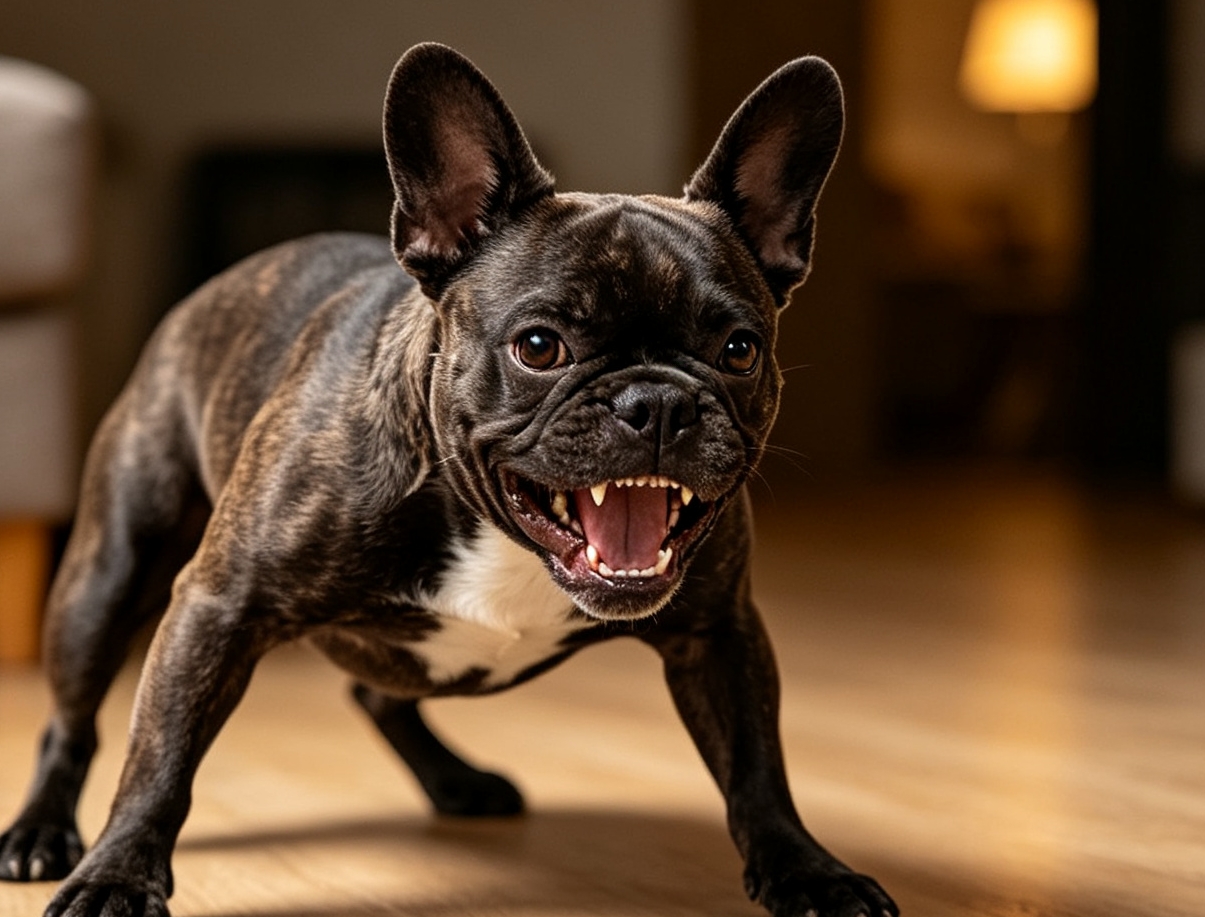
The methods above work for most excitement‑ or habit‑driven pre‑meal impatience. However, if your French bulldog shows severe resource‑guarding such as snarling, growling or snapping, extreme anxiety (shaking, heavy drooling, refusal to eat), or sudden dramatic behavioural shifts around food, underlying medical or psychological problems may exist. Promptly consult a licensed veterinarian or certified animal behaviourist for full assessment. Rule out conditions including thyroid disorders and physical pain, and follow professional guidance for intervention. Safety always comes first.