Dear French bulldog parents. Nothing beats the joy of watching your French bulldog trot happily home from outdoors, wagging its signature short tail with its goofy‑sweet facial expression. Yet as a veterinarian and dog trainer with ten‑year experience, I have witnessed countless health problems triggered by incomplete post‑walk cleaning. These range from stubborn pododermatitis, fungal skin infections, harmful chemical residues ingested through licking, to unwelcome parasites such as fleas and ticks hitching a ride indoors. Today I would like to walk you through a simple yet effective five‑step cleaning routine to build a solid health barrier for your French bulldog and keep every homecoming safe.
Why Do French Bulldogs Require Special Post‑Walk Cleaning?
French bulldogs are beloved for their distinctive appearance and affectionate temperament, yet they also demand special grooming attention. Numerous skin folds trap dirt easily; their short muzzles come with sensitive respiratory tracts vulnerable to dust and chemical fumes; their limb structure lets debris build up between paw toes. Urban ground surfaces are far more contaminated than most owners realize: animal waste, oil mixed with vehicle exhaust and road dust, pesticide residues from green belts, public‑area disinfectants, plus invisible bacteria, viruses and parasite eggs. French bulldogs walk close to the ground and love sniffing everything, so dirt and pathogens readily cling to their paws, bellies, muzzles and fur. Simply wiping paws with a damp towel leaves many hidden risks unaddressed. I once treated a French bulldog named Potato as a typical example. Its owner assumed its short legs kept its belly fairly clean and only wiped its paws after walks. Following several consecutive rainy days, Potato developed widespread red rashes and foul odor across its groin and armpits, diagnosed as mixed fungal‑bacterial infection that took nearly one month to treat. This case illustrates how critical systematic cleaning truly is.
5‑Step Post‑Walk Cleaning Routine (Field‑Tested Detailed Workflow)
The following routine draws from my clinical practice and personal dog‑raising experience. It requires simple tools, follows clear procedures, and only takes roughly 10 minutes per day for long‑term health benefits.
Step 1: Stop Contamination At The Door — Build A Fixed Routine
Never let your dog run freely all over the house immediately after entering. Prepare a dedicated absorbent floor mat or old towel by the entrance. I keep a small basket hanging behind the door storing all cleaning supplies. When arriving home, speak to your dog in a calm cheerful tone: “Let’s get clean before going inside.” Keep it on leash and restrict it to the mat area. This ritual helps the dog understand cleaning must happen before full entry. Treat‑based encouragement and patience may be needed at first; once the habit forms, your dog will cooperate readily.
Step 2: Deep Paw Cleaning (The Most Critical Step)
Paw care sits at the core of post‑walk grooming. I do not recommend quick casual swipes with wet wipes.
My practical procedure:
1. Initial Debris Removal: Use a soft‑bristle brush (I use a baby bottle brush with fine dense bristles) to gently brush coarse sand, soil and grass fragments off paws and between toes. This prevents grit from abrading skin during subsequent wet‑wiping.
2. Foam‑Based Washing: Apply pet‑specific no‑rinse paw‑cleaning foam. After testing multiple methods, I find this the most convenient and effective option. Dispense adequate foam onto your palm, then carefully massage every paw, paying special attention to toe gaps and paw‑pad crevices. French bulldogs have tight toe spaces where moisture fosters bacterial growth (pododermatitis), so thorough massaging here is mandatory.
3. Drying & Inspection: Fully dry paws and toe gaps using microfiber pet‑paw wipes or soft dry towels until skin feels completely dry. Use this moment to check for paw‑pad cuts, overgrown nails, redness or abnormalities. Once I found a small stone wedged tightly between a French bulldog’s toes; without careful cleaning it would quickly trigger inflammation.
Step 3: Targeted Body Wiping
Focus on high‑soiling body zones for French bulldogs:
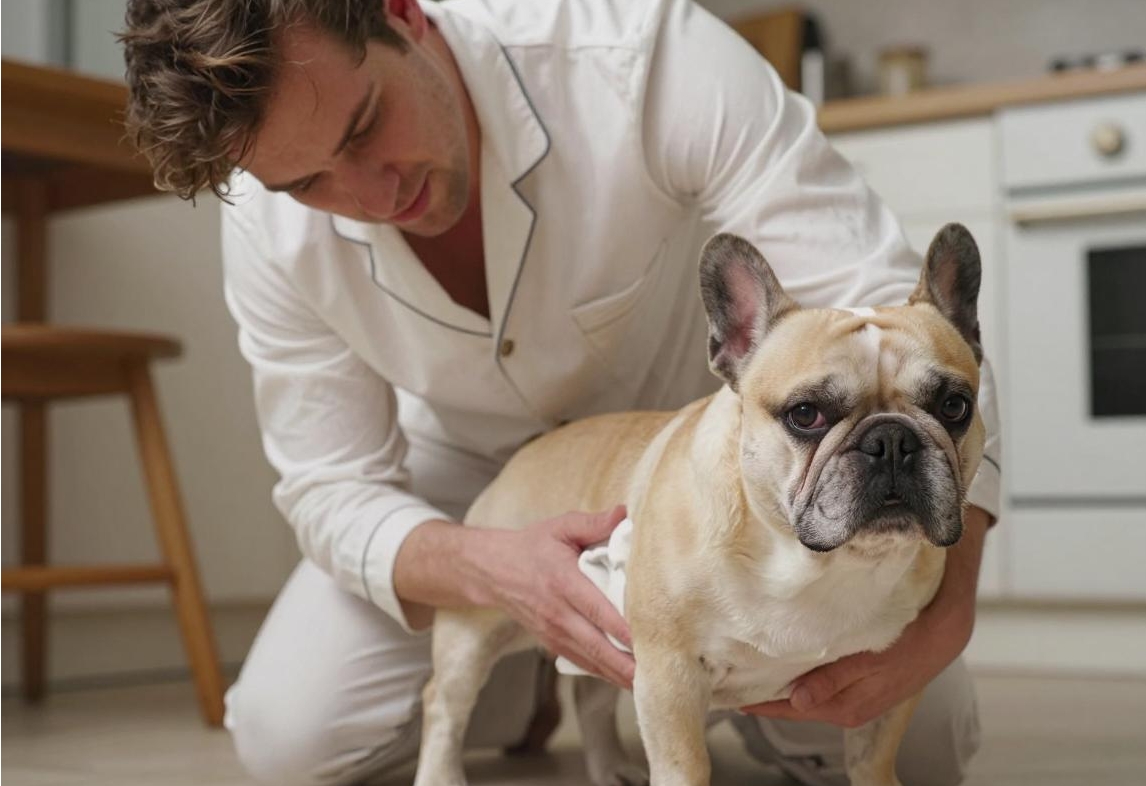
‑ Belly & inner legs: These areas sit close to the ground and pick up dust and rainwater. Wipe with a well‑wrung warm towel (not scalding hot) or alcohol‑free, fragrance‑free pet wipes.
‑ Facial skin folds: Facial folds are high‑risk zones for French bulldogs. Gently pull folds open with soft cotton pads or wipe corners, carefully remove trapped dirt and sweat. Keep movements gentle. Always blot moisture away with dry cotton pads afterward to maintain dry folds — this is key for preventing facial dermatitis.
‑ Muzzle & hindquarters: Lightly wipe off saliva, food residues or waste marks picked up outdoors.
Step 4: Brushing & Full‑Body Check‑Up
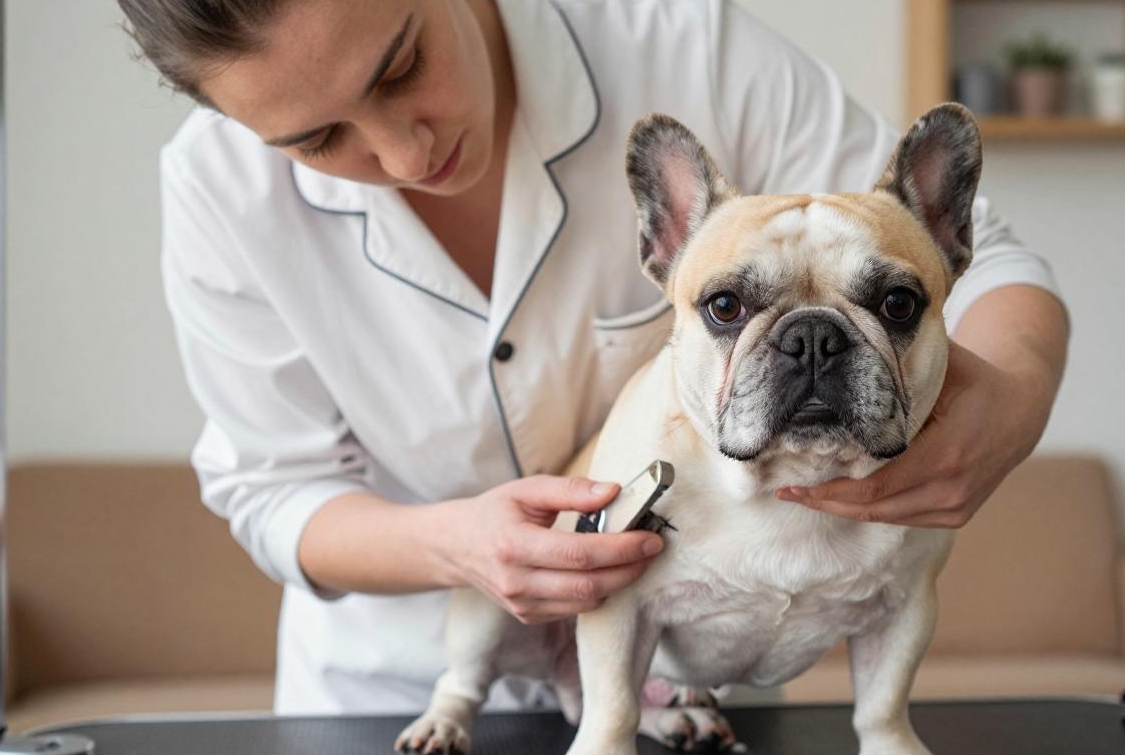
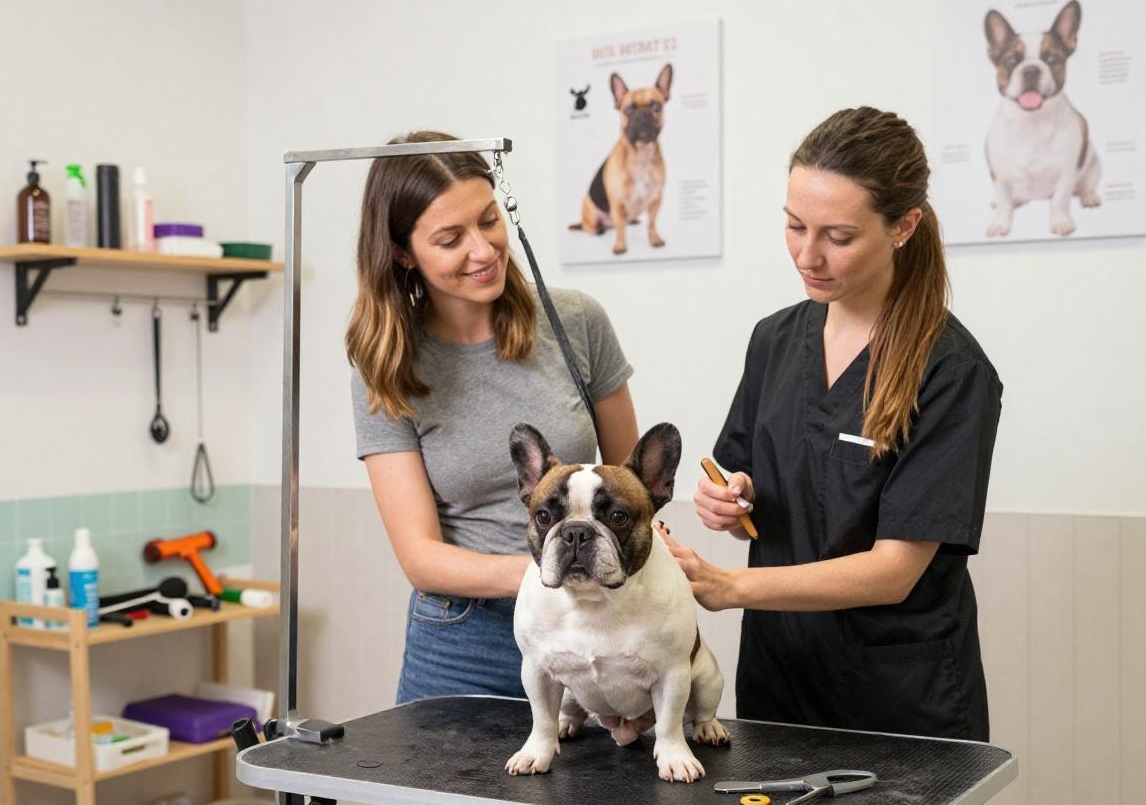
Never underestimate brushing. Use a fine‑tooth comb or pin brush and brush gently along hair‑growth direction. This removes surface dust and loose fur, and doubles as a hands‑on physical examination. While brushing, your hands and comb detect abnormal lumps or scabs on skin, and help you spot fleas and ticks, especially behind ears, around the neck and within the groin. My personal habit is brushing while running my hands over the dog’s whole body. On one occasion I felt a grain‑sized bump on the back of the neck, discovered it was a tick, removed it vertically with tweezers and disinfected the spot, avoiding parasitic‑disease risks.
Step 5: Mild Disinfection & Partial Isolation (Optional, Situation‑Dependent)
Perform mild disinfection under special circumstances: during infectious‑disease outbreaks, after vet‑clinic visits or dog‑park gatherings.
Important Note: Never spray human‑grade strong disinfectants such as bleach or Dettol directly onto dogs or living areas. Their respiratory tracts and skin cannot tolerate such products.
My approach:
1. Use diluted pet‑safe environmental disinfectant (usually quaternary‑ammonium‑based for relative safety). Spray onto the entrance mat and the cleaning zone where the dog stood, allow brief contact time then wipe dry.
2. If extra caution is needed, apply pet‑specific coat‑sanitizing conditioning spray. Hold 20 cm away from fur, mist lightly, then comb through evenly. This is not required for daily use; over‑application may disrupt healthy skin microflora.
3. After finishing all steps, thoroughly wash your own hands with soap or hand sanitizer.
Mistake‑Avoidance Guide: Avoid These Common Errors
1. Ignoring toe‑gap drying: Moisture is the root of many skin ailments. Wiping paws without thorough drying renders the whole process useless. Ensure toe spaces are fully dry.
2. Using human wet wipes or disinfecting products: Alcohol, fragrances and certain sanitizing ingredients in human‑formulated items irritate canine skin and may cause gastrointestinal upset if licked.
3. Over‑cleaning: Washing paws with shampoo daily or bathing too frequently strips protective skin oils, leading to dryness, itching and skin damage. Our goal is to remove dirt, not natural sebum.
4. Only cleaning visible areas: Skin folds, behind ears and the groin are prime bacterial‑breeding sites often overlooked.
5. Skipping regular parasite prevention: Surface cleaning cannot replace monthly external parasite prevention, which is fundamental for flea and tick control.
Summary
Post‑walk cleaning for French bulldogs may look tedious, yet it is a loving investment in their health. These five steps — door‑step containment, paw cleansing, targeted body wiping, brushing & inspection, mild disinfection & isolation — form a complete protective workflow. It reduces germs and dirt brought indoors, prevents skin and general‑health issues, and creates quality bonding time between you and your dog. With daily consistency you will grow more attuned to physical changes in your dog, and your dog will build greater trust and attachment toward you. Remember: prevention beats treatment.
Important Reminder
The home‑cleaning guidance shared here applies to routine wellness care. Seek prompt veterinary attention if your French bulldog shows any of the following signs: persistent skin redness, papules, skin ulcers or heavy hair loss; frequent licking or chewing of limbs; swollen, oozing toe gaps; lethargy, loss of appetite; or heavy parasite infestation within fur. Such symptoms exceed the scope of home care. Stop self‑treatment and visit a professional animal hospital for accurate diagnosis and veterinary treatment. To love your dog is to provide science‑backed, thoughtful care.