Hello everyone, I am Old Chen, a veterinarian with over ten‑year experience in pet medicine and nutrition. Among the many patients I have treated over the years are lovely French Bulldogs. They are cute and affectionate, yet famously possess sensitive digestive systems. Today we will skip complex diseases and focus on daily feeding: how proper steaming of fruit‑and‑vegetable supplements protects their fragile digestion so they eat happily and you gain peace of mind.
Why Does My French Bulldog Keep Farting? — Understanding the Problem
Many French Bulldog owners know this scenario: shortly after eating, the dog’s stomach rumbles followed by embarrassing, distressing flatulence. Severe cases bring abdominal pain, reluctance to move and loss of appetite. Loose stools and diarrhoea may also occur. Besides air swallowing caused by their brachycephalic skull and special oesophageal structure, improper feeding — especially poorly prepared supplementary food — is one major trigger for bloating and indigestion. Many owners understand fruit and vegetables benefit dogs, yet serving them raw, cutting overly large chunks or over‑cooking can backfire despite good intentions.
Scientific Background for Sensitive Digestive Tracts — Root‑Cause Analysis
French Bulldogs have relatively simple digestive systems with short intestines and limited capacity to break down coarse fibre. Raw fruit and vegetables contain anti‑nutritional factors such as certain protease inhibitors plus hard‑to‑digest cellulose, greatly increasing gastrointestinal burden when fed raw. Steaming works as ideal pre‑processing:
1. Softens fibre: Heat softens tough plant cell walls and partially breaks down large‑molecule cellulose, making them easier for gut flora to metabolise while reducing physical irritation.
2. Boosts safety: Steaming effectively kills surface parasite eggs and harmful bacteria, particularly important for French Bulldogs who like sniffing the ground and do not always have robust immunity.
3. Improves nutrient absorption: Heat releases nutrients such as beta‑carotene from plant cells for higher bioavailability.
4. Critical timing control: Getting steaming duration right matters greatly. Undercooking leaves fibres tough; over‑steaming leaches large amounts of water‑soluble vitamins including B and C, and produces overly mushy food that fails to support intestinal motility or dental cleaning.
Ten‑Year Practical Summary: Steaming Recipes for Specific Ingredients
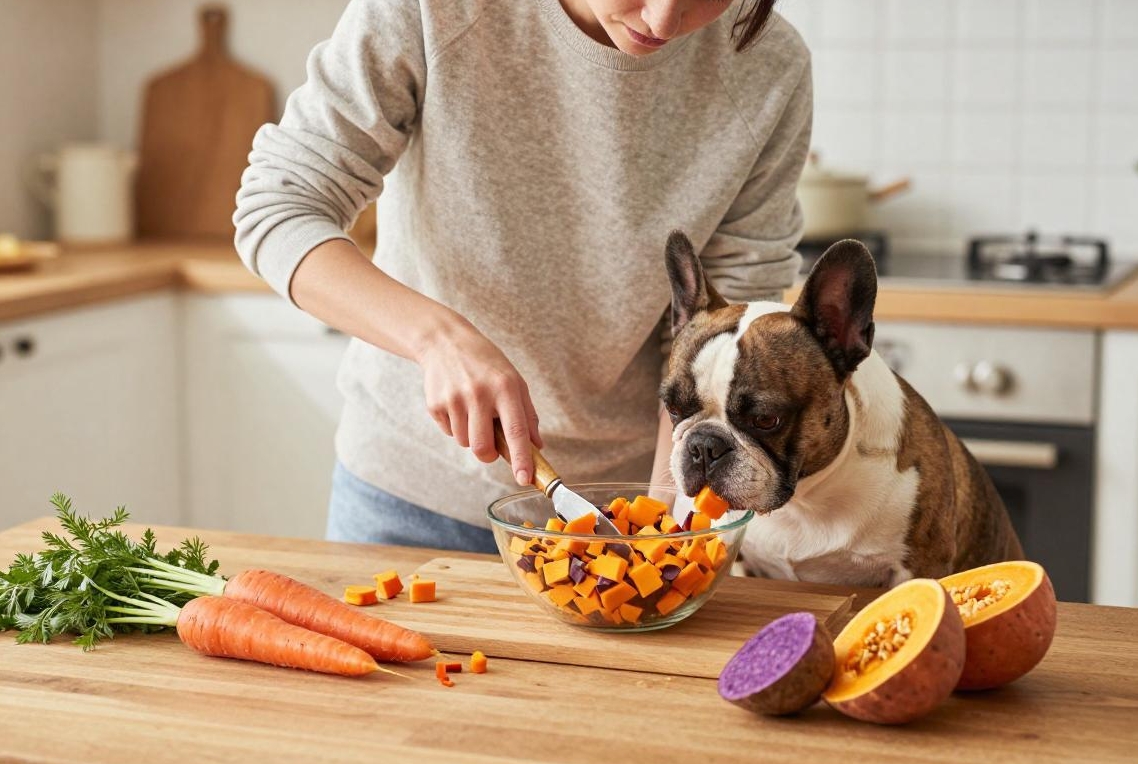
Drawing from custom diet formulation for countless French Bulldogs and clinical cases of gastroenteritis caused by badly prepared supplements, here are practical guidelines for common safe fruits and vegetables. Remember this rule: Always introduce new supplements in tiny portions (tip of a spoon). Gradually increase serving size only after normal stools are confirmed, and keep total supplementary food below 10 % of daily staple‑food intake.
1. Pumpkin — Intestinal Lubricant
Real‑world lesson: One owner fed a large under‑steamed chunk of pumpkin to their French Bulldog, resulting in constipation from undigested lumps inside the gut. Proper texture control for pumpkin is essential.
Solution: Choose ripe, starchy pumpkin. Peel and remove seeds, cut into 1‑1.5 cm cubes. Steam for 12‑15 minutes once steam builds up until chopsticks pierce easily. Mash lightly with spoon or fork, or leave small chunks to mix with kibble. This cooking time ensures full softening. Soluble fibre absorbs water to deliver dual benefits: gentle laxative action and stabilisation of loose stools.
2. Broccoli — Nutrient Powerhouse
Real‑world lesson: I once advised clients to boil broccoli, yet many French Bulldogs developed worse bloating. Boiling leaches high volumes of sulphur compounds and washes away vitamins.
Solution: Use steaming. Wash broccoli and split into small florets; peel or thinly slice tough stem sections. Cut into bite‑sized pieces. Steam 8‑10 minutes after steam appears until bright green and tender. Steaming preserves vitamins and anti‑oxidants while lowering gas‑inducing compounds. Serve cooled as treats or mixed with meals.
3. Carrot — Great Dental‑Care Helper
Real‑world lesson: Raw carrots are too hard for French Bulldogs, creating choking or tooth‑abrasion risks, especially for senior dogs. Over‑boiling removes dental‑cleaning benefits.
Solution: Adopt “steam first, then cut”. Wash and peel whole or half carrots. Steam 25‑30 minutes after steam builds up. Chopsticks should penetrate fully yet retain slight firmness inside. Cool completely then slice into strips or chunks. Steamed carrots become soft outside and firm inside, supplying beta‑carotene while encouraging chewing that cleans tooth surfaces. Only serve once cooled and firmed up.
4. Apple — Sweet‑Sour Appetite Stimulant
Real‑world lesson: Apple seeds and cores contain cyanide and must be fully removed. Surface wax and pesticide residues on apple skin also irritate French Bulldog intestines.
Solution: Always peel and core apples. Cut flesh into roughly 1 cm cubes. Apples oxidise easily and are tolerable raw, so keep steaming brief to soften fibres and sanitise. Steam for 5‑6 minutes after steam appears. Stop cooking when flesh turns slightly translucent and soft. Steamed apples taste sweet‑sour, rich in pectin and help ease mild diarrhoea.
5. Purple Sweet Potato / Sweet Potato — Quality Energy Source
Real‑world lesson: Under‑steamed sweet potatoes contain hard inner cores triggering indigestion. Over‑steaming releases excess sugar, creating overly sweet food that discourages staple‑food consumption.
Solution: Pick medium‑sized tubers. Steam with skin on (skin locks in nutrients). Halve extra‑large tubers. Steam 30‑40 minutes once steam builds up until a thin skewer slides effortlessly all the way to the centre. Cool fully, peel, then mash or dice. Purple sweet potato provides anthocyanins while orange sweet potato delivers dietary fibre; both represent excellent carbohydrate sources. Due to high starch content, strictly limit portions for overweight French Bulldogs or those with unstable blood‑sugar levels.
Avoid These Mistakes for Safer Homemade Supplementary Food
1. Memorise the forbidden‑food list: Never feed grapes / raisins, onions, garlic, chives, mushrooms, raw or sprouted potatoes, tomato leaves or stems. These remain toxic or high‑risk for dogs no matter how they are cooked.
2. Pay attention to chunk size: Regardless of cooking duration, cut pieces small enough for your dog’s mouth. For French Bulldogs, aim for thumbnail‑sized or smaller cubes to prevent choking and poor digestion from swallowing large pieces whole.
3. Cool before serving: Freshly steamed food is extremely hot and can burn oral tissues and oesophagus. Cool down to room temperature or lukewarm (test against the back of your hand) before feeding.
4. Keep food unseasoned: Never add salt, sugar, soy sauce, butter or any human‑style seasonings during cooking or before feeding. Canine kidneys cannot process excess salt and additives increase bodily strain.
5. Observe individual reactions: Every French Bulldog is unique. Steamed broccoli may suit one dog yet trigger mild bloating in another. Owners should observe responses and build a personalised safe supplementary‑food list for their pet.
Summary
Preparing fruit‑and‑vegetable supplementary food for French Bulldogs relies on care and correct technique. Proper steaming delivers extra nutrition and flavour while building protective support for their delicate digestive tracts. Follow these key principles: moderation, tender texture, small chunks, no seasoning, close observation. You can become a home cook safeguarding your French Bulldog’s gut health. Watching them enjoy your homemade healthy meals brings irreplaceable satisfaction.
Important Reminder
Guidelines in this article offer general nutritional advice for preventing and easing mild digestive discomfort. If your French Bulldog develops persistent severe bloating (drum‑like swollen abdomen), vomiting, bloody diarrhoea, lethargy, refusal to eat lasting over 24 hours, or any other worrying abnormal signs, discontinue home care immediately and visit a professional animal hospital. Digestive conditions range from minor to serious; timely professional diagnosis and treatment represent the most responsible choice for your dog’s wellbeing.