When Your French Bulldog Puppy Ignores Every Cue
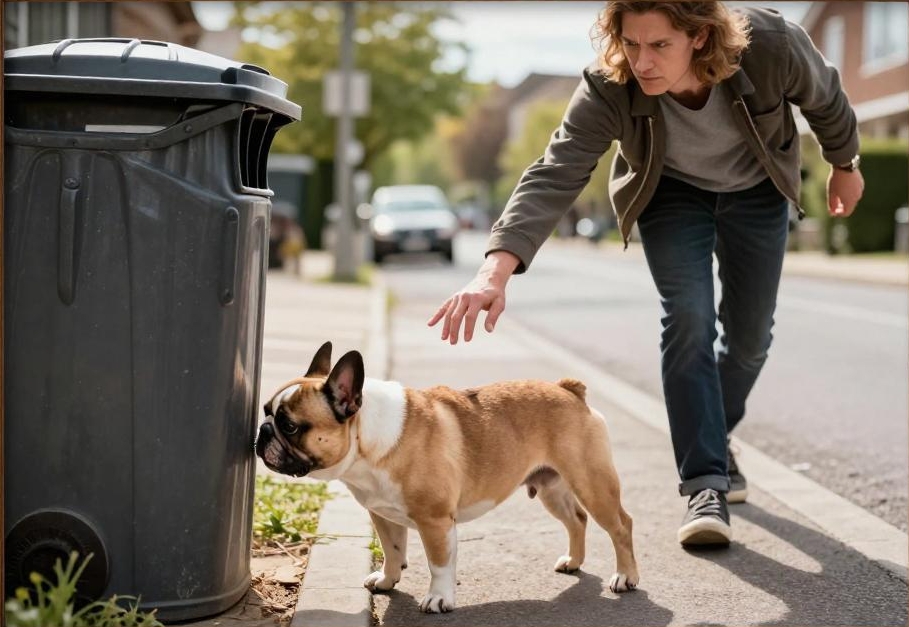
Many first‑time French bulldog owners share this frustration: “Doc / Trainer, my little French bulldog is practically deaf! I call his name and he pays zero attention. When I try teaching ‘sit’, his focus instantly drifts toward a leaf, a shadow, or even the tip of his own tail. Training feels like talking to a brick wall. I wear out my voice, while he happily plays around.” If you are struggling with this, do not feel discouraged or scold your puppy. This is not deliberate defiance or low intelligence. It stems from the unique physical and psychological traits of the French bulldog breed combined with typical puppy developmental stages. Understanding this is the first step toward helping them succeed.
Why Is My French Bulldog Puppy Constantly Distracted?
To solve the problem we must identify its origins. Three core reasons cause short attention spans in French bulldog puppies:
1. Breed traits & physical anatomy: French bulldogs are brachycephalic (flat‑faced) dogs with special respiratory anatomy that makes them prone to breathing strain and fatigue. Compared with other breeds, they cannot sustain intense mental focus for long periods. Heavy concentration consumes large amounts of oxygen and energy, bringing brain‑like exhaustion that triggers instinctive mental “shutdown” or attention shifting. Historically bred as companion dogs, they are highly sensitive to human moods and interaction, yet easily pulled toward tiny environmental changes.
2. Puppy developmental phase: All puppies go through a world‑exploration golden period. Their brains act like super sponges yet have limited information‑processing capacity. Every sound, scent, light‑shadow and texture feels brand‑new and stimulating. Expecting a several‑month‑old puppy to maintain long‑focused attention on repetitive obedience commands is like asking a kindergarten child to sit quietly through an academic lecture — unrealistic.
3. Improper training methods (human factor): This easily‑overlooked point is critical. Over‑long sessions, repetitive rambling commands, delayed or unclear rewards, starting training in high‑distraction settings, and impatient owner moods quickly snuff out a puppy’s fragile capacity for focus. I once observed an owner trying to teach “down” to a French bulldog puppy in a noisy public park using ordinary kibble. Predictably, the puppy was completely overwhelmed by surroundings.
From Distraction‑Prone To Focused Star: Five Practical Solutions
Drawing on ten years working with thousands of dogs (a large share being French bulldogs), I have built this step‑by‑step focus‑training framework for French bulldog puppies. Remember: our goal is not to fight against natural instincts, but to guide and work with them.
Solution 1: Build A Distraction‑Free Starting Environment
Core idea: Reduce competing stimuli so you become the only interesting element within the space.
My real‑world case: I worked with a 4‑month‑old French bulldog named “Doubao” who could not concentrate at home. On my first visit, training took place in the living‑room with the TV on, family phones ringing, and birds chirping outside the window. Doubao’s eyes darted non‑stop everywhere.
Step‑by‑step execution: I advised the owner to pick a quiet small room such as a study or bedroom corner. Clear away floor toys and clutter, close doors and windows to block most outside noise. Inside this clean environment only myself, Doubao, and high‑value treats (diced cooked chicken breast) remained. At the very beginning I gave zero commands and simply stood calmly. The moment Doubao glanced toward me I cheered enthusiastically “Good!” and quickly offered chicken pieces. Within minutes Doubao learned: “Looking at this human brings good things.” This forms the fundamental first step of focus training — building a strong association between eye contact and positive outcomes. Run 2‑3 short sessions daily in this space, each lasting merely 3‑5 minutes. After one week, Doubao maintained far longer eye‑contact durations inside low‑distraction surroundings.
Solution 2: Gamify & Fragment Your Training Sessions
Core idea: Leverage the French bulldog’s playful, interactive nature and turn learning into hide‑and‑seek‑style fun.
My experience note: French bulldogs have limited endurance yet decent bursts of energy. Traditional sequential drills “sit‑reward‑down‑reward” feel too much like homework for them.
Step‑by‑step execution: I created the “name‑call game”. Inside a quiet room, have the owner stand one‑to‑two metres away and call the puppy’s name excitedly “Doubao!”. When Doubao turns toward you or runs over, cheer and reward immediately. Then I stand in another direction and call his name. This dynamic entertaining game matches puppy restlessness while solidifying the most foundational focus skill: name‑triggered response. A second exercise: “find‑the‑treat‑in‑hand”. Hold a treat and let the puppy sniff it, swap hands behind your back, then present two closed fists for him to guess which hand holds food. This simple game demands careful observation of your hand movements. Play only two‑to‑three rounds per session and finish while the puppy still wants more, keeping him eager for next‑time practice.
Solution 3: Use High‑Value Rewards & Perfect Timing
Core idea: Make focus feel highly rewarding and deliver pay‑offs instantly.
My experience note: Many owners use regular kibble as training treats. During early focus‑building stages kibble often lacks sufficient appeal. I have seen training failures with kibble turn into instant success after switching to tiny cheese pieces.
Step‑by‑step execution: Build a custom reward hierarchy for your French bulldog. Daily kibble = lowest value; cooked chicken or beef = medium value; cheese, liver pâté or his absolute‑favourite snacks = high‑value rewards, reserved exclusively for focus training and overcoming difficult challenges. Timing is everything. Rewards must arrive within 0.5 seconds the instant your puppy looks toward you. I pre‑chop high‑value treats into tiny crumbs held in my palm for instant delivery. This builds powerful neural links inside the dog’s brain: “Paying attention to my owner equals instant premium treats”.
Solution 4: Progress From Static Focus Toward Dynamic Distraction‑Resistance
Core idea: Level‑up difficulty gradually just like beating stages in a video game.
My experience note: After succeeding inside quiet rooms do not jump straight to busy parks. This will undo all previous progress.
Step‑by‑step execution: Follow a clear “distraction‑resistance pyramid”. Level 1: quiet closed room; Level 2: quiet room with one person moving gently; Level 3: living‑room with TV playing softly; Level 4: building hallway outside your front door; Level 5: quiet corner of your residential complex; Level 6: community park with light pedestrian traffic… Advance only one difficulty level at a time. When working at a new level shorten session duration (for example from 5 minutes down to 2 minutes) and deploy higher‑value rewards. If your puppy fails twice consecutively at the new level you have advanced too fast; drop back to the prior level for consolidation. This process requires great patience and may take weeks or even months. It is the only reliable way to raise a French bulldog that obeys commands across varied real‑world environments.
Solution 5: Capture & Reward Spontaneous Focus
Core idea: Reinforce attentive behaviour anytime in daily life, not only during formal training time.
My experience note: Some of the best training happens outside planned sessions. Moments when your puppy stops playing and glances at you, or looks back to check your position mid‑walk represent precious spontaneous focus opportunities.
Step‑by‑step execution: Keep small treats handy. Whenever your French bulldog voluntarily looks toward you without any cue, seize the moment! Call his name softly (if he makes eye‑contact), praise happily and give a reward. Your puppy will learn: “Choosing to pay attention to my owner brings benefits anywhere, anytime.” This creates a powerful positive feedback loop that embeds trained behaviours deep within his everyday habits.
Pitfall‑Avoidance Guide: Steer Clear Of These Common Mistakes
1. Punishing distraction: Shouting or forcibly twisting your puppy’s head back when his mind wanders. This associates eye‑contact with unpleasant experiences and amplifies stress and avoidance.
2. Marathon‑length training: Single sessions over 10 minutes. Puppies, especially French bulldogs, have short mental‑focus windows. Short‑frequent practice (multiple daily sessions of 2‑5 minutes) vastly outperforms one long training block.
3. Delayed or vague rewards: Saying “good boy” then fumbling for treats long afterwards, or substituting petting for food rewards. In early focus‑training phases instant, clear high‑value food rewards are mandatory for building associations.
4. Training while tired or over‑excited: Working right after heavy exercise when panting, or just after waking while groggy yields poor results. Train when your puppy is awake, calm and slightly hungry (before meal‑time).
5. Ignoring underlying health issues: If alongside poor focus your French bulldog shows frequent noisy breathing, low exercise tolerance or easy fatigue, first rule out severe respiratory stenosis or other medical conditions that shape all behavioural performance.
Summary: Patience Builds The Road Toward Focus
Improving focus in French bulldog puppies calls for understanding, patience and proper technique. Set aside human‑centered expectations and see the world from the perspective of a flat‑faced, curious puppy with limited mental stamina. Start inside zero‑distraction spaces, turn drills into games, use well‑timed smart rewards, raise challenges incrementally like game levels, and catch every spontaneous bright moment in daily life. You will watch your easily‑distracted puppy transform into an attuned, focused companion. This whole journey forges trust and rapport between you and your dog.
Important Reminder
This article provides training guidance for general behavioural challenges. If alongside poor focus your puppy displays excessive sleepiness, loss of interest in food and play, sudden behavioural shifts, or obvious physical discomfort such as breathing difficulty, coughing or mobility problems, these may signal underlying medical concerns. Visit a licensed veterinary clinic promptly for comprehensive health assessment. All behavioural training must build upon solid physical wellness.