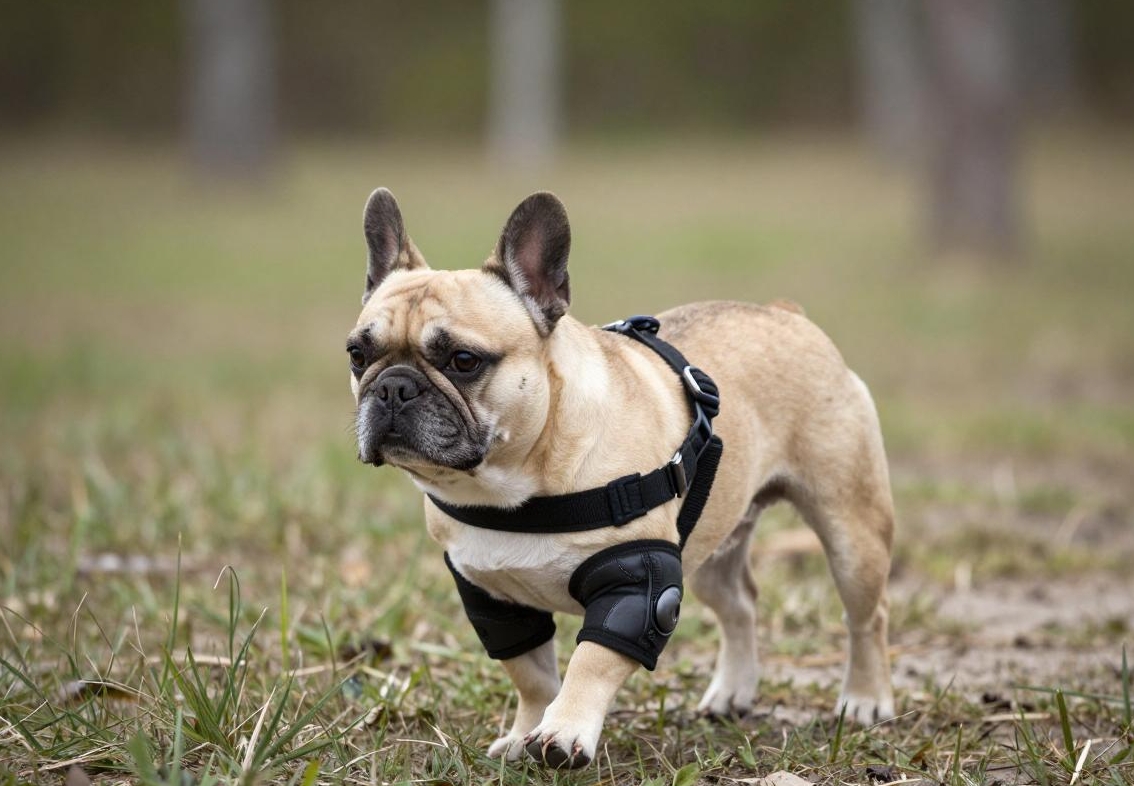
Dear French Bulldog owners, hello everyone. Over years caring for these lovely, docile “little pig‑dogs”, countless owners have come to me with the same worry: “Doctor, after my French Bulldog finishes eating, the fur around its mouth is always damp and yellow. No matter how hard I wipe it, it still looks dirty. What can I do?”. I fully understand the owners’ helplessness. The iconic wrinkled short muzzle and wide jaws of French Bulldogs bring enormous cuteness, yet they are also the root cause of mealtime messes. Today, drawing on ten years of practical experience solving this problem, I will systematically explain how to manage this issue effectively with one simple tool — the pet bib.
Why Does Mealtime Turn Into a “Battle” for French Bulldogs?
Before covering solutions, we must understand the root cause. Messy muzzles are not caused by bad table manners; they stem from their unique physical structure:
1. Short, broad muzzle (brachycephalic trait): As brachycephalic breeds, French Bulldogs often have relatively long soft palates and short nasal‑throat passages. When lowering their heads to eat and swallow, food and water easily spill out from the mouth corners instead of passing smoothly down the oesophagus.
2. Special lip structure: Many French Bulldogs cannot fully close their lips. Especially the lower lip may turn slightly outwards or hang loose, much like a leaky tap, allowing liquids and tiny food crumbs to “escape” easily.
3. Excited eating behaviour: Energetic and food‑obsessed, French Bulldogs often gobble food quickly. Fast eating creates greater splashing force, worsening spillage of food and water.
Combined, these physical traits let food debris, saliva and moisture continuously soak muzzle fur. Without thorough, timely cleaning, bacteria and yeast (especially Malassezia) grow over time, triggering fur discoloration (yellowing, reddening), bad odours and even skin inflammation — commonly known as saliva dermatitis or food‑contact dermatitis.
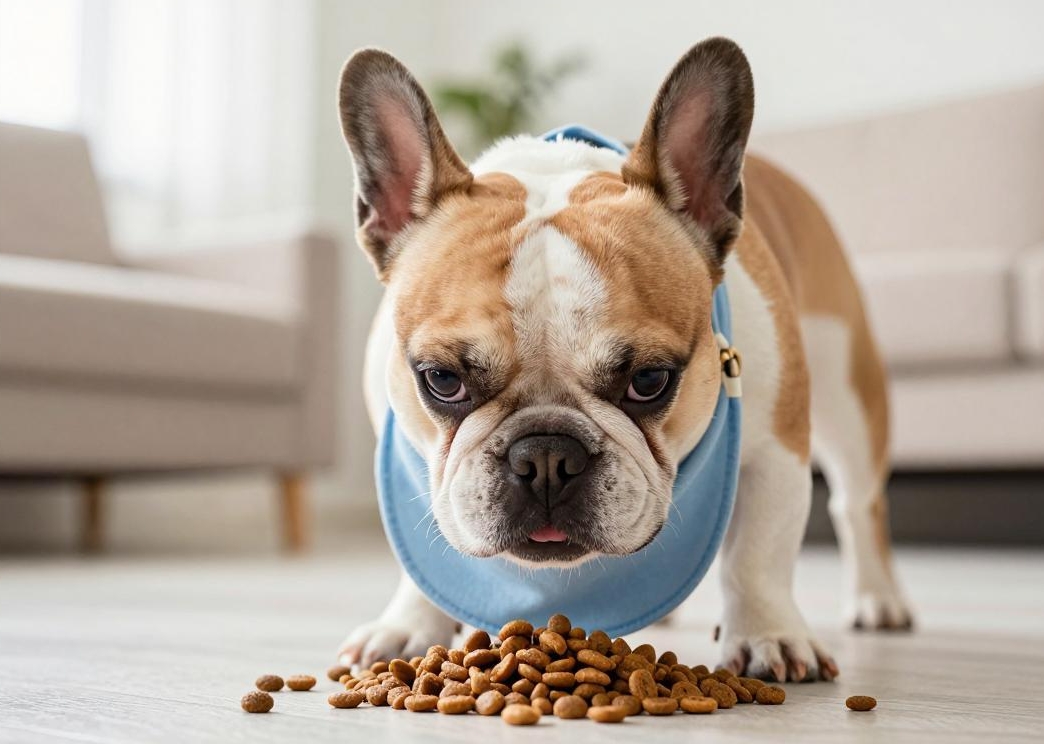
Core Solution: Choose and Use Pet Bibs Properly
Now we can target the real problem. For French Bulldogs, bibs are not decorative; they act as a physical barrier to catch and absorb food and liquid before they reach the fur. Below are practical, actionable solutions including hands‑on tips I have accumulated through practice.
Solution 1: How to Pick the Perfect Bib Made for French Bulldogs
Countless pet bibs are sold on the market, yet many are unsuitable for French Bulldogs. Evaluate products from these key dimensions:
1. Material matters most: absorbent, quick‑drying and soft
- Practical experience: Early on I tried pure‑cotton bibs for my own French Bulldog. They absorbed well but dried slowly. Damp bibs pressed against skin for long periods caused skin troubles. Fully waterproof fabrics let liquid run off, yet trapped food crumbs against fur.
- My recommendation: Prioritise microfibre towel material or composite fabric with soft absorbent towel on the front and waterproof backing. Microfibre absorbs fast and traps crumbs; composite material stops liquid seeping down to fur roots. Ensure fabrics are soft and will not chafe the delicate neck skin of French Bulldogs.
2. Shape and design: sufficient coverage is critical
- Practical experience: Ordinary small square or triangular bandanas provide far too little coverage for French Bulldogs. The high‑mess zone covers the whole chin and extends along both cheeks.
- My recommendation: Select smock‑style or apron‑style bibs. Starting under the neck, these bibs fully cover the chest and chin with an inverted‑triangle or trapezoidal shape. Choose a sufficiently large size so the bib edge hangs near the elbow when the dog lowers its head, catching all falling food and water.
3. Fastening system: balance security and comfort
- Practical experience: Hook‑and‑loop fasteners (velcro) are convenient yet may irritate sensitive skin from repeated pulling, and active dogs can rub them loose. Snap buttons are size‑specific and lack flexible adjustment for varying neck girth.
- My recommendation: A combination of hook‑and‑loop plus adjustable plastic buckle works best. The buckle handles main fastening and quick length adjustment; velcro fine‑tunes the end for a snug fit that cannot easily be shaken off. Check that straps are wide; narrow straps may dig into fur and skin.
Solution 2: Correct Wearing and Operating Procedure
Even the best bib fails without proper use. I have summarised a standard workflow:
Step 1: Put on before meals. Fasten the bib before placing food and water bowls. Pair with cues such as “Sit” to build a conditioned reflex: wearing the bib means mealtime, so your dog will cooperate.
Step 2: Adjust tightness. You should comfortably fit two fingers underneath. Too tight causes discomfort or breathing restriction; too loose slips out of position and loses function. Make sure the bib lies flat without folded edges that trap water.
Step 3: Supervise feeding. Even with a bib fitted, supervise during the first few uses or for highly impatient French Bulldogs. Prevent pawing at the bib or attempts to chew the bib together with food.
Step 4: Immediate post‑meal care. This is the most important step! Remove the bib right after eating. Use a clean section of the bib to pat dry visible food residue and moisture around the muzzle (do not rub back and forth, to avoid skin irritation). Next, gently wipe lip folds, chin and muzzle fur using pet‑specific wet wipes or a damp soft cloth for thorough cleaning. Finally pat everything dry with a dry towel or tissue.
Step 5: Clean the bib. Wash the bib after every use to stop bacterial growth. Keep 2‑3 bibs on hand for rotation.
Solution 3: Supplementary Cleaning Measures Beyond Bibs
Bibs are your main tool, yet better results come with complementary practices:
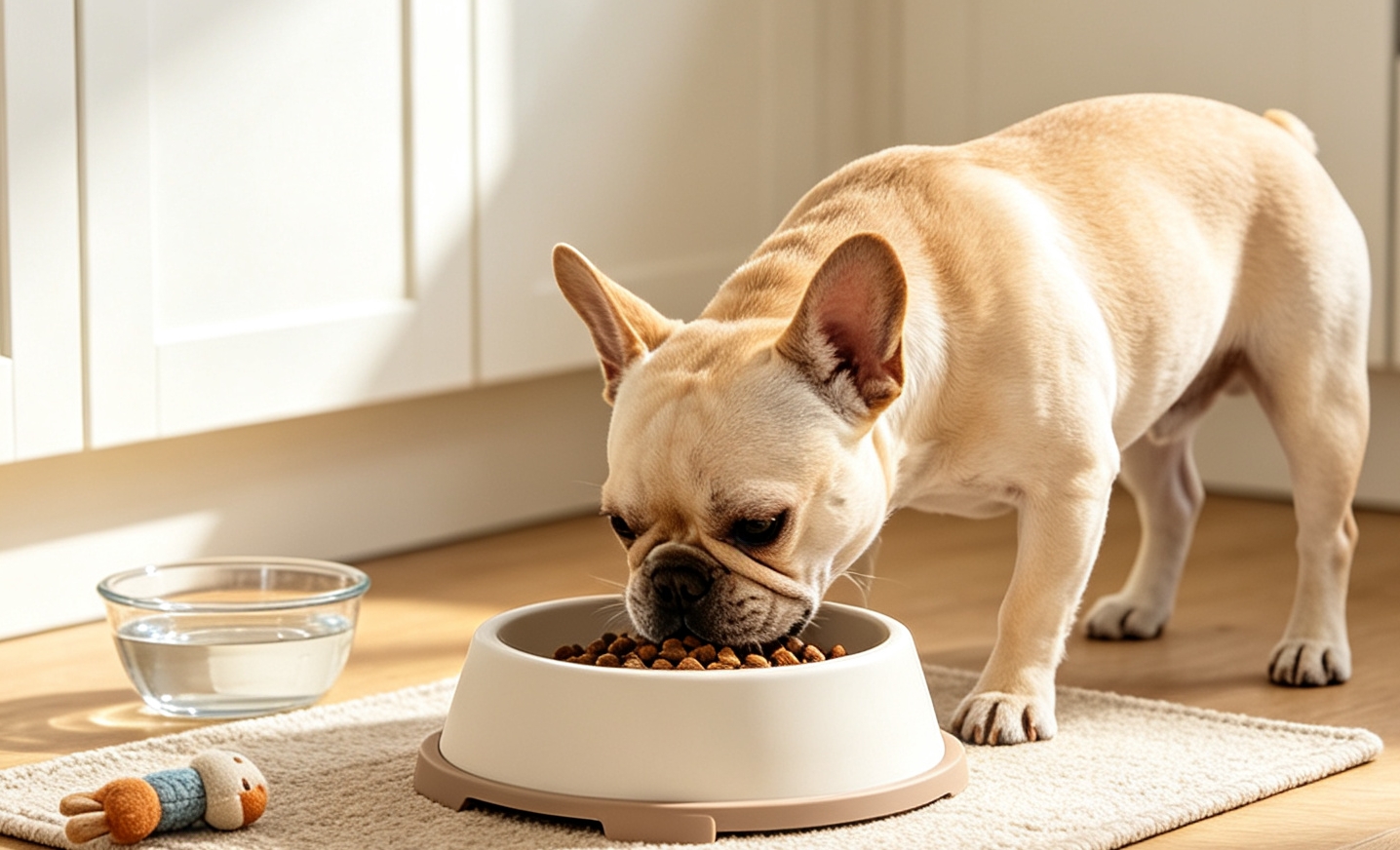
1. Optimise food and water bowls. Use slow‑feed bowls to slow eating speed and reduce splashing. Install hanging or stand‑mounted water dispensers so your French Bulldog drinks with its head raised, greatly cutting chin contact with water. I use a hanging water‑bottle with a drinking spout at home, with very noticeable improvement.
2. Trim muzzle fur. Have a groomer or carefully trim over‑long fur around the chin and muzzle regularly. Shorter fur traps less food and moisture and is easier to clean. Do not shave completely; leave moderate fur length for skin protection.
3. Choose appropriate food. Wet food and pâtés stick heavily around mouths. Try suitably sized dry kibble, or mix wet food with dry kibble to reduce stickiness. Extra‑prompt cleaning is required after wet‑food meals.
Pitfall‑Avoidance Guide: Avoid These Common Mistakes
1. Blind faith in “fully‑waterproof”: Fully waterproof plastic or silicone bibs let liquid run down onto chest fur and worsen mess. They are only suitable for very dry treat‑snack time.
2. Leaving bibs on all‑day: Do not leave bibs on long after meals. Damp trapped conditions trigger skin disorders. Bibs are mealtime workwear, not everyday accessories.
3. Neglect daily grooming: Do not assume a bib removes all need for daily muzzle wiping. Tiny residual moisture and bacteria still require routine care to eliminate yellow stains.
4. Using human‑grade cleaning products: Never clean your French Bulldog’s muzzle repeatedly with soap, facial cleanser or disinfectant. These upset skin pH balance and cause worse sensitivity and inflammation. Always use pet‑formulated cleaning supplies.
Summary
Keeping your French Bulldog’s muzzle clean is not difficult. Success relies on correct understanding, proper tools and consistent grooming. A well‑designed bib, paired with correct usage and daily cleaning habits, resolves around 80 % of post‑meal muzzle‑staining problems. This improves your dog’s appearance and comfort, and forms a key part of skin‑disease prevention. Watching them enjoy food happily with a clean face brings great satisfaction for owners.
Important Reminder
Please note that methods in this article cover preventive and routine care for mealtime‑related dirt. If you observe large persistent reddish‑brown stains, continuous skin redness, hair loss, papules, ulceration or unusual sour odour around your French Bulldog’s muzzle, secondary bacterial or fungal infection (e.g. Malassezia dermatitis) may have developed. Simple surface cleaning will no longer suffice. Seek veterinary care promptly. Professional vets will diagnose conditions via tests such as skin scrapings, and prescribe medicated shampoo, ointments or oral medication. Delayed treatment causes unnecessary suffering for your pet. Regular check‑ups and scientific care are the best long‑term care you can offer.