Hi all French Bulldog parents. Over ten years working in veterinary treatment and pet health management, I have cared for countless lively Frenchies suffering from painful joint conditions. I often see worried, helpless owners: they want nothing more than to take their furry companion out to explore, yet after walking only a short distance, the dog pants heavily, sits down and refuses to move, or shows stiff, weak hind legs. This dilemma — wanting to take them outside yet fearing they cannot endure the walk — troubles many French Bulldog families.
Why Do French Bulldogs’ Joints Get Fatigued Easily?
To resolve joint problems, we first need to understand their origin. Heavy joint strain in French Bulldogs is no accident — it stems from their unique body structure.
First, inherent structural factors: French Bulldogs are short-legged, compact dogs. This build means their limb joints, especially hips and knees, endure greater pressure and shear force during weight-bearing and exercise than slender breeds of equal weight. Imagine supporting the same load on four short pillars; each pillar bears significantly higher pressure.
Second, common genetic predispositions: Canine Hip Dysplasia and Patellar Luxation are widespread among Frenchies. Many puppies show no obvious symptoms while young, yet issues gradually emerge with aging and weight gain, causing unstable joints and accelerated cartilage wear.
Finally, weight management is critical: French Bulldogs are prone to obesity. Every extra pound adds tangible stress to joints, speeding cartilage degeneration and creating a vicious cycle: excess weight reduces activity, and inactivity leads to further weight gain.
Practical Solutions To Make Walks Easier For Your French Bulldog
Once we understand the causes, we can take targeted action. Our goal is not to restrict movement entirely, but to apply scientific support to reduce exercise-related joint damage and make walks enjoyable again.
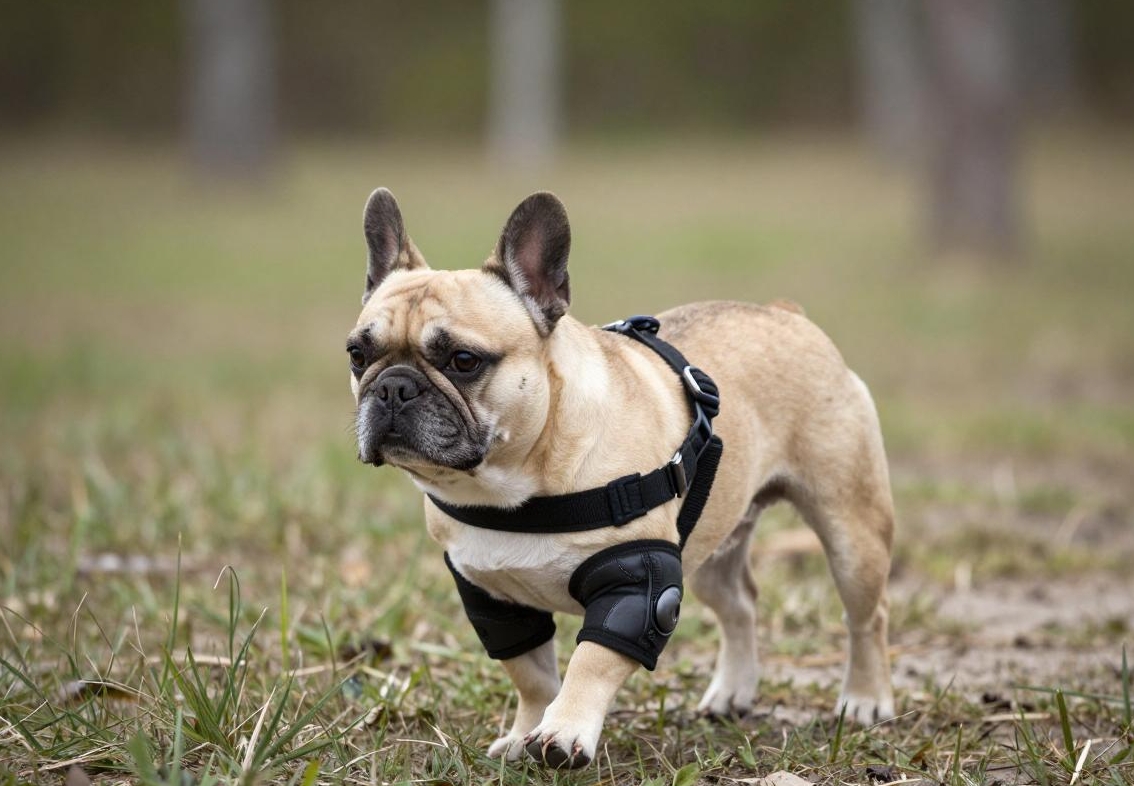
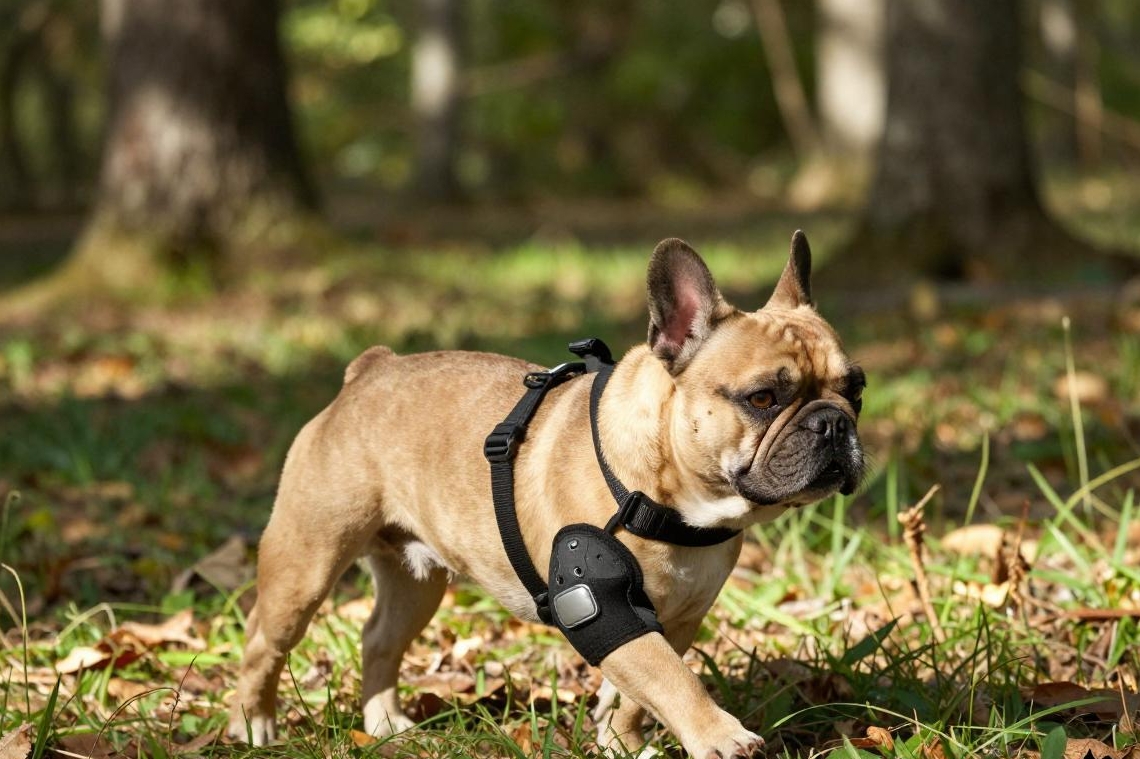
Solution 1: External Joint Support — Choose & Fit Dog Knee Braces Properly
This is one of the most direct forms of physical support. However, you cannot simply buy a brace and slip it on; incorrect fitting can do more harm than good.
My Real Clinical Experience: One owner purchased a knee brace for their Frenchie, Niu Niu, but complained the dog refused to walk and kept chewing the brace. After examination, I identified two core problems. The brace was oversized, loose and formed folds over bending joints, continuously rubbing the skin and causing discomfort. Secondly, it was positioned incorrectly; the primary compression zone failed to align with the front of the knee joint (patella), resulting in almost zero supportive effect.
Step-by-Step Implementation Guide:
1. Accurate Measurement: Use a soft measuring tape against the skin around the thickest part of the leg (slightly above the knee). Match the measurement to the size chart. Aim for a snug (not loose) fit; premium braces feature elastic material.
2. Correct Fitting Procedure:
* Step 1: Smooth leg fur. Brush hair flat on the fitting area to prevent trapped fur that causes pressure and irritation.
* Step 2: Locate the proper position. Align the reinforced or marked central section of the brace directly over the front of the dog’s patella (the small sliding knee bone).
* Step 3: Slide on and adjust. Gently pull the brace upward like putting on a sock, ensuring the paw fully exits the opening. Pull upward to cover the knee joint, adjust to follow the leg shape without twisting.
* Step 4: Secure the hook-and-loop fasteners. Fasten straps from bottom to top for even compression. You should be able to fit one finger underneath. Too loose and the brace slips; too tight restricts blood circulation.
3. Gradual Adaptation: Start with short home wear sessions (10–15 minutes) paired with treats to build positive associations. Slowly extend wear time before attempting short walks outdoors.
Solution 2: Build Muscle — Create Natural Internal Joint Support
Strong muscle tissue acts as the best built-in stabilizer for joints. For French Bulldogs, training should focus on hind limb and core muscle groups.
My Recommendations:
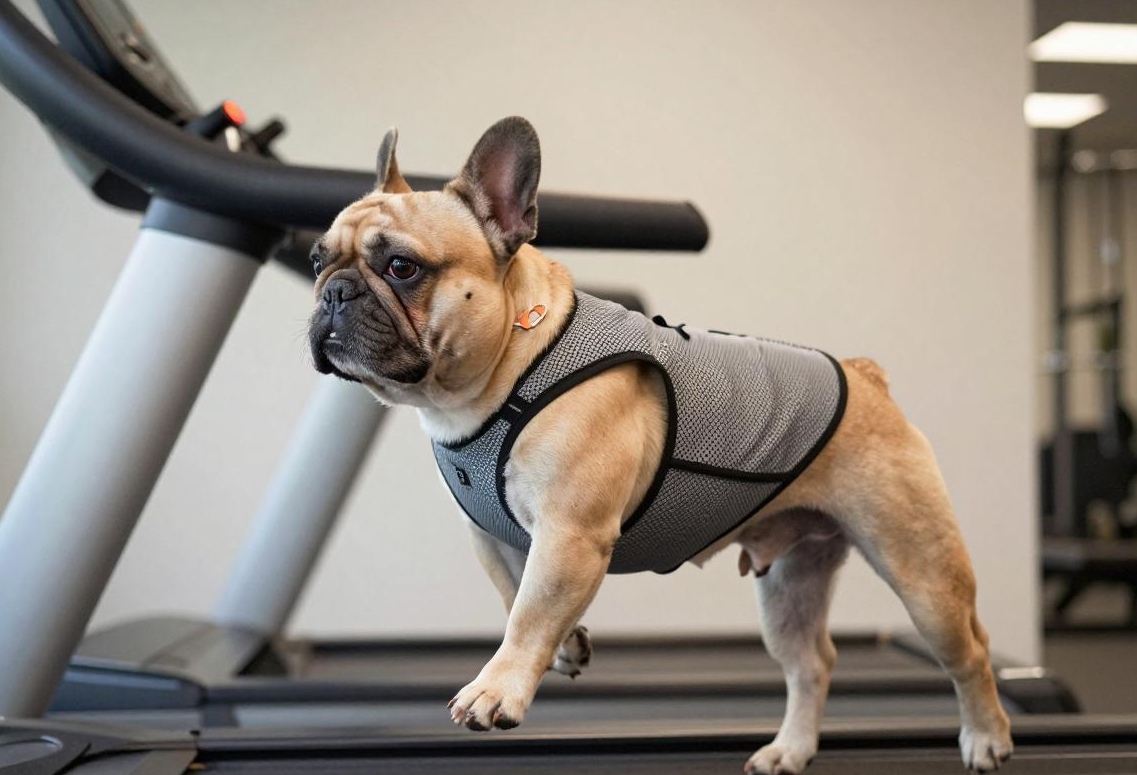
1. Underwater Treadmill or Swimming: This is gold-standard rehabilitation exercise for joint disorders. Buoyancy removes most bodyweight pressure from joints, while water resistance effectively builds muscle. If accessible, swimming 1–2 times weekly delivers huge benefits for Frenchies.
2. Home Strength Training:
* Sit-to-Stand Exercises: Guide your dog to stand up from a sitting position. Repeat 10–15 times per set, 2–3 sets daily. This excellently strengthens hind leg muscles.
* Core Balance Training: Encourage your dog to walk slowly across soft mats or pillows placed on the floor. Slow movement improves balance and core stability.
Solution 3: Weight Management & Optimized Nutrition
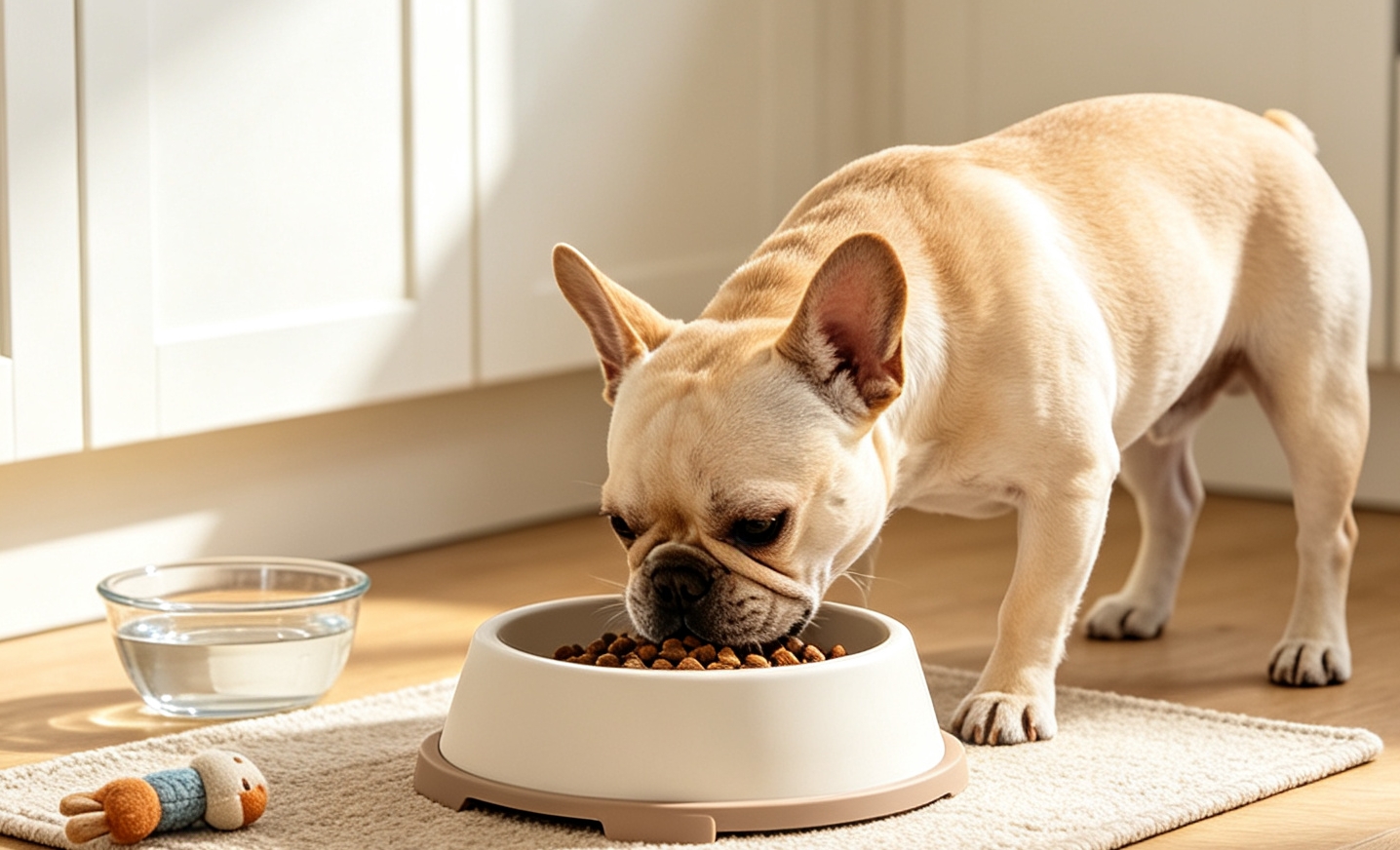
This forms the foundation of all joint care. Weight loss directly reduces load on joints.
My Action Plan:
1. Precise calorie calculation: Consult your veterinarian or pet nutritionist to confirm your dog’s daily resting energy requirement. Use a kitchen scale to portion kibble — avoid free-feeding by guesswork. Count treat calories toward total daily intake; replace snacks with measured portions of regular food when possible.
2. Joint-supporting nutrition: Under veterinary guidance, consider joint prescription food or supplements containing Glucosamine, Chondroitin, and Omega-3 Fatty Acids (such as fish oil). These nutrients lubricate joints, reduce inflammation and support cartilage health. I often remind owners: investing in high-quality food and supplements is far more cost-effective than future surgery and treatment bills.
Solution 4: Optimize Outdoor Activity Patterns
Abandon the traditional routine of one long walk until exhaustion.
Veterinarian Advice:
1. Short, frequent walks: Split one long outing into 2–3 shorter sessions (15 minutes each) with ample rest breaks. This is gentler on joints than a single 30-minute continuous walk.
2. Choose suitable terrain: Prioritize flat, soft grass or dirt ground. Avoid hard concrete, asphalt, and locations requiring constant stair climbing.
3. Supportive gear: For French Bulldogs with arthritis or recovering from surgery, use a pet stroller or harness lifting handle during long-distance travel or uneven terrain. I advised one owner to transport their Frenchie to the park by stroller and let the dog roam freely only on flat grass. This greatly reduced stress for both pet and human.
Mistakes To Avoid
1. Wearing the knee brace 24/7: Knee braces are exercise gear, not everyday clothing. Remove them at home during rest to allow skin ventilation; prolonged compression and trapped moisture trigger skin irritation.
2. Ignoring pain signals: Do not overlook limping, difficulty standing, or repeated licking of joints simply because your dog “can still walk.” These are clear signs of pain requiring veterinary assessment.
3. Blind calcium supplementation: Joint disorders are rarely caused by calcium deficiency! Unnecessary calcium supplements offer no benefit for most joint conditions and may worsen certain illnesses. Always follow vet advice for nutritional supplements.
4. Complete rest with zero activity: Inactivity causes muscle atrophy and further joint instability. Follow the principle of moderate, gentle, progressive exercise.
Summary
Caring for a French Bulldog with fragile joints demands patience, attentiveness and scientific methods. Your dog is like delicate machinery requiring careful maintenance. Properly fitted knee braces deliver instant protection during movement; muscle strengthening and weight control reduce strain fundamentally; and adjusted activity routines safeguard overall quality of life. Combine these strategies, and you can help your French Bulldog enjoy every outdoor adventure with greater ease and vitality.
Important Reminder
The advice and solutions shared focus on daily maintenance, mild discomfort and prevention. Seek immediate veterinary care if you observe any of the following symptoms in your French Bulldog:
* Sudden severe limping or inability to bear weight on a limb.
* Noticeable swelling, warmth or deformity around joints.
* Whining due to pain, or aggressive reactive behavior when touched.
* Loss of appetite and lethargy accompanied by abnormal movement.
Stop home management immediately and visit a professional animal hospital. Your vet will perform a full physical examination, possibly X-ray imaging to confirm diagnosis, and create a targeted treatment plan including medication, physiotherapy or surgery. Early professional intervention is the most critical step to prevent deterioration of joint conditions.