Hello everyone. Over the past ten years I have worked with countless lovely French bulldogs and their worried owners. One very common and frustrating scenario plays out like this: you hold treats and repeat “sit” over and over. Meanwhile your French bulldog tilts his head and stares at you with innocent big eyes as if asking “What are you talking about?”. Or he gets distracted by a passing butterfly and completely ignores you. This miscommunication brings training to a standstill and wears down your patience and confidence.
Why Doesn’t Your French Bulldog “Hear” You?
To fix the problem we first need to understand its roots. French bulldogs are a special breed: intelligent and emotionally expressive, yet stubborn and easily distracted. Many owners blame poor training results on the dog being “dumb” or “disobedient”, but the real cause is usually flawed communication methods.
Three core reasons stand out:
First, relying on a single sensory channel. Humans are heavily verbal creatures who prefer voice commands. For dogs, visual body‑language cues are often more intuitive and primal. Voice commands get easily drowned‑out in noisy surroundings or when the dog becomes excited.
Second, the French bulldog’s attention traits. French bulldogs are curious but have relatively short attention spans. Long, repetitive verbal cues quickly kill their interest. They thrive on fast, unambiguous input.
Third, inconsistent commands. Saying “sit” one day and “sit down” the next, plus randomly changing hand gestures, confuses your dog about exactly what you want.
Early in my career I worked with a French bulldog named “Doubao”. His owner had a soft‑spoken voice, yet Doubao ignored her recall cues outdoors and repeatedly put himself in danger. I observed that her anxious body movements while calling sent mixed signals to Doubao. This taught me a vital lesson: clear, consistent physical signals are the key to effective communication with French bulldogs.
Solution: Build Your Custom “Hand‑Signal” System
Below are practical hand‑signal training techniques validated through extensive real‑world practice. Remember the core principles: build associations, stay patient, reward promptly.
1. Start With “Sit”: Create Your First Gesture‑Behaviour Link
My experience: I prefer starting with the foundational “sit” command, as it comes fairly naturally to dogs. New trainers often make gestures too large or overly complicated.
Step‑by‑step practice:
‑ Prepare small high‑value treats your dog loves.
‑ Stand in front of your dog. Hold a treat in your hand and move it slowly upward from his nose then backward toward the back of his head, tracing an L‑shaped path.
‑ As his head tilts upward following the treat, his hips will naturally lower. The instant his bottom touches the ground, give the verbal cue “sit”, deliver the treat immediately and offer enthusiastic praise.
‑ Repeat 5‑10 times. Next try giving only the hand signal without speaking. Reward extra generously if he complies. If he fails, revert back to using gesture plus verbal cue together.
‑ Critical detail: Keep gestures slow, steady and distinct. When training Doubao I noticed fast wiggling hand motions made him think I was playing. Once my gestures stayed stable, his comprehension improved dramatically.
2. “Come” Cue: A Gesture For Safe Returns
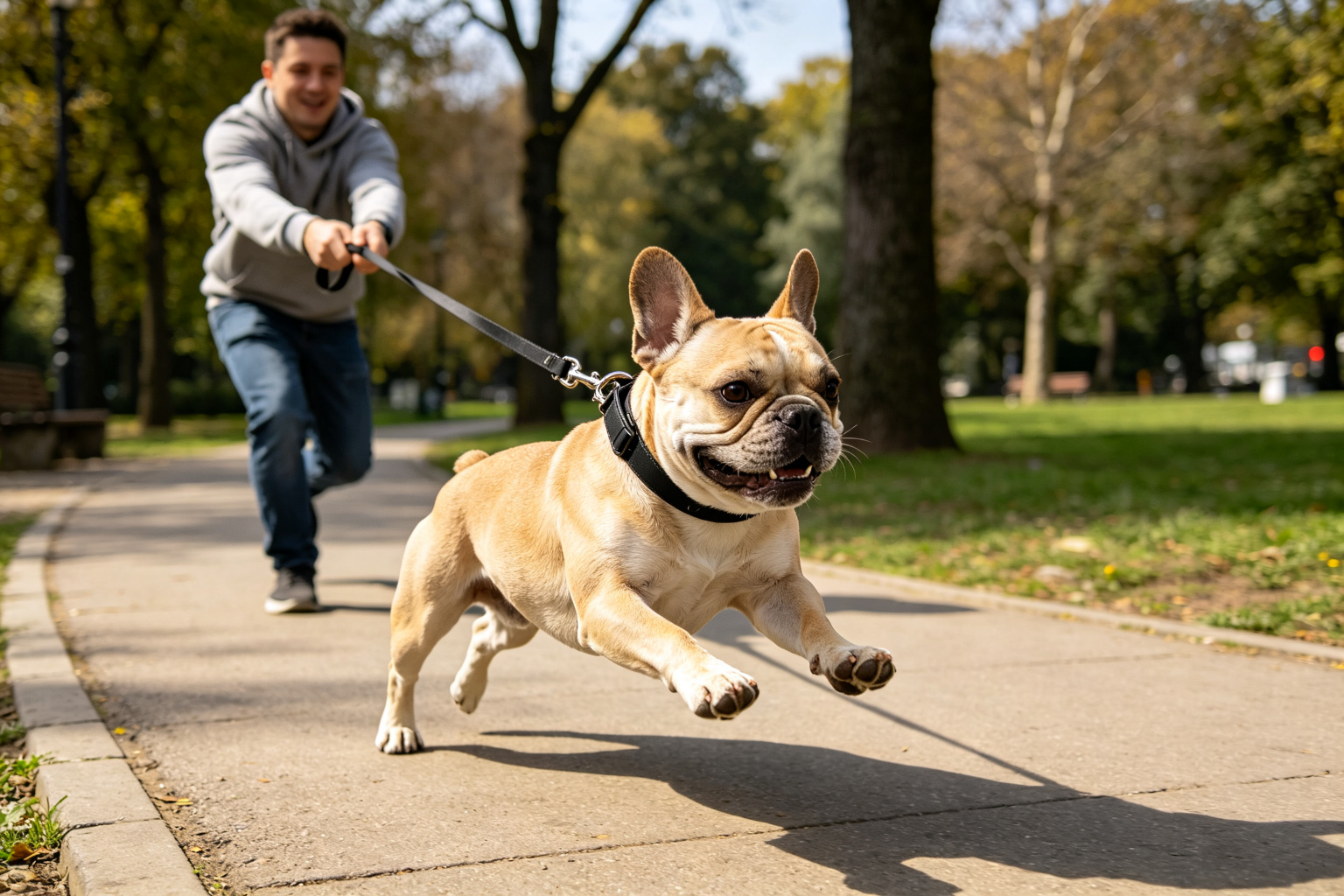
My experience: Recall training is a safety priority. Many French bulldogs suffer “selective deafness” outdoors because they lack a powerful, appealing visual signal.
Step‑by‑step practice:
‑ Begin indoors in a low‑distraction space. Crouch down, open your arms wide in an inviting welcoming gesture and cheer “come!”.
‑ Reward instantly plus hugs or petting as soon as your dog runs over and makes contact with you.
‑ Gradually increase distance and introduce a concise signature gesture, such as sweeping one arm firmly toward your own body, like beckoning.
‑ Critical detail: Never do anything unpleasant after your dog comes‑‑no scolding, no forcing on a leash, no ending playtime. This gesture must always predict good things. Using this method I once called back a French bulldog completely absorbed by park play; he sprinted toward me like a little rocket the moment he saw my specific beckoning hand signal.
3. “Wait” & “Release”: Use Body Language To Set Clear Boundaries
My experience: This is a powerful tool for managing impulsive behaviours such as snatching food or lunging forward. Clear “start” and “release” signals give dogs a sense of security.
Step‑by‑step practice:
‑ Have your dog sit or stand. Hold your palm flat toward his face like a traffic‑stop officer (without touching him) and say firmly “wait”.
‑ Hold the gesture for 1‑2 seconds, then give your release cue such as “OK”, paired with an obvious physical change: lower your arm or sweep it sideways.
‑ Start with short durations and short distances, then slowly extend waiting time and working distance. Practice beside food bowls or before heading out the door.
‑ Critical detail: Release signals must look distinctly different from wait signals. Early on I used a head nod for release and confused my dog. Switching to a clear verbal “OK” plus a large arm drop produced instant improvements.
4. Attention‑Recall Gesture: Pull Your Day‑dreaming French Bulldog Back To Focus
My experience: French bulldogs easily zone out. You need a noise‑free way to grab their attention without shouting.
Step‑by‑step practice:
‑ Create a unique gesture not used in daily life, for example two quick claps over your chest or tapping your own chin with a finger.
‑ Immediately follow this gesture with something your dog enjoys: a treat, toss a toy, or joyful petting.
‑ Over time this gesture alone becomes the signal “look at me, good things are coming”. Trigger it before he gets drawn toward other distractions to pro‑actively prevent loss of focus.
Pitfall‑Avoidance Guide: Steer Clear Of These Common Mistakes
In training, avoiding errors matters as much as learning new skills.
1. Do not frequently change hand signals. Once settled, every household member must use identical gestures. Swapping between open palm and fist will confuse your dog.
2. Never force your dog when he feels confused or scared. If he fails several times running, drop back to an easier step or take a break. Training should feel like fun games.
3. Keep your emotions in check during sessions. Frustration and anger transmit through stiff posture or sharp hurried movements, raising his stress and resistance.
4. Never link command gestures to punishment. Do not hit or scold your dog with the same hand you use for training cues. Otherwise that gesture will trigger fear and undo all your progress.
5. Do not skip difficulty progression. Do not train on busy roads or around groups of dogs before your dog masters basics. Follow this gradual sequence: quiet indoor setting → mild indoor distractions → quiet outdoor space → complex outdoor surroundings.
Summary: Patience Matters More Than Any Single Gesture
Teaching your French bulldog hand‑signal commands builds cross‑species rapport rooted in trust and understanding. This is not a quick‑fix control trick, but loving two‑way communication. The sense of connection and satisfaction when your French bulldog lights‑up and responds quickly to a simple hand gesture is unmatched. Enjoy the journey and celebrate every tiny win. Remember you are teaching him a new language, whose core vocabulary consists of “love” and “safety”.
Important Reminder
This article shares home‑training advice for general behavioural challenges. If your dog shows extremely severe issues such as overwhelming fear, aggression, self‑harm or serious separation anxiety, problems may stem from underlying physical health or deep‑seated psychological factors. It is strongly recommended you consult a certified veterinary behaviourist or experienced accredited dog trainer for professional assessment and intervention. Your dog’s physical and mental wellbeing always comes first.