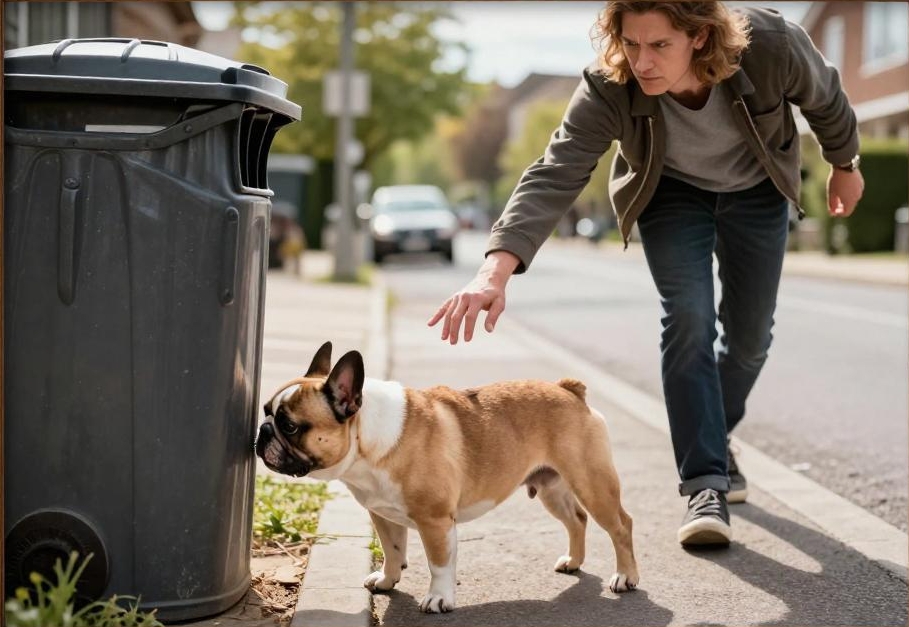
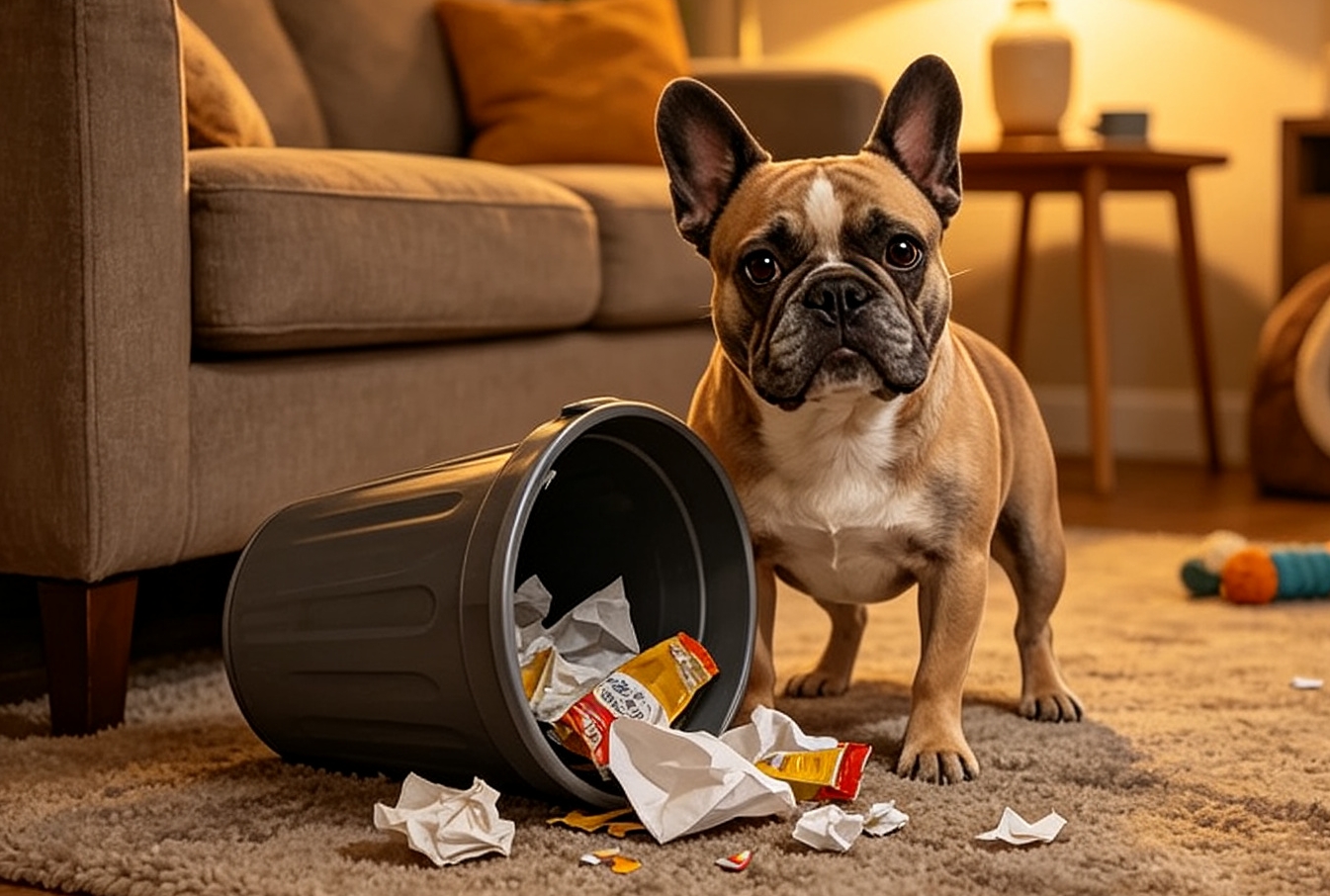
Hello everyone. Today I want to talk about a worrying issue for many French bulldog owners: how to stop your French bulldog from taking food from strangers and accidentally eating dangerous items. You have likely encountered these scenarios: neighbours offer treats out of affection during community walks; children wish to share snacks in the park; and in worst‑case scenarios, malicious feeding may occur. Moments like these make every owner’s heart race. As a dog trainer with ten‑year experience supporting countless dogs and families, I understand this concern comes from deep love and responsibility for your pet. Today we systematically cover science‑backed training to build a safety barrier for your French bulldog.
Why Leave‑It Training Is Critical And Urgent
First, understand that teaching your French bulldog to reject food from strangers is far more than a fun trick. It directly impacts life‑or‑death health safety. French bulldogs are naturally curious and avid food‑seekers with low resistance toward edible items. Once they get used to accepting food from strangers, multiple risks emerge:
1. Poisoning hazard: This is the most life‑threatening risk. Many people lack pet‑care knowledge. Hand‑fed food may contain ingredients highly toxic to dogs: chocolate, grapes, onions, xylitol (found in sugar‑free pastries and chewing gum). One single ingestion can trigger acute kidney failure, liver damage or even death.
2. Digestive system illness: Sudden intake of unfamiliar, greasy or unclean food easily causes acute gastroenteritis with vomiting and diarrhoea — especially problematic for French bulldogs with sensitive stomachs.
3. Emerging behavioural problems: If your dog learns to obtain food by soliciting strangers, it may grow over‑excited toward passers‑by, jump on people, and develop further troublesome habits such as resource‑guarding or scavenging garbage off the ground.
4. Lost owner focus: When external food temptation outweighs your commands, your bond and authority weaken, making recall and other basic obedience far harder.
Therefore leave‑it training is a core life skill for safety, health and good manners.
Root‑Cause Analysis: Why Does Your French Bulldog Beg For Food From Everyone?
Before training begins, understanding behavioural motivation is essential. French bulldogs readily accept food from outsiders mainly for these reasons:
Instinctive drive: Foraging is innate animal behaviour. Food represents a vital resource; seeking extra food is hard‑wired in their genetics.
Lack of clear household rules: Dogs do not instinctively know “only food from my owner is allowed”. If accepting stranger food has previously yielded tasty rewards, that behaviour becomes reinforced.
Social bonding and appeasement: Some dogs interpret receiving food as social interaction, particularly when strangers act friendly and offer praise.
Unintentional owner reinforcement: Sometimes owners silently permit or fail to intervene, signalling “this behaviour is okay”. Alternatively, when your dog declines food but receives no high‑value reward, the refusal habit cannot sustain.
With these points clear, our training objective is set: establish firm, non‑negotiable rules and reshape behaviour so your dog learns complying brings bigger benefits than breaking rules.
Three Practical Step‑by‑Step Training Solutions
Below are field‑tested training workflows. Remember: this demands great patience and consistency. Adult dogs with pre‑existing bad habits require extra time and persistence.
Solution 1: Lay foundations — build and reinforce the “refuse” cue
This forms the cornerstone of the whole programme. We give your dog an unambiguous cue meaning “do not eat this”. My go‑to cue is “No” or “Leave‑it”. Pick one short, firm word you prefer.
Real‑world case: I trained a 3‑year‑old French bulldog named “Doubao” who could not resist any food held by passers‑by. Early sessions: I held food and said “No” while closing my fist. He circled anxiously and pawed at my hand. Many owners give in out of sympathy, yet we must stay consistent.
Step‑by‑step procedure:
1. Train indoors. Prepare regular kibble plus higher‑value rewards such as small boiled chicken breast or cheese cubes.
2. Place kibble in your open palm and present it. The moment he leans in to eat, close your fist tightly and deliver the firm verbal cue “No”.
3. Wait. He may lick, sniff or paw your hand. As soon as he stops, even for a split second by turning his head away, immediately — timing is critical! — offer the high‑value treat from your other hand together with enthusiastic verbal praise.
4. Repeat hundreds of times until, with kibble resting in your open palm, hearing “No” prompts him to pull away or look toward you expecting better rewards.
Key principle: Help your dog understand: “refusing food in this hand earns tastier food from my owner’s other hand”. Your reward must be more desirable than the food he is rejecting.
Solution 2: Simulate real‑world scenarios — desensitisation with “leave” and “look at me”
Once your dog reliably performs the refuse cue indoors, raise difficulty by simulating real‑life situations. This stage introduces distractions and distance.
My practical workflow: Ask family or friends to act as “friendly strangers”. Have the helper hold ordinary low‑value treats and stand several metres away from you and your dog.
Step‑by‑step procedure:
1. Attach the leash and walk toward your helper. When your dog notices the held food and shows interest, apply gentle light leash pressure (do not yank hard), give the cue “Leave” and smoothly guide him away from the food source.
2. The instant he turns away successfully, reward generously with ultra‑high‑value treats e.g. freeze‑dried bites plus exaggerated praise.
3. Practise the “Look at me” cue alongside. When food temptations appear, say “Look at me”. If he shifts gaze away from food onto your face, deliver a substantial reward. This drastically improves focus amid distractions.
4. Gradually reduce distance between helper and you. Add triggering actions such as calling the dog’s name or waving food. Always keep the situation controllable; the leash is essential safety gear.
Key principle: Build this conditioned reflex: “seeing stranger‑held food → move away and look at owner → amazing rewards happen”. The leash is a safety aid, not a punishment tool; guidance should be decisive yet gentle.
Solution 3: Consolidate and generalise — random real‑walk tests
Training succeeds only when behaviour holds across all environments. Integrate practice into every outdoor walk.
Trainer tip: I advise owners to carry a pouch of “jackpot rewards” on walks. You do not need to use them every time, but keep your dog anticipating them.
Step‑by‑step procedure:
1. Start on quiet, familiar walking routes. When you encounter people who might offer food e.g. known neighbours, coordinate beforehand to run controlled tests. Let them hold out a hand (with or without food) and watch your dog’s reaction.
2. If he hesitates or tries to approach, give “Leave” or “No”, guide him away, and deliver jackpot rewards immediately upon correct response.
3. If he completely ignores temptation and walks calmly beside you, reward him after walking a short distance to reinforce this ideal choice.
4. Progress toward busier, more crowded locations for random spot‑checks. Keep rewards random and high‑value to sustain motivation.
Key principle: Daily life is your training ground. Teach your dog that rejecting outside food remains the most beneficial choice everywhere, at any time. Your rewards must outcompete any potential external food temptation.
Pitfall‑Avoidance Guide: Common Training Mistakes
1. Punishing mistakes: Hitting, yelling or harsh corrections when your dog steals or accepts food. This creates fear around strangers offering food or teaches him to hide misbehaviour in your presence. It does not fix root causes and may trigger resource‑guarding aggression. Always stick to positive reinforcement: reward correct responses, ignore wrong ones.
2. Over‑demanding training intensity: Starting practice in highly chaotic environments such as noisy street markets guarantees failure, damaging both your dog’s confidence and your patience. Follow the rule: start simple, advance gradually.
3. Insufficient reward value: Expecting your dog to reject delicious sausages for plain kibble breaks the “value exchange” principle. For leave‑it training your rewards must be sufficiently high‑grade.
4. Inconsistent rules: Strict training one day then leniency thinking “a little bite won’t hurt” confuses your dog and wastes prior progress. All household members must enforce identical rules.
5. Neglecting real‑world management:Before training is fully reliable, always use a leash outdoors. A muzzle may serve as temporary management equipment (not punishment) to physically prevent accidental ingestion.
Summary
Leave‑it training for French bulldogs is a time‑and‑patience investment that protects your dog’s lifelong safety. It is more than learning one cue; it deepens mutual trust, strengthens your bond and establishes healthy leadership. By following the three‑stage workflow: “establish refuse cue → simulated desensitisation → real‑life generalisation” paired with consistent positive reinforcement, your French bulldog will remain calm amid outside temptations and stay reliably focused on you. Safety is never trivial; prevention beats treatment.
Important Reminder
Even with thorough prevention, accidents may still occur. All owners should recognise common dog‑poisoning symptoms: sudden vomiting, possibly bloody diarrhoea, excessive drooling, lethargy, convulsions, ataxia (unsteady gait), breathing difficulty.
If you suspect or witness your dog swallowing toxic substances:
1. Contact your vet or pet emergency centre immediately. Report item name, ingredients and approximate quantity, and follow professional instructions.
2. Do not induce vomiting blindly: Corrosive substances such as strong acids / alkalis or petroleum products cause secondary injury when vomited. Only a vet can decide whether emesis is appropriate.
3. If possible, bring packaging or residual fragments of the ingested item to the clinic for fast, accurate diagnosis.
Time matters for survival; timely professional veterinary intervention saves lives. Wish all furry companions good health and safety!