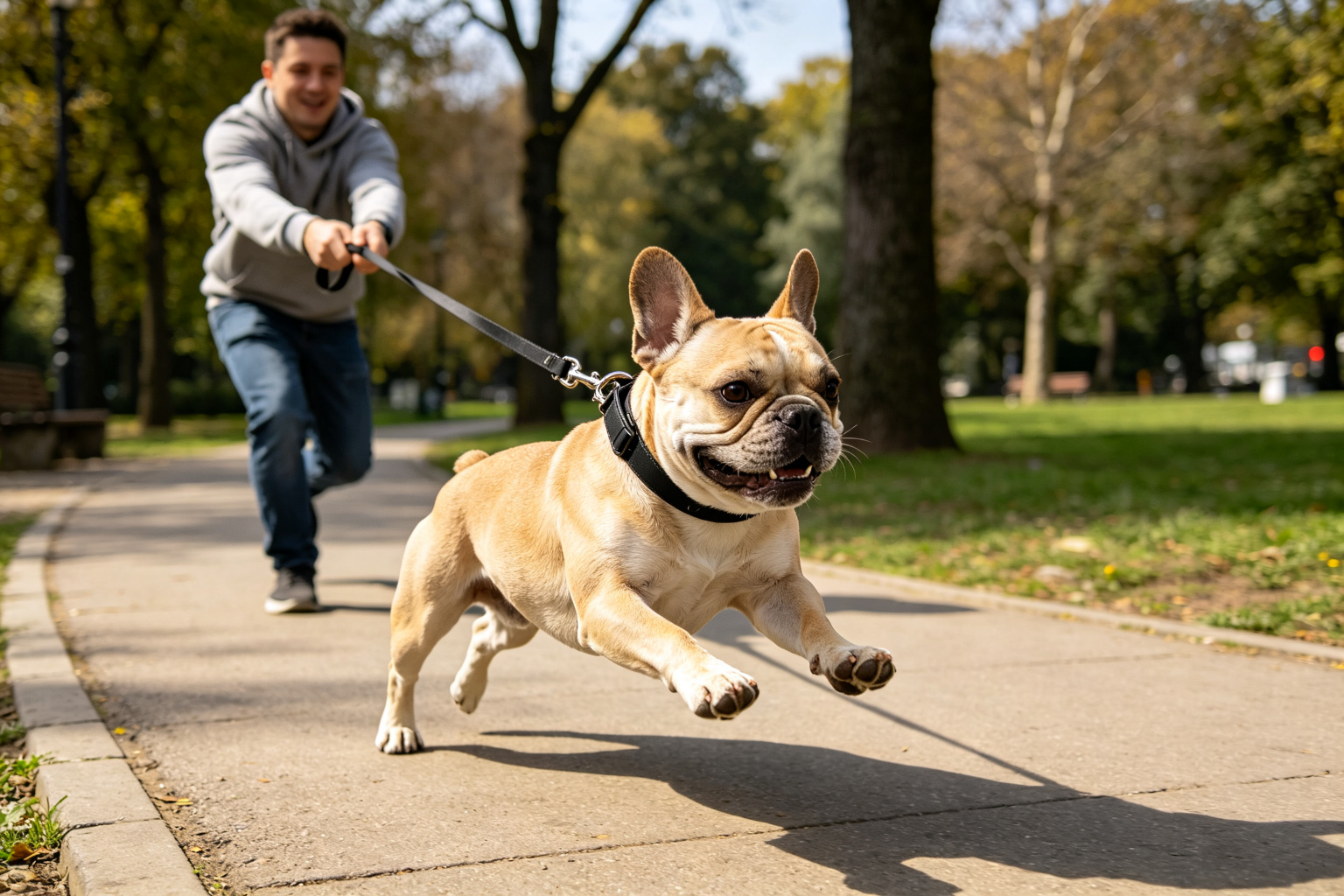
Dear French bulldog owners, hello everyone. During more than ten years of pet behaviour consulting and training, I have dealt with all kinds of canine behavioural issues. Over‑excitement and jumping toward strangers on walks are among the most embarrassing and stressful challenges for French bulldog guardians. Imagine enjoying a pleasant stroll, when your French bulldog suddenly bolts like a little cannonball toward an unsuspecting pedestrian. Even though your dog only intends friendliness, passers‑by get startled, clothes get scratched by paw marks, and disputes may arise. Poor manners disrupt public space and spoil your pet‑owning experience. Today we cover science‑based etiquette training to turn your French bulldog into a well‑behaved companion for stress‑free outings.
Why Does My French Bulldog Keep Lunging Toward Strangers?
Before fixing the problem, understand underlying motivations. Jumping is far more than misbehaviour or disobedience. Key contributing factors are listed below:
1. Social needs and communication style: French bulldogs are naturally friendly and people‑oriented. From a dog’s perspective, leaping up and touching others with front paws is a direct, enthusiastic greeting similar to human hugging. They crave attention and interaction. Especially for puppies lacking early guidance, jumping becomes the fastest way to elicit human reactions, even if it is shouting or pushing away.
2. Excess energy and poor arousal control: Though small‑sized, French bulldogs have plenty of stamina. Insufficient daily physical exercise or mental enrichment causes pent‑up energy to explode outdoors. Novel outside triggers such as moving people, other dogs and noises drastically lower their excitement threshold, and jumping becomes an uncontrolled emotional outlet.
3. Missing or improper socialisation: Without positive exposure to diverse people and stimuli during the critical socialisation window (roughly 3‑14 weeks of age), adult dogs struggle to cope with complex real‑world environments and default to instinctive reactions like jumping and barking. Many owners mistakenly interpret jumping as affection and unintentionally reinforce it through petting or verbal responses when the dog jumps.
4. Reinforced attention‑seeking pattern: This is a vital point. Any behaviour that yields desired outcomes will be strengthened. When your French bulldog jumps up at you, you may say “Off!” or “Stop!”. Even negative replies give your dog full focused attention, which is preferable to being ignored. Over time, jumping solidifies as a reliable attention‑getting tactic.
Three Core Solutions: Build Polite Behaviour From The Root
With causes understood, targeted training can begin. Below are three field‑tested practical workflows. Consistency and patience are essential.
Solution 1: Foundation Training — Build Solid Focus And Obedience
This underpins all behaviour modification. Outdoor training cannot progress if your dog cannot keep focus on you. I often tell owners: “Before expecting your dog to ignore the whole world, make yourself the most interesting thing in their world.”
Trainer real‑world experience: I worked with a 2‑year‑old French bulldog named Doubao. Once outside, he completely tuned out his owner and fixated only on pedestrians and pigeons. Instead of starting on busy streets, I trained the “Look‑at‑me” cue indoors with zero distractions, using ultra‑high‑value rewards such as small boiled chicken bits. Reward instantly every time he makes eye contact on cue. Run multiple short daily practice repetitions until a solid conditioned reflex forms.
Step‑by‑step procedure:
1. Practise name recall and “Look‑at‑me” indoors, aiming for over 90 % success rate.
2. Move to low‑distraction locations such as building hallways or quiet corners of your residential complex.
3. Gradually introduce mild distractions e.g. people walking far in the distance. Reward heavily when your dog redirects focus back to you quickly.
4. Training goal: outdoors, when you call his name, he immediately looks toward you awaiting further directions. This builds groundwork for emergency recall and behaviour interruption.
Solution 2: Core Behaviour Modification — Desensitisation & Alternative‑Response Training
This module directly targets jumping‑on‑strangers scenarios. The principle is to reshape your dog’s emotional reaction toward seeing passers‑by, and teach an incompatible replacement behaviour instead of leaping.
Trainer real‑world experience: Continuing with Doubao’s case. I asked an assistant to act as a pedestrian starting at a long distance (30 metres). This distance must be far enough so Doubao can spot the person without feeling the urge to jump. The moment he notices the stranger yet stays calm — or better, voluntarily looks back toward me from Solution 1 foundation work — I deliver excited verbal praise plus premium rewards. The assistant then shortens distance in tiny increments, only 1‑2 metres at a time. If Doubao shows arousal or leash‑pulling, we have advanced too fast. The assistant steps back to the last successful distance and we restart.
Alternative‑behaviour drill (Sit or Auto‑sit):
1. Inside controlled set‑ups as in the desensitisation exercise, anticipate rising excitement. Give a well‑known cue e.g. “Sit” before arousal peaks (requires careful owner observation).
2. Sitting is physically incompatible with jumping. Reward your dog’s absolute favourite treat the instant he sits.
3. Repeat consistently to build new mental association: “See stranger → Hear cue → Sit → Receive fantastic reward”. End goal: upon spotting approaching strangers, your dog habitually glances toward you or automatically sits expecting rewards instead of surging forward.
Solution 3: Environmental Management & Equipment Support — Set Conditions For Success
While training remains incomplete, proper management and tools prevent unwanted jumping from being repeatedly reinforced, protecting public safety for everyone.
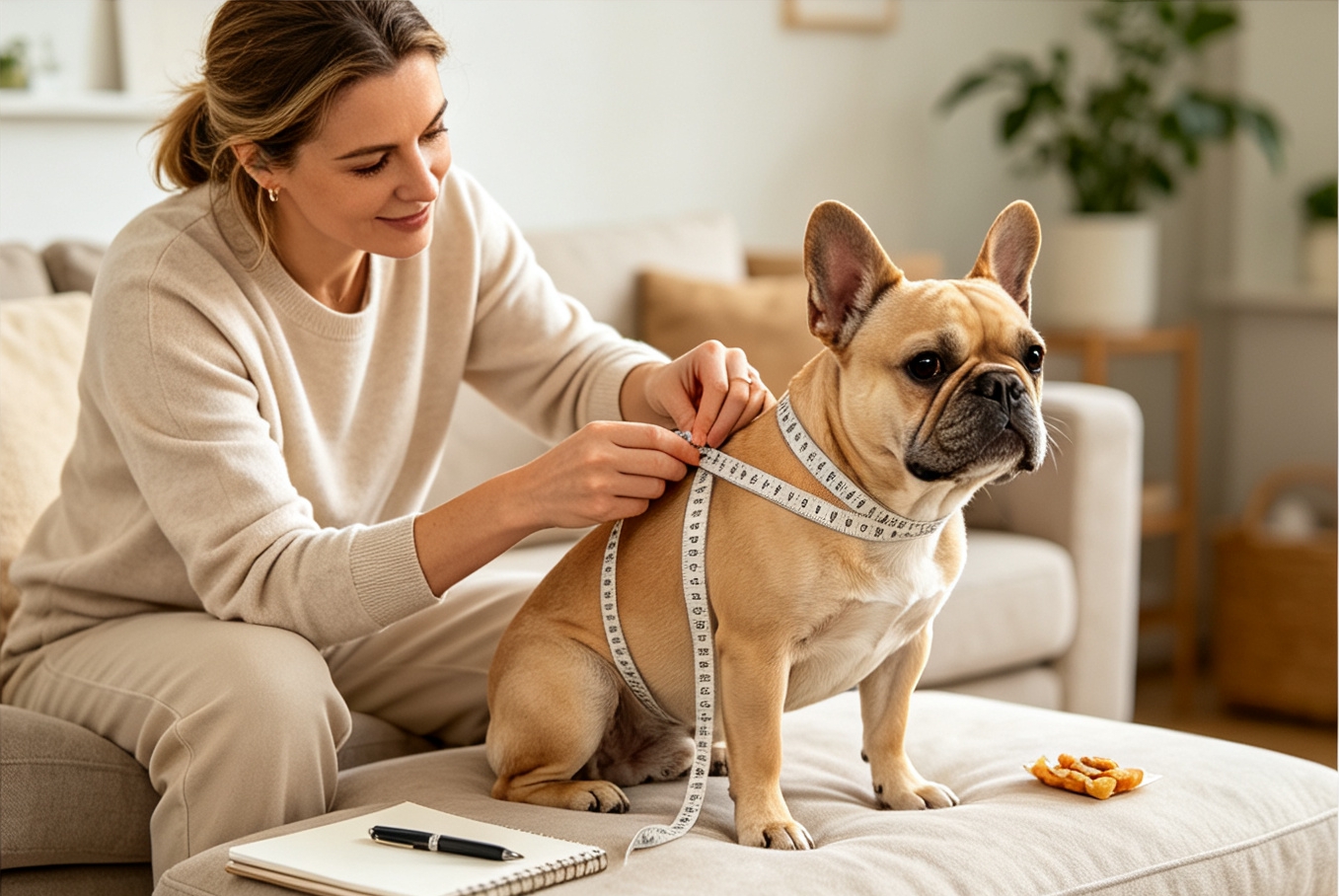
Trainer real‑world experience: In early‑phase training, I strongly recommend avoiding crowded peak hours and busy locations. For impulsive dogs such as Doubao, front‑clip harnesses are highly recommended. With leash attachment positioned on the chest, forward lunging naturally turns the dog sideways, blunting surge force, granting owners improved control while remaining safer and more comfortable than neck collars. Remember: gear is an aid, not a cure. It buys you time and control to implement proper training protocols.
Practical steps:
1. Choose suitable times and routes: Walk and train during early mornings, late nights or along quiet low‑foot‑traffic paths.
2. Use correct equipment: Fixed‑length leash (1.2‑1.5 metres recommended) paired with front‑clip harness. Retractable leashes are discouraged; they hinder clear cue delivery and distance management.
3. Maintain safe distance: Proactively keep enough space from passers‑by so your dog stays relaxed. When people approach, calmly steer your dog aside to let others pass, ask for “Sit”, and reward good performance.
Pitfall‑Avoidance Guide: Common Training Mistakes
1. Punish jumping: Yelling, physical correction or harsh leash yanking. This may make your dog link strangers with bad experiences, triggering fear‑based or defensive aggression, defeating your original training objectives.
2. Poor timing: Issuing commands only once your dog is already over‑aroused and mid‑jump. Over‑excited dogs cannot process instructions. Training must happen while calm or at the very earliest signs of arousal.
3. Late or low‑value rewards: Ordinary kibble loses appeal in stimulating outdoor environments. Use high‑value rewards like cheese or dried meat. Deliver reward immediately upon correct behaviour. Even a 1‑2‑second delay breaks the mental link between action and reward.
4. Lack of patience and consistency: Expect instant results after one‑off training sessions. Inconsistent household rules, for example allowing jumping at family members yet forbidding it toward outsiders, confuse dogs and weaken training outcomes.
Summary
Eliminating jumping habits in French bulldogs calls for affection, patience and science‑driven methods. Beyond correcting a single physical action, this journey deepens communication and trust between you and your dog. With solid focus foundations, desensitisation plus alternative‑behaviour exercises, and smart environmental management, your French bulldog can learn socially acceptable, polite ways to interact with the world. Every time he chooses to calmly watch passers‑by rather than leap forward deserves genuine praise and rewards. Responsible dog ownership is the best gift for both your dog and your local community.
Important Reminder
The guidance above applies to jumping stemming from excitement and high social drive. If your dog displays extreme fear, anxiety paired with snapping intent, sudden behavioural shifts or overt aggression, underlying medical or psychological triggers may exist, including pain, hypothyroidism or severe anxiety disorders. In these scenarios, promptly consult a licensed veterinarian or certified animal behaviourist for full assessment and diagnosis to ensure safe, effective support for you and your pet.