Hello to all pet parents. Every sweltering summer, many worried French bulldog owners come to my consultations. Their most frequent question is: "Doctor, my French bulldog refuses kibble completely. What should I do?" I fully understand your anxiety when your normally cheerful, food‑loving companion becomes listless and uninterested in meals. Drawing on ten‑year hands‑on experience with countless French bulldogs, I will walk you through practical tricks to help your French bulldog regain a healthy appetite throughout summer.
Why Do French Bulldogs Go Off Their Food in Hot Summer Weather?
Before jumping to solutions, we need to identify underlying triggers. Summer appetite drop in French bulldogs is far more than simple picky eating; it results from a combination of physical‑breed traits and environmental heat stress.
First, French bulldogs are classic brachycephalic (short‑skulled) dogs. Their signature flat muzzle creates naturally narrowed respiratory tracts. In cool conditions this may only produce loud snoring. Under high temperatures, however, problems escalate. Dogs primarily dissipate heat via open‑mouth panting and paw‑pad perspiration. Breathing already demands extra effort for brachycephalic breeds. Rapid hot‑weather panting burns massive energy, bringing fatigue and discomfort, naturally killing their desire for food.
Second, high temperatures alter bodily functions. Just like humans, dogs experience metabolic shifts in heat. Their bodies instinctively cut heat‑generating activities — and food digestion produces significant internal heat. Therefore their bodies send out signals to eat less to reduce heat production.
Third, mismatch between food conditions and hot surroundings.
Dry extruded kibble can feel especially unappealing in summer. Food bowls placed in stuffy poorly‑ventilated corners, or meals slightly spoiled by high ambient temperature, will cause sensitive French bulldogs to reject food entirely.
Understanding these three points lets us target problems precisely instead of blaming dogs for misbehaviour. Below I share field‑tested practical tips validated with my own French bulldog Niu Niu and numerous client cases.
Five Field‑Tested Summer Feeding Tricks to Stimulate Appetite
Trick 1: Reschedule feeding times, avoid peak‑heat hours
This is the simplest, most immediately‑effective measure. Ditch rigid twice‑daily feeding routines. My recommendation: Split daily rations into 3‑4 smaller portions.
Sample schedule: First meal at 6‑7 a.m. before intense sunshine; second meal at 4‑5 p.m. once heat eases; third meal after 9 p.m. when temperatures cool fully. If you are busy during daytime, at minimum serve breakfast very early and dinner very late. One summer Niu Niu refused all midday meals. After switching to feeding half‑an‑hour after his 9:30 p.m. evening walk inside air‑conditioned rooms, he ate ravenously. Smaller servings reduce single‑meal digestive load and align with their natural preference for eating in cool conditions.
Trick 2: Cool and moisten food smartly
Cooler, moister meals greatly improve palatability.
1. Refrigerator‑chill method: Place unopened canned food or sealed wet food inside refrigerator for 15‑20 minutes (do NOT freeze!). Slightly chilled texture stimulates appetite, like a savoury main‑dish treat for dogs. Always check temperature to avoid gastrointestinal irritation from overly cold food.
2. Broth / warm‑water soaking method: My top recommendation for kibble‑fed French bulldog owners. Soak dry kibble 15‑20 minutes in unsalted simmered meat broth (chicken or beef, skim off surface grease) or plain lukewarm water. Use just enough liquid for kibble to fully absorb and soften. This boosts water intake — critical for summer hydration. Softened food is easier for brachycephalic dogs to swallow and releases appetising meat aroma. One owner simply soaked kibble with warm water and her previously fussy French bulldog increased food consumption by 30 %.
Trick 3: Prepare simple summer appetite‑boosting toppers
No complicated cooking required. Small amounts of safe natural ingredients can awaken taste buds.
Suggested toppers:
- Yoghurt topping: Spoon one small portion (roughly 5‑10 g) of plain, unsweetened, xylitol‑free Greek yoghurt over kibble. Its cool tangy flavour stimulates appetite and supplies probiotics.
- Fruit ice cubes: Blend dog‑safe fruits (blueberries, seedless watermelon chunks, apple slices) with water and freeze in ice‑cube trays. Drop 1‑2 cubes into the food bowl at feeding time. They melt gradually while eating, adding cooling enrichment. Serve fruit moderately; strictly avoid grapes, onions and other toxic foods.
- Freeze‑dried crumble: Crush freeze‑dried chicken or duck treats and sprinkle over kibble like seasoning. High‑protein meat aroma creates irresistible appeal for dogs.
Remember: all supplementary toppings are accents, making up no more than 10 % of total meal volume to prevent nutritional imbalance.
Trick 4: Optimise eating environment and food bowls
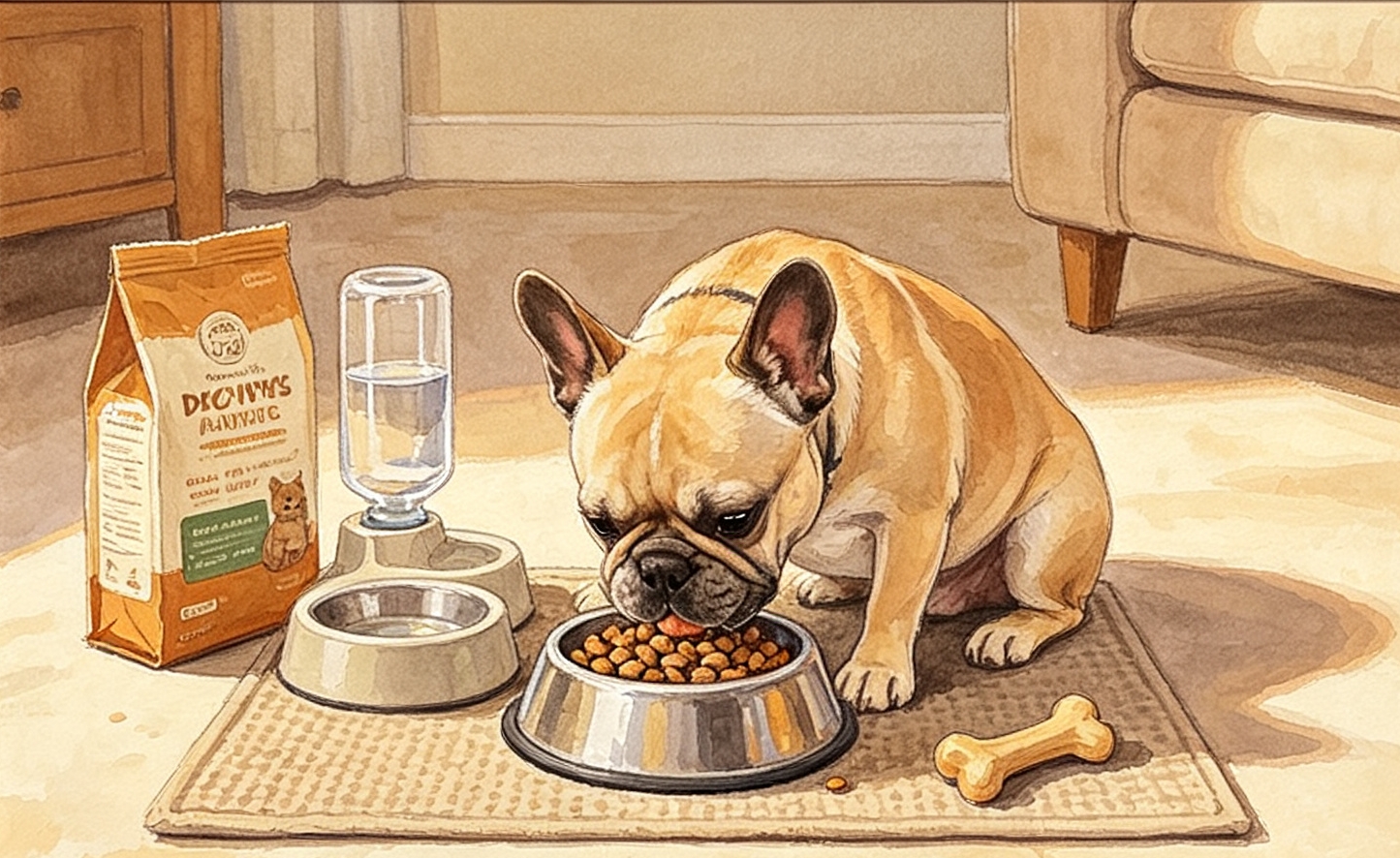
French bulldogs suffer badly from heat stress even while eating. Keep their food bowl positioned in the coolest, best‑ventilated indoor spot, away from balconies and direct sunlight. If air‑conditioning or fans run indoors, ensure airflow reaches that area, yet do not blow air directly onto the dog or food bowl.
Also, given their flat facial structure, wide‑mouthed shallow bowls work far better than deep narrow bowls for unobstructed breathing while eating. I advised one client to swap deep bowls for specialised shallow slow‑feed pet plates. It not only stopped rushed gulping, but also noticeably improved summer eating motivation, as mealtimes no longer felt breath‑restricting and stressful.
Trick 5: Guarantee constant access to cool fresh drinking water
Dehydration directly suppresses appetite. Always provide abundant, fresh, cool drinking water. Place multiple water bowls in several shaded spots. Refresh water 2‑3 times each day and wash bowls thoroughly to stop bacterial build‑up. Toss in a couple of ice cubes, or use a circulating pet water fountain; running cool water encourages drinking. Proper hydration supports normal metabolism and gradually restores appetite.
Pitfall‑Avoidance Guide: Practices That May Backfire
While trying to encourage eating, watch out for these frequent mistakes:
1. Do not arbitrarily switch food or overload with flavour enhancers: Summer brings heightened gut sensitivity. Sudden kibble changes easily trigger diarrhoea. If a diet switch is necessary, transition gradually across a minimum of 7‑10 days. Do not pile on excessive canned food or meat sauces just because your dog refuses meals; this quickly entrenches severe picky‑eating habits.
2. Never force‑feed or chase your dog with food: This creates severe mealtime stress, associating eating with anxiety and forming a vicious cycle.
3. Watch for disease signals behind anorexia: If poor appetite accompanies lethargy, vomiting, diarrhoea, obvious weight loss, pale or jaundiced gums, severe breathing difficulty, heat alone cannot explain symptoms. Seek veterinary attention immediately.
4. Avoid feeding right after strenuous exercise or extreme excitement: French bulldogs carry heavy cardiac and respiratory load. Allow them to calm down and cool fully before offering meals.
Summary
The core principle for improving summer appetite in French bulldogs is think from their perspective and keep them cool. By adjusting feeding rhythm, modifying food texture and optimising local eating conditions, we ease their physical discomfort and help them enjoy summer happily. These methods rely on understanding and accommodation rather than coercion. A cool comfortable dog is a dog with a good appetite.
Important Reminder
The above‑mentioned home‑care tips apply only to temporary mild appetite loss caused by hot seasonal weather. Every dog is an individual with unique health status. If after trying multiple approaches your French bulldog still completely refuses food and water for 24‑48 consecutive hours or longer, or displays any abnormal symptoms listed earlier, stop home observation and visit a professional veterinary clinic without delay. Serious conditions including heatstroke, gastrointestinal foreign bodies, pancreatitis and liver‑kidney disorders may first present as complete anorexia. Timely professional diagnosis and treatment represent the most responsible approach for your companion’s life and health. Wish all French bulldogs a cool summer and consistently good appetite!