Many French Bulldog owners who work from home or own a dedicated study room have encountered this stressful scene: you step out of the room briefly to take a phone call, only to return and find important documents torn to shreds, or worse—the rubber insulation on your laptop charger chewed through, exposing bare copper wiring. I fully understand the mix of panic, fear and frustration this brings. This is not merely a costly property issue; it poses a fatal electrocution risk to your furry companion. Today we will break down a complete, science-backed housing plan for French Bulldogs in study room layouts to eliminate destructive chewing of papers and wires at the source.

Why Even Well-Behaved French Bulldogs Treat Study Room Items As Chew Treats?
Before solving the problem, we must unpack the instincts and unmet needs driving this behavior. When Frenchies chew office supplies, it is never simple mischief or vengefulness—their actions stem from multiple overlapping innate urges.
First, Oral Exploration Instinct. Dogs lack opposable thumbs; their primary tool for learning about the world and testing texture is their mouth. Puppies and young adult French Bulldogs go through a teething oral fixation phase, using chewing to soothe sore gums while investigating their surroundings. Loose paper has an unique crinkly texture, and pliable cable rubber provides satisfying resistance—both are highly enticing to them.
Second, Excess Energy & Chronic Boredom. Though French Bulldogs are labeled low-energy companion dogs, they still require daily mental stimulation and physical exercise. Without consistent walks and interactive play, pent-up energy will manifest as destructive behavior. When you are absorbed in work or reading, neglected dogs chew items to grab your attention or create their own entertainment.
Third, Underlying Separation Anxiety. Many Frenchies are extremely clingy toward their owners. Even brief separation from you in the study (e.g., stepping into the living room) triggers anxious stress. Chewing items saturated with your scent—such as notebooks, pens and paperwork—is their primary coping mechanism to calm nervousness. I once worked with a client whose French Bulldog only chewed his work notebooks when he left the study for meetings, a textbook anxiety trigger signal.
Fourth, Lax Household Hazard Management
5 Vet-Tested Effective Solutions To Secure Your Study Room & French Bulldog
Given these root causes, we need a multi-layered combined strategy addressing environment, behavior and unmet canine needs. All methods below have been repeatedly validated through real client case practice.
Solution 1: Install Physical Barriers To Create Separate Human & Pet Zones
This is the most direct, impactful first step. Core principle: eliminate all unsupervised access to dangerous chewable items.
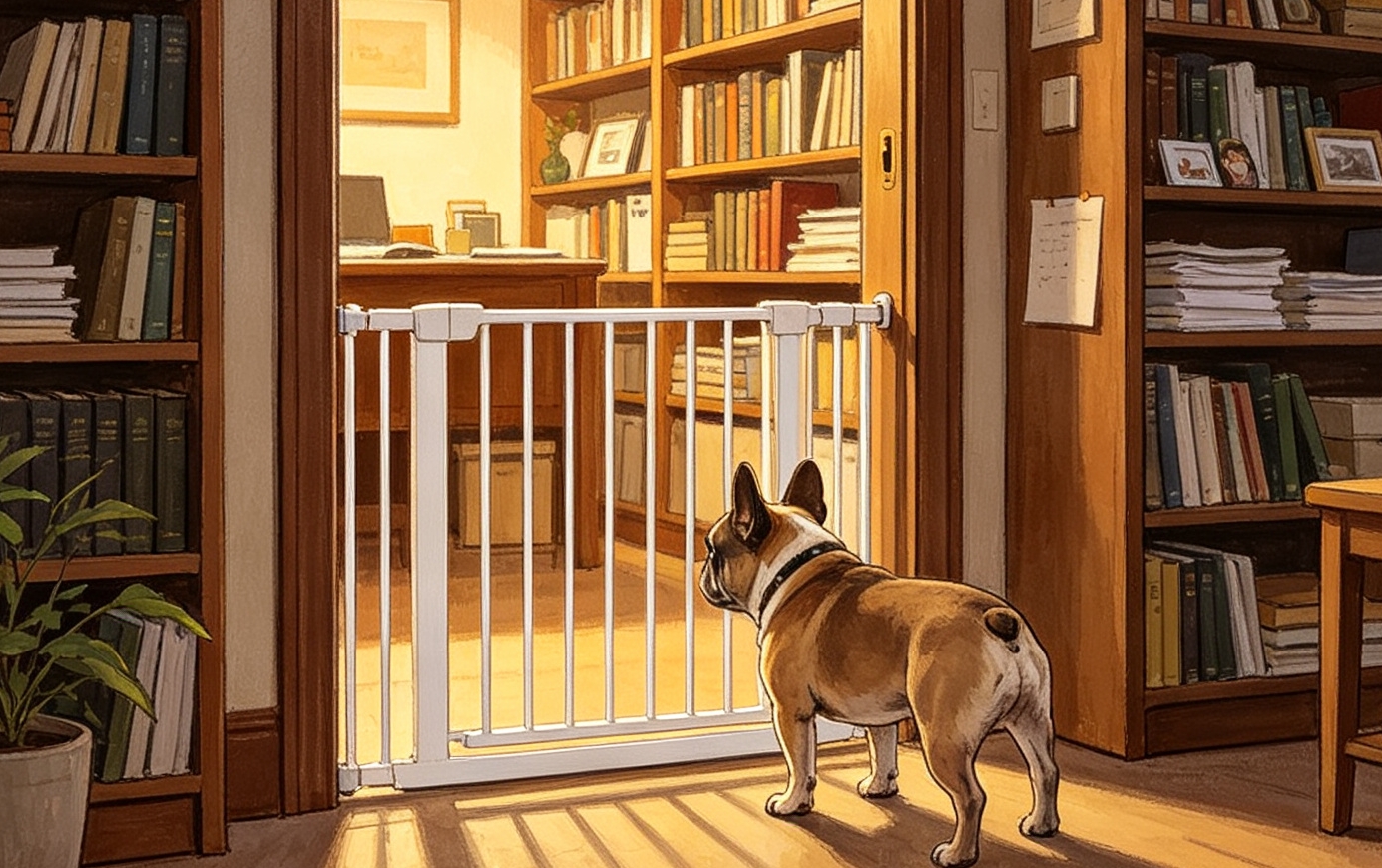
Practical implementation: Install expandable pet safety gates / baby gates at your study doorway. When you need deep work focus or have to step away temporarily, gently contain your Frenchie outside the room while maintaining visual contact with you to reduce separation stress. This approach outperforms fully closing the door and isolating them entirely.
Cable & Document Storage Overhaul: Encase all exposed wiring in protective cable sleeves or closed cable management boxes. Use cord organizers to secure loose desk wires along table edges or underneath surfaces. All paper documents must be stored inside lidded file bins or closed drawers. Follow this rule of thumb: any object within chest height of a standing dog is a potential chew target.
Solution 2: Offer Approved Chew Outlets To Satisfy Natural Chewing Urges
If you forbid chewing item A, you must simultaneously provide suitable item B they are allowed to chew freely. Selecting appropriate enrichment toys is critical.
My personal vet recommendation: Frozen Kong stuffed treat toys are an invaluable tool. Before starting work in your study, fill a Kong with palatable low-sugar fillings (unsweetened yogurt, softened kibble paste, mashed pumpkin) and freeze it solid for your Frenchie. They will spend 30+ minutes focused licking and gnawing to extract the food inside. This exhausts their mental energy, encouraging calm napping instead of fixating on your paperwork.
Assortment of durable multi-texture chew toys: Stock a rotation of varied chew items: hard rubber chews, thick braided rope toys, antler chews, etc. Observe which textures your French Bulldog prefers and stock more matching options. Rotate toys weekly to preserve novelty and sustained engagement.

Solution 3: Positive Reinforcement Training To Establish Clear House Rules
Training teaches dogs which behaviors are permitted vs forbidden, and motivates them to voluntarily choose good habits.
"Leave It" Command Training: This foundational cue protects your office supplies. Start training with low-interest objects first. When your dog approaches or sniffs an off-limits item, calmly say "Leave It", then draw their focus away with high-value reward treats (small chicken jerky). The instant they turn away from the object toward you, mark the correct behavior (verbal "Yes!" or clicker) and deliver the treat reward. Repeat daily, gradually increasing the appeal level of test objects.
I used this exact training to stop my own French Bulldog from fixating on TV remotes. After one week of consistent practice, he voluntarily walks away from remotes left on the floor. Important rule: never yell, scold or physically punish your dog after chewing. Punishment amplifies anxiety and uncertainty, often leading to worse destructive behavior when you are out of sight.
Solution 4: Structured Daily Schedule To Fully Burn Excess Energy
A mentally and physically tired dog is a well-behaved dog. Complete your Frenchie’s daily exercise routine before settling down to work in the study.
My recommended daily workflow: Exercise First, Calm Down Next, Then Focused Work. Prior to your study session, take your dog on a lengthy 20–30 minute walk incorporating loose-leash heeling drills and scent work enrichment games. Upon returning home, offer fresh water and allow them to settle into a relaxed state. Give them their pre-stuffed frozen Kong toy, then begin your work undisturbed. This routine fulfills their exercise, foraging, sniffing and chewing instincts, making rest far more appealing than destructive chewing.

Solution 5: Scent-Based Enrichment To Build Positive Associations With The Study Room
Dogs perceive the world primarily through scent; we leverage this to create calming, pleasant feelings around your office space.
My standard calming routine: Spray canine appeasing pheromone on their resting mat or dog bed. Commercial synthetic dog appeasing pheromone sprays/diffusers (Adaptil) replicate the soothing maternal pheromones released by mother dogs, helping pups feel secure and relaxed. Create a dedicated quiet resting nook for them inside the study (positioned far from all wiring) and mist pheromone spray there to encourage voluntary relaxation. Pair time in the study with gentle petting, short reward-based training sessions and play to frame the room as a space for calm, quality bonding with you—not a restrictive boring zone full of forbidden items.
Common Mistake Avoidance Guide: Never Use These Counterproductive Fixes!
When correcting chewing habits in French Bulldogs, many quick-fix tactics carry severe hidden risks.
1. Coating wires with harsh bitter deterrents (essential balm, chili spray): Extremely dangerous! Irritant chemicals damage delicate canine oral tissue and digestive linings. Some curious or stubborn dogs will be driven to chew harder out of defiance or curiosity.
2. Post-hoc punishment after destruction: If you return home to a chewed mess and yell at your dog, this training method is completely ineffective. Dogs cannot connect your anger to an action they committed hours earlier; they will only associate your arrival with fear, worsening separation anxiety long-term.
3. Only block access without providing alternatives: Simply locking away all chewable objects while denying your dog suitable enrichment and daily exercise shifts their chewing urges to new targets such as door frames and table legs.
4. Low-quality easily destructible toys: Avoid flimsy plastic toys and unsupervised plush stuffed animals that tear apart into swallowable fragments. Inspect all chew toys regularly for rips or breakage to prevent intestinal blockages from ingested debris.
Summary
Stopping French Bulldogs from chewing study room papers and electrical cords is a long-term practice built on understanding, proactive environment management and gentle behavioral guidance. Success does not rely purely on your dog’s obedience, but your own foresight and consistent patience. By building a fully hazard-free office zone, providing ample approved chew enrichment, practicing science-backed positive reinforcement training, and meeting your dog’s daily physical and mental needs, you can enjoy a calm, safe study environment with your French Bulldog peacefully at your side. Remember: every destructive chewing episode is your dog’s way of communicating unmet needs to you. Listen to their signals, and you can nurture a happier, healthier bond together.
Important Reminder
The strategies shared in this article address typical chewing stemming from boredom, excess energy or poor household management. However, if your French Bulldog displays extreme persistent anxiety, compulsive self-chewing, excessive drooling, or a sudden drastic spike in destructive behavior, this may go beyond a simple behavioral issue and signal underlying physical illness (chronic pain, nutritional deficiencies) or severe psychological distress. Immediately consult a professional certified canine behaviorist or full-service veterinarian for comprehensive assessment and targeted intervention. Your pet’s physical and mental wellbeing will always be our top priority.